From vehicle procurement to maintenance and cost control, all the way to taking climate and environmental goals into account, the tasks involved in fleet management are diverse and complex. As a result, this job requires not only strong organizational skills but also extensive technical knowledge.
In this article, we’ll introduce you to the 10 most important fleet management tasks. We’ll also show you how a software solution can help fleet managers complete their tasks.
What are the responsibilities of fleet management?
Fleet management tasks encompass numerous activities aimed at ensuring the efficient and cost-effective operation and administration of a fleet. In doing so, fleet managers must not only ensure the economical use and optimal utilization of vehicles but also comply with legal requirements. As a result, fleet management becomes a strategically important task for fleet managers.
The Top 10 Fleet Management Tasks
From purchasing new vehicles to handling claims, fleet management tasks go far beyond simply managing vehicles. Below, we’ll outline the ten most important fleet management tasks and show how a software-based solution can help you manage these activities.
Vehicle procurement
Fleet management tasks include the selection and procurement of new vehicles. This involves evaluating vehicle types, negotiating contracts with suppliers and car dealers, and ensuring that the vehicles actually meet the company’s requirements.
Before purchasing new vehicles, the company’s needs should be analyzed. How many vehicles are needed? What types of vehicles are needed (e.g., passenger cars, trucks, delivery vans) and what functions are they intended to fulfill (e.g., sales, delivery, service)? Based on the needs analysis, the fleet manager prepares a budget for the procurement of new vehicles that covers the costs of purchase or lease as well as all associated operating costs, such as taxes, insurance, and maintenance.
In particular, selecting the right vehicles is one of the most critical tasks in fleet management. This is because company vehicles should meet the company’s requirements and offer the best available combination of price, performance, safety, and environmental impact. So it quickly becomes clear: Vehicle procurement is a complex process that requires careful planning and organization.
Cost Control
The vehicle fleet is one of the company’s largest cost centers. Fleet management tasks therefore include monitoring the fleet’s total costs and ensuring its cost-effectiveness.
The fleet manager therefore prepares and manages the fleet budget and monitors all costs, such as those for fuel, insurance, maintenance, and other operating expenses. The goal is to optimize operating costs and avoid budget overruns. Through regular analyses of the Total Cost of Ownership—the total costs associated with the fleet—all expenses and consumption are evaluated, and potential savings are identified.
Fuel Management
Fuel management is also one of the key tasks in fleet management. The goal is to track fuel consumption and costs transparently and to identify opportunities for savings. Analyzing the consumption data of individual vehicles helps identify anomalies and vehicles with particularly high fuel consumption, and enables the development of targeted measures to reduce consumption and CO₂ emissions.
In this context, fuel card management is also part of fleet management. Fuel cards can simplify the management of fuel consumption, as they allow for precise monitoring and tracking of refueling transactions and the associated costs.

Vehicle Maintenance and Repair
Regular vehicle maintenance is also part of fleet management responsibilities. This is particularly important for reducing the likelihood of unexpected breakdowns and malfunctions and ensuring smooth operations. Well-maintained vehicles are safer: Potential safety issues can be identified and resolved early on, before they can lead to accidents.
Fleet management tasks therefore also include the proper planning and monitoring of maintenance and repairs. To ensure that all deadlines are met, it is advisable to create a maintenance schedule. To simplify the organization of maintenance and inspections, you can also enter into a maintenance contract with a repair shop.
Claims Management
The claims processing is also one of the key fleet management tasks. Should an accident or damage to a company vehicle occur, speed and good planning are essential. This is the only way to ensure that business operations are not disrupted and costs do not become unnecessarily high.
If damage occurs to a vehicle, one of a fleet manager’s responsibilities is to first document the damage and prepare a damage report. The information recorded should be as detailed as possible, including photos and a description of the damage. Next, the damage must be reported to the insurance company, and a damage assessment must be conducted, either by an appraiser or a repair shop. In the event that the vehicle is out of service for an extended period, a replacement vehicle should be provided to the driver so that he or she can remain mobile.
A damage analysis can help identify the most common causes of damage and accidents in the fleet. As part of fleet management responsibilities, preventive measures should also be taken to prevent future damage. These include regular maintenance and training drivers in safe driving practices.
Compliance with keeper liability obligations
One of the key tasks of fleet management is ensuring compliance with the legally mandated vehicle owner liability requirements. This includes, first, the regular driver’s license checks, during which the validity of the driver’s license is verified. With digital solutions for electronic driver’s license verification, drivers can conveniently scan their driver’s license on the go using a smartphone app.
On the other hand, the UVV driver training is part of the vehicle owner’s liability obligations and thus an integral part of fleet management tasks. The training is designed to teach drivers how to safely operate company vehicles and how to respond in the event of an accident. With digital training in the form of an e-learning course, you’ll be relieved of the time-consuming tasks typically associated with fleet management, such as scheduling and communicating with drivers. For drivers, this also means greater flexibility, as they can complete the training from any location.
Data Analysis
Data plays an important role in fleet management and serves as the foundation for many fleet management tasks. For example, it provides a basis for deciding which vehicle types and models are the most efficient and cost-effective for the company’s specific needs. Analyzing this data also helps monitor and reduce operating costs by providing a detailed breakdown of expenses for fuel, maintenance, and repairs.
Therefore, part of fleet management involves leveraging this data to make fleet operations more efficient, reduce costs, and make informed decisions.
Set the Car Policy
With a company car policy, also known as Car Policy, sets forth all guidelines for the use of company vehicles. As a set of internal rules, it serves as a guide for employees and fleet management and helps prevent conflicts and misunderstandings.
A car policy governs, among other things, who in the company is authorized to use company vehicles, under what conditions, and for what purposes this is permitted. For example, if personal trips in a company car are not permitted, this must be specified in the company car policy. It also contains clear instructions on how to proceed in the event of an accident or damage to a company vehicle, as well as potential penalties for violating the guidelines. Part of fleet management’s responsibilities is therefore to establish and regularly update such a set of rules.
Mobility Management
In addition to vehicle management, fleet management is increasingly focusing on overall corporate mobility. Employee needs are changing, and flexible, personalized mobility options are becoming more important.
As a result, more and more companies are implementing mobility budgets that allow employees to spend a set amount on their preferred modes of transportation. This enables them to combine public transit, car-sharing services, and company bicycles in a personalized and flexible way. Corporate car-sharing is also supplementing employee-specific company cars in an increasing number of fleets, thereby expanding the company’s mobility mix.
The responsibilities of a fleet manager are therefore shifting from purely managing vehicles to holistically managing corporate mobility.

Climate and Environmental Goals for the Fleet
Many companies are increasingly taking CO₂ emissions and energy consumption into account when managing their fleets. For fleet managers, one of their responsibilities is therefore to implement appropriate measures to reduce fuel consumption and CO₂ emissions .
These include, for example, the integration of electric vehicles and corporate car-sharing. Higher utilization rates for shared vehicles can help reduce the need for vehicles and the associated costs.
Eco-driving training courses can also help. Anticipatory driving, smoother acceleration and braking, and avoiding unnecessary idling can help reduce fuel consumption and the associated CO₂ emissions.
Manage Fleet Management Tasks Using a Software Solution
Digitalization also offers exciting solutions for fleets, enabling the automation of fleet management tasks and saving valuable time. Even though managing a fleet with Excel files may seem like a simple and straightforward solution at first glance, fleet managers quickly reach their limits when using this method to handle fleet management tasks. The demands and the volume of data to be processed are increasing, particularly for larger vehicle fleets.
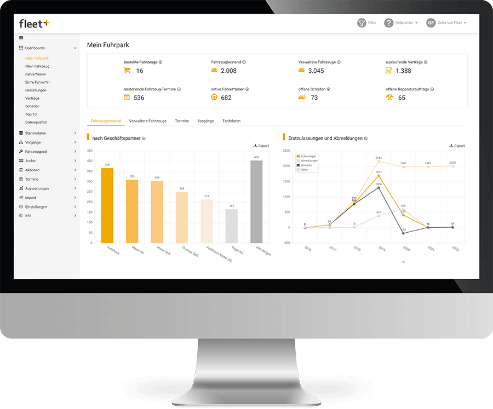
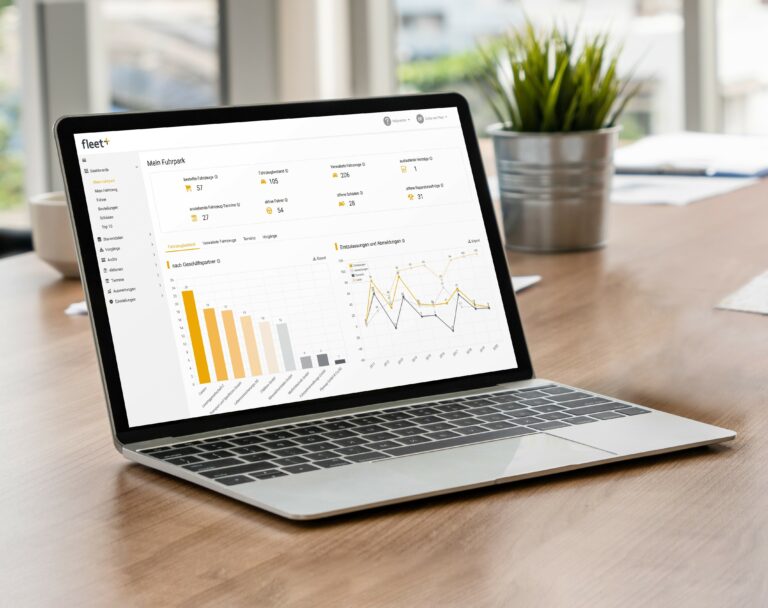
A fleet management software such as Carano Fleet+ offers comprehensive features for the efficient and transparent organization of fleet management tasks. By digitizing the routine tasks of a fleet manager, a software solution creates structured workflows and ensures full cost control. Optional add-ons, such as electronic driver’s license verification and UVV driver training as an e-learning course, make it easier to fulfill the vehicle owner’s liability obligations.
Fleet Management Tasks: In-House or Outsourced?
In some cases, fleet managers decide to outsource many or even all fleet management tasks to an external service provider. Both approaches have their advantages and disadvantages, which must be carefully weighed.
By outsourcing fleet management tasks, companies can reduce costs related to personnel, training, and IT systems. In addition, external service providers have specialized expertise and established processes that enable them to efficiently handle fleet management tasks. At the same time, companies relinquish some control over their fleet and must rely on the quality and reliability of the fleet service provider. The decision between in-house fleet management and outsourcing therefore depends on the company’s specific needs and resources.
FAQ on Fleet Management Tasks
Data serves as an important foundation for many fleet management tasks, as it can help increase efficiency, reduce costs, and improve safety. Vehicle data —including mileage, fuel consumption, and maintenance history—plays a particularly central role in this regard. By analyzing this information, it is possible, for example, to identify cost drivers, evaluate the cost-effectiveness of individual vehicles, and optimize the planning of maintenance and inspections.
Environmental data such as CO2 emissions and energy consumption for electric vehicles can also be analyzed as part of fleet management tasks to reduce the fleet’s environmental footprint and optimize charging behavior. Fleet management software simplifies the collection, processing, and analysis of this data, enabling companies to manage their fleets even more effectively and efficiently.
Fleet management tasks can be organized through the use of fleet management software and data-driven decision-making. Centralized management and automation of processes and routine tasks—such as maintenance reminders and reporting—minimize errors and increase fleet efficiency. In addition, fleet management software helps ensure compliance with legal requirements.
The biggest challenges associated with fleet management tasks include organizational, technological, and legal aspects. Fleet managers must juggle a wide variety of different issues simultaneously. These include developing cost-reduction strategies, complying with legal regulations, and meeting environmental requirements. The development of new technologies and the changing mobility needs of employees also require constant attention.