A company’s vehicle fleet represents a major cost factor and often requires extensive planning and management. However, thanks to outsourcing, many operational tasks can be automated or entrusted to experts. In this article, we take a closer look at the pros and cons of outsourcing fleet management and explain what you should consider when making a decision.
Contents
- 1. What is fleet management outsourcing?
- 2. Advantages of outsourcing in fleet management
- 3. Disadvantages of outsourcing in fleet management
- 4. Partial outsourcing in fleet management – practical example Technolit
- 5. What should be considered when outsourcing fleet management?
- 6. Fleet service provider or full-service leasing?
- 7. Software support for fleet outsourcing
What is fleet management outsourcing?
When outsourcing fleet management, the entire administration or certain tasks are outsourced to external third parties instead of being handled internally. Outsourcing in fleet management starts with the outsourcing of certain tasks through full-service leasing to complete outsourcing of fleet management.
Outsourcing fleet management can ease the strain on both the budget and the human resources within a company. In many smaller companies, the fleet manager is often employed in another role as well and does not always possess the expertise necessary to ensure that all fleet-related obligations are met efficiently and in compliance with regulations. This is where specialized fleet service providers or full-service leasing companies can help. Operational processes in particular—such as claims management, repairs, or cost tracking—are well-suited for outsourcing. However, you should carefully analyze whether outsourcing is the right fit for your fleet.
Advantages of outsourcing in fleet management
Companies that decide to outsource (part of) their fleet management processes can benefit from the following advantages:
- Cost savings in procurement, management, and disposal thanks to the fleet service provider’s expertise and better purchasing terms
- Increased efficiency through the outsourcing of routine tasks, which allows employees to focus on their core responsibilities.
- Investments in employee training or IT systems can be minimized, and scalability can be increased
- Improved process quality and legal certainty through access to the expertise of an external expert
Disadvantages of outsourcing in fleet management
In addition to the advantages, there are also disadvantages that should be considered when looking at outsourcing in fleet management as a whole:
- External service providers cost money. Ideally, the qualitative benefits should outweigh the financial costs. In some cases, higher costs are accepted in order to avoid having to handle fleet management internally.
- Outsourcing to a service provider can lead to a loss of internal knowledge, as well as flexibility and control.
- A dependency on the service provider may develop . This is particularly problematic if the service provider does not, after all, possess the expected qualifications or if other issues arise. In the worst-case scenario, a time-consuming process of returning to self-administration must be undertaken.
- Data protection and other security considerations require appropriate contract terms and measures to ensure that your company’s data and processes are well protected.

Partial outsourcing in fleet management – practical example Technolit
Technolit GmbH proves that there is also a way back: after gaining experience with full-service leasing, the company is now once again managing its fleet more extensively in-house. The trade magazine Autoflotte reported on this in this article. Technolit relies on the fleet management software Carano Fleet+ to automatically import invoices and analyze them in detail. Service providers receive precise billing guidelines, and through standardization, Technolit keeps track of total cost of ownership (TCO). Even the smallest deviations are automatically flagged. Among the most important features for the internal team is the ability to handle follow-up tasks, ensuring that no tasks are overlooked.
What should be considered when outsourcing fleet management?
Outsourcing a fleet involves certain consequences and should therefore be carefully considered. When deciding to outsource fleet management—or to partially outsource certain aspects of fleet management— a thorough cost-benefit analysis should be conducted. The company’s goals and strategies must always be the guiding factors: How does the fleet contribute to the company’s success, what risks are involved in outsourcing, and what capabilities must remain within the company?
For larger fleets, the potential lies primarily in savings on process costs. Smaller fleets often lack a dedicated fleet manager and, consequently, the necessary expertise. In addition, a service provider can help secure better purchasing terms. Outsourcing operational tasks can lead to cost savings—but strategic responsibility should always remain with the company to prevent dependence on the supplier.
To compare the costs of internal versus external management, all costs incurred to date must be recorded. Appropriate software solutions that consolidate all necessary data can serve as the basis for strategic decisions in this regard. It is always advisable to document all processes related to outsourcing, as this preserves the option of integrating fleet management.
Strategic tasks in the vehicle fleet
- Aligning the vehicle fleet with mobility needs, powertrain types, corporate image, and climate and environmental goals
- Supplier selection, financing
- Establishment of car policies designed to reflect factors such as corporate image, residual values, and employee motivation
- Forms of financing
- Risk assessment
Operational tasks in the vehicle fleet
- Cost Accounting, Auditing, and Management Control
- Claims management, repairs
- Driver’s license checks, instructions
- Fuel Card Management
Fleet service provider or full-service leasing?
There are many options for outsourcing fleet management. One option is full-service leasing, in which the lessor also manages the fleet. Alternatives include specialized fleet managers who coordinate the management of vehicles from various leasing companies, as well as service providers who handle only selected services. The key consideration here is whether you want to outsource individual tasks or the entire fleet management process. A fleet service provider may be more impartial when it comes to contract adjustments or returns, but you should make sure to exclude any commissions when signing the contract.
Software support for fleet outsourcing
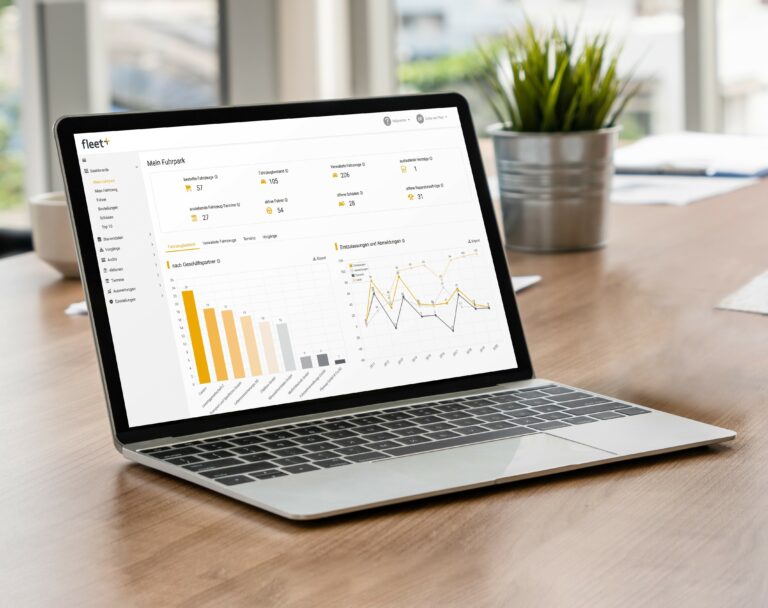
If you want to maintain your independence in managing your fleet while still benefiting from outsourcing fleet management, the Carano Fleet+ fleet management software offers the right support. Automated bulk invoice imports with validity checks, comprehensive reporting, and campaign management take the strain off your daily work and free up time for strategic fleet management.