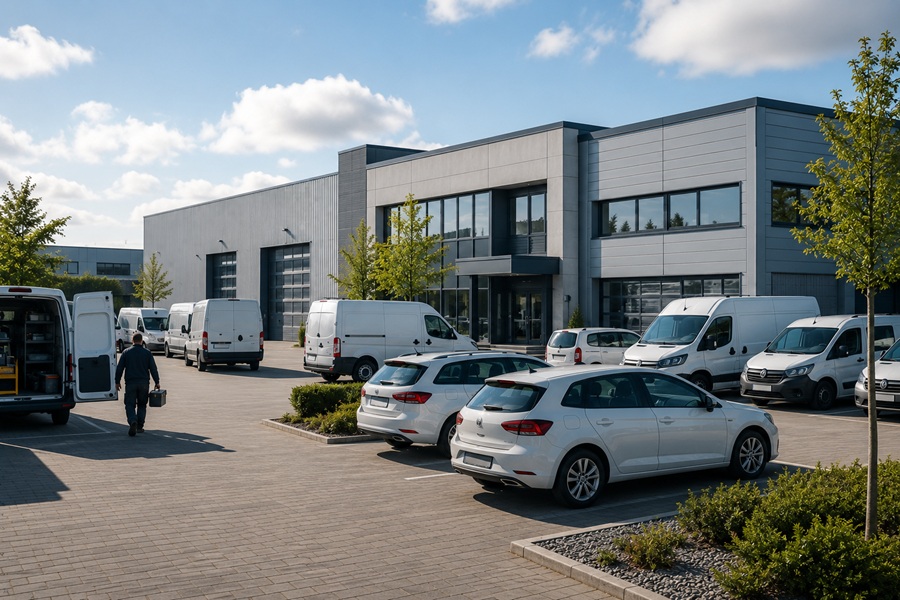
The mobility landscape is undergoing a transformation driven by climate protection requirements, individual needs, and technological innovations. Fleet managers face the challenge of adapting their fleet strategy to changing circumstances and developments. They must not only manage the fleet economically, but also plan it to be safe, tailored to needs, and mindful of CO2 emissions and costs.
In 2027, several key policy decisions will come into play: tax breaks for electric company cars will expire, the EU will negotiate quotas for corporate fleets, and the CO2 price for fuels is set to transition to the European Emissions Trading System.
Fleet management software itself is also evolving: dashboards are replacing Excel spreadsheets, cloud-based solutions are becoming the norm, and drivers are being directly integrated via apps. In this article, we’ll show you what the future of mobility looks like and highlight seven trends that can guide you on your journey toward a future-ready fleet. You’ll also learn when fleet management software is a worthwhile investment and what questions you should consider before making a selection.
In a nutshell: The future of fleet mobility is electric, connected, and flexible. Seven developments are particularly relevant for 2027: electrification under revised tax rules, new EU regulations for corporate fleets and the CO2 price, digital fleet management using telematics, AI, and cloud software; integrated offerings such as corporate carsharing; flexible usage models; a sober assessment of alternative powertrains; and the first steps toward autonomous driving. Whether fleet management software is worthwhile depends less on the number of vehicles than on the complexity of the fleet. As of October 2026.
Contents
- 1. What is the future of mobility?
- 2. Trend 1: Fleet Electrification Under New Circumstances
- 3. Trend 2: EU Fleet Quota and CO2 Price
- 4. Trend 3: Digital Fleet Management: Telematics, AI, the Cloud, and Apps
- 5. Trend 4: Integrated Services and Corporate Car Sharing
- 6. Trend 5: Flexible Usage Models: Leasing, Long-Term Rentals, and Car Subscriptions
- 7. Trend 6: Realistically Assessing Alternative Powertrains
- 8. Trend 7: Autonomous Driving
- 9. When is fleet management software worth it?
- 10. Checklist: Questions to Ask Before Choosing Fleet Management Software
- 11. What These Trends Mean for Leasing Companies
- 12. Conclusion: How to Prepare Your Fleet for 2027
What is the future of mobility?
The mobility of the future is characterized by a combination of electrified, connected, and flexible solutions that enable companies to respond to stricter CO2 regulations, rising costs, and the changing needs of their employees. For companies, this means that the fleet is evolving from a mere collection of vehicles into a data-driven offering that takes costs, emissions, and employee needs into account in equal measure. The following seven trends have a direct impact on fleet management.
Trend 1: Fleet Electrification Under New Circumstances
Legally, the phase-out of internal combustion engines adopted in 2023 remains in effect: Starting in 2035, CO2 emissions from newly registered passenger cars and light commercial vehicles must be reduced by 100 percent compared to 2021, based on manufacturers’ fleet averages. In December 2025, the European Commission proposed lowering this target to 90 percent. The European Parliament and the Council have not yet reached a decision on this matter; Germany and France are pushing for further relaxations (as of October 2026). For fleet managers, this means that internal combustion engine vehicles will not disappear overnight, but the economic conditions are increasingly favoring electric vehicles.
Tax law will provide the strongest incentive in 2027. For newly purchased electric and fuel-cell vehicles acquired by December 31, 2027, companies can depreciate 75 percent of the purchase cost in the first year. This makes 2027 the last year in which this accelerated depreciation applies. In addition, there is the 0.25 percent rule: Purely electric company cars with a gross list price of up to 100,000 euros are taxed at 0.25 percent of the list price for personal use, while internal combustion engine vehicles are generally taxed at 1 percent. At the same time, the previous monthly flat-rate charging allowances for charging company cars at home will be eliminated at the end of 2025. Charging costs must therefore be tracked and billed more accurately.
Electric mobility is therefore the key lever for reducing the fleet’s direct CO2 emissions: Battery-electric vehicles emit no CO2 while driving. At the same time, electric cars are becoming increasingly powerful and cost-effective. With falling battery prices and the tax incentives mentioned above, they are already competitive in terms of total cost of ownership (TCO) for many use cases.
A lot has already changed in terms of range as well. Numerous models now achieve ranges of over 500 kilometers, and some even exceed that significantly according to WLTP. For most company car profiles, range is therefore no longer a deal-breaker.
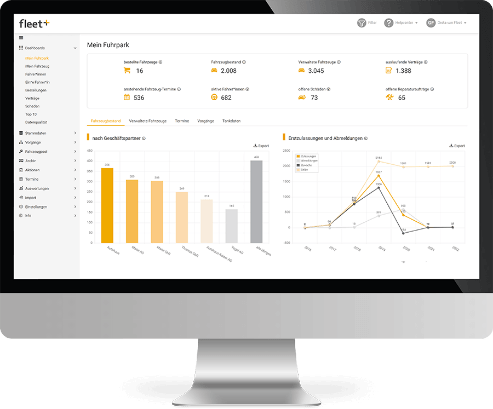
A robust database is crucial for the transition. With Carano Fleet+, the CarWise Group’s fleet management software, you can centrally manage electric vehicles and mixed fleets, automatically import fuel and charging data, and transparently break down costs by vehicle.
Trend 2: EU Fleet Quota and CO2 Price
In addition to phasing out internal combustion engines, the EU is targeting corporate fleets directly. In December 2025, the European Commission proposed a regulation on clean corporate vehicles. It would apply to large companies with at least 250 employees and 50 million euros in revenue, setting increasing minimum quotas for zero-emission and low-emission vehicles among their new registrations. Media reports cite figures of 54 percent by 2030 and 95 percent by 2035 for Germany. According to the draft, plug-in hybrids would be considered low-emission vehicles.
The regulation has not yet been adopted: It is currently going through the regular legislative process, and the federal government opposes mandatory quotas for company car fleets. Business associations are also calling for exemptions for leasing and rental car providers. Nevertheless, it is worthwhile for large companies to begin measuring and planning the proportion of zero-emission vehicles in their fleets now.
The CO2 price also remains a cost factor. For 2027, the Federal Cabinet has decided to maintain the national price range of 55 to 65 euros per metric ton of CO2. Starting in 2028, the European Emissions Trading System for Buildings and Transportation (ETS2) is set to replace the national emissions trading system. The price of gasoline and diesel will then be determined primarily by the market and will become more difficult to predict. Those who know the emissions and fuel costs of each vehicle can factor this development into their fleet strategy.
Trend 3: Digital Fleet Management: Telematics, AI, the Cloud, and Apps
All trends share one common prerequisite: reliable data. Telematics automatically provides mileage, locations, and vehicle status information instead of relying on driver reports. Digital interfaces with fuel card and charging providers, repair shops, and leasing companies replace manual lists. This gives fleet managers a complete picture of each vehicle throughout its entire service life.
Based on this, artificial intelligence is becoming increasingly important in fleet management—for example, for predicting maintenance needs, identifying unusual refueling patterns, or analyzing vehicle utilization scenarios. Our article “AI in Fleet Management” shows how AI can be applied in practice within a fleet.
Carano Fleet+ already analyzes key metrics such as cost per kilometer, fuel consumption, CO2 emissions, vehicle utilization, as well as mileage and contract deviations, and checks data for plausibility. This allows anomalies, such as refueling with the wrong fuel, to be identified early on.
Dashboards Instead of Excel Spreadsheets
Excel spreadsheets are a thing of the past in reporting and controlling. Interactive dashboards display key metrics—such as claims, consumption, or CO2 emissions—with just a few clicks, and standard reports are generated without manual processing.
Cloud and SaaS Instead of On-Premises Installation
Cloud solutions continue to gain traction in fleet management. Unlike on-premises software, which is installed locally on a company’s own servers, the cloud enables easy access while on the go, from a home office, or from various locations. The provider handles hosting and updates. Carano Fleet+ is available as a SaaS solution with GDPR-compliant hosting certified to ISO 27001 or as an on-premises installation. LeaseWise and RentWise, the CarWise solutions for leasing and rental, are also being migrated to a fully web-based SaaS platform.
Digitally Integrate Drivers and Locations
Distributed work across multiple locations and from home has become the norm in many companies. Good fleet management software gives everyone involved access to a shared database and a digital archive. Drivers are also more closely integrated: They receive automatic reminders for legally required inspections and can complete tasks such as checking their driver’s licenses via a smartphone app. This saves fleet managers organizational effort and reduces oversights. In Carano Fleet+, automated emails with customizable templates and a wizard that guides users step-by-step through the processes support these efforts.
Trend 4: Integrated Services and Corporate Car Sharing
The vehicle fleet is increasingly shaped by connected solutions. Corporate car-sharing, company bicycles, e-scooters, and public transportation are converging into a unified offering that companies are increasingly managing through a mobility budget. Companies face the challenge of offering a comprehensive solution to meet their employees’ needs flexibly and efficiently.
The implementation of such integrated solutions requires well-thought-out and strategic planning and execution. Companies must take various factors into account, such as employee needs, the availability of options, and the appropriate infrastructure.
In addition, technical interfaces and efficient data integration may be necessary to seamlessly link the various components. Fleet managers should therefore keep an eye on these developments and plan how to integrate a holistic approach into their fleet strategy. A good place to start is corporate carsharing: pooled vehicles are utilized more efficiently, and costs can be reduced.
Trend 5: Flexible Usage Models: Leasing, Long-Term Rentals, and Car Subscriptions
Vehicle use is becoming more personalized. The focus is on flexible use rather than vehicle ownership, often summarized under the term “Vehicle-as-a-Service” (VaaS). Leasing remains the standard model in many corporate fleets. Long-term rentals and car subscriptions complement this model in cases where vehicles are needed for only a few weeks or months.
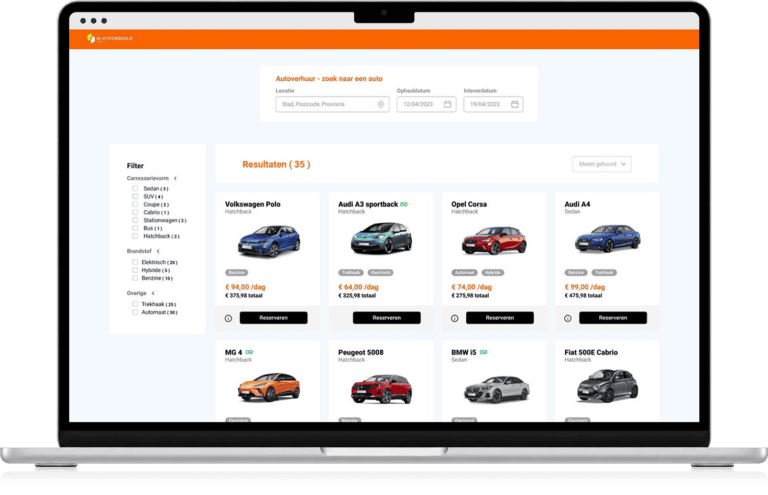
A car subscription offers a flexible and cost-effective way to meet a company’s short-term vehicle needs. It’s particularly useful for addressing seasonal and economic fluctuations or for bridging longer delivery times for ordered vehicles. Those who first want to test whether electric vehicles are a viable option for their company’s fleet can also take advantage of a car subscription. Company bicycle leasing has also become an established practice in many companies.
For providers, this blurs the lines between leasing and rental. With LeaseWise, the CarWise Group’s leasing management software, and the rental software RentWise, both business areas can be managed from the same database—with a shared CRM, financial accounting, and combined invoices for customers who both lease and rent. Bicycle leasing and private leasing can also be calculated in LeaseWise.
Trend 6: Realistically Assessing Alternative Powertrains
In addition to battery-electric powertrains, work is underway on other alternative powertrains. When planning the 2027 fleet, it’s worth taking a realistic look at which options are actually available and economically viable.
Hybrids & Plug-in Hybrids
In hybrid vehicles, an internal combustion engine is combined with an electric motor to reduce fuel consumption and, consequently, CO2 emissions during driving. When braking, the electric motor converts the vehicle’s kinetic energy into electrical energy, thereby charging the battery. At the same time, it acts as a starter for the internal combustion engine. If more power is needed, the internal combustion engine kicks in.
Hybrid vehicles are generally viewed as a transitional technology on the path to a fully electrified fleet. A plug-in hybrid can also be charged via a power outlet. Their value in a fleet depends heavily on how often they are actually charged. Under the EU’s proposed fleet quota regulations, plug-in hybrids would be classified as low-emission vehicles.
Hydrogen
Hydrogen-powered vehicles use fuel cells to generate electrical energy from hydrogen. They have a long range and quick refueling times of no more than 5 minutes, which makes them particularly appealing for long-distance trips. For passenger cars, however, hydrogen has lost its appeal: there are hardly any models available, and according to H2 Mobility, only 50 public hydrogen refueling stations were still in operation in Germany as of early 2026, down from over 80 two years earlier.
New stations are being built primarily for trucks and buses. A forecast by the Fraunhofer Institute for Systems and Innovation Research predicts that high hydrogen prices will eventually make its use as a fuel uneconomical.
Compressed Natural Gas and Liquefied Natural Gas
Vehicles powered by compressed natural gas (CNG) have hardly gained any traction in the passenger car sector. In contrast, LNG trucks are emerging as an attractive alternative to diesel trucks. LNG (Liquefied Natural Gas) is natural gas in liquid form.
E-Fuels
E-fuels are synthetic fuels produced using renewable energy. Existing vehicles can be fueled with them even without any modifications. However, the production of e-fuels is currently still very expensive, and their efficiency is also far below that of electric vehicles. The role they will play in passenger cars after 2035 also depends on the outcome of the EU debate on fleet emission limits. For most vehicle fleets, e-fuels are not a cost-effective alternative to electric propulsion for the time being.
Trend 7: Autonomous Driving
The development of autonomous vehicles continues to advance and will have a significant impact on road traffic in the future. The legal framework has already been established in Germany: In May 2021, the Bundesrat and the Bundestag approved a law allowing Level 4 vehicles—that is, highly automated vehicles operating within defined areas under technical supervision—to participate in road traffic.
Autonomous driving refers to the ability of vehicles to navigate and move through traffic without human intervention. Sensors, cameras, and artificial intelligence detect the surroundings and make appropriate decisions. A distinction is made between different levels of automation—ranging from semi-autonomous driving with driver-assistance systems to fully autonomous driving, without a driver at all.
Internationally, driverless operations are already a reality: According to the company, Baidu’s robotaxi service, Apollo Go, completed 3.2 million driverless trips in the first quarter of 2026, and in the U.S., driverless robotaxis are operating commercially in several cities. In Germany, however, no robotaxis are yet in regular service. MOIA is conducting tests in Hamburg with passengers and safety drivers, while Waymo is aiming for a commercial launch in Munich by the end of 2027 (as of October 2026). Driver-assistance systems and semi-automated driving, on the other hand, have long been standard features in many vehicles.
Autonomous driving is set to gain ground more quickly in Germany for commercial vehicles. As part of the ATLAS-L4 research project, truck manufacturer MAN and its partners have been testing a Level 4 truck for trips between logistics hubs on the highway, always with a safety driver on board so far. The goal is to offer autonomous trucks as production models starting in 2030. This is intended to address the driver shortage, which is a major challenge for many trucking companies. At the same time, autonomous trucks are expected to reduce the risk of accidents and traffic jams. For most fleets, autonomous driving is not yet a planning consideration in 2027. In the medium term, however, it will transform vehicle designs, insurance, and the role of drivers.
When is fleet management software worth it?
Fleet management software is worthwhile in most cases. The decisive factor is not so much the size of the fleet as its complexity: multiple locations, different types of propulsion, numerous external service providers, or stringent compliance requirements all point to the need for a robust solution. It’s helpful to take a look at your work processes: What is handled internally, what is handled by service providers, and how will the data be used in the future?
Carano Fleet+ is designed specifically for larger, more complex fleets of 100 or more vehicles, for both self-managed fleets and fleet service providers. Excel spreadsheets reach their limits, at the very latest, when data on CO2 emissions, charging costs, and drive types is needed on a regular basis.
Checklist: Questions to Ask Before Choosing Fleet Management Software
- Is the software primarily intended to track and analyze costs, or should the data serve as the basis for strategic decisions such as electrification?
- Are there multiple locations, and who should have direct access?
- To what extent should drivers be involved—for example, through an app for driver’s license verification and training?
- Which departments and external service providers should be involved—for example, leasing companies, repair shops, or fuel card providers?
- What interfaces are required, such as those with HR, ERP, or financial accounting systems?
- What data protection requirements apply within the company, and should the software run in the cloud or on our own servers?
- Is CO2 data required for sustainability reports or a potential EU fleet quota?
Those who clarify these questions in advance can make their selection more quickly and move on to implementation sooner. The real challenge then lies in simplifying complex processes step by step to reduce costs.
What These Trends Mean for Leasing Companies
Leasing companies are at the intersection of nearly all trends and their customers’ vehicle fleets. Fleet customers expect reliable comparisons between powertrains, flexible contract models, and transparent usage data. In LeaseWise, vehicles can be compared in terms of costs, TCO, and CO2, and quote options for different contract terms and mileage can be generated automatically. Mileage is tracked via OEM, CAN bus, or GPS data, so deviations from the contract become apparent early on. Through the FleetDisk portal, fleet managers on the customer side receive their own up-to-date reports.
Added to this is regulatory uncertainty: It remains to be seen whether leasing and rental car providers will be exempt from an EU fleet quota. Those who have their calculations and contract data under control digitally can respond more quickly to both scenarios.
Conclusion: How to Prepare Your Fleet for 2027
- Electrification remains the most important trend. 2027 is the last year of accelerated depreciation for electric vehicles, so investment decisions should be planned accordingly.
- The EU fleet quota and CO2 price are still subject to change. Companies that are already measuring emissions and costs per vehicle can adapt to any scenario.
- Digital data from telematics, fuel and charging cards, and leasing contracts form the basis for all subsequent steps, from corporate carsharing to the use of AI.
- When choosing fleet management software, complexity matters more than size. Cloud capabilities, interfaces, and CO2 reports should be standard features by 2027.
FAQ – The Future of Mobility
The key trends for 2027 include the electrification of the fleet under revised tax rules, potential EU quotas for corporate fleets, the CO2 price on fuels, digital fleet management using telematics and AI, integrated offerings such as corporate carsharing, flexible usage models such as long-term rentals and car subscriptions, and a realistic assessment of alternative powertrains. Autonomous driving remains a long-term issue for most fleets.
Companies can depreciate 75 percent of the purchase cost in the first year for electric and fuel-cell vehicles purchased by December 31, 2027. For the personal use of all-electric company cars with a gross list price of up to 100,000 euros, the 0.25 percent rule applies. The specific requirements should be clarified with a tax advisor.
In December 2025, the European Commission proposed requiring large companies with 250 or more employees and 50 million euros in revenue to meet minimum quotas for zero-emission and low-emission vehicles among their new registrations. Small and medium-sized enterprises would be exempt. The regulation has not yet been adopted (as of October 2026).
Key trends include cloud and SaaS models, interactive dashboards instead of Excel spreadsheets, driver integration via apps, interfaces with telematics, fuel card, and leasing providers, AI-powered analytics, and CO2 reporting.
Fleet management software is worth the investment as soon as managing the fleet with spreadsheets becomes too cumbersome. The key factor is not so much the number of vehicles as the complexity involved: multiple locations, a mix of powertrains, numerous service providers, and increasing requirements for CO2 reporting and compliance.
Fleet electrification refers to the transition from conventional vehicles to electric models in order to eliminate direct CO2 emissions during operation and reduce operating costs.
Because CO2 emissions are increasingly leading to costs and reporting requirements: The CO2 price is driving up the cost of gasoline and diesel; large companies may have to meet minimum quotas for zero-emission new vehicle registrations in the future; and reliable data is needed for sustainability reports. Knowing the fuel consumption and emissions for each vehicle allows for targeted corrective action.
Autonomous vehicles can be used in a wide range of applications. These include urban transportation systems, delivery services, and industrial applications, where they improve efficiency and safety through automated processes. In Germany, they have so far been used primarily in test and pilot operations, such as shuttles in Hamburg or trucks in hub-to-hub transport.
Battery-electric vehicles emit neither CO2 nor nitrogen oxides while driving. In many operating scenarios, their operating costs are also lower, due in part to lower energy and maintenance costs. Starting in 2027, fleet owners will also benefit from tax incentives such as accelerated depreciation and the 0.25 percent rule.
More helpful articles on the topic of mobility
- Mobility Budget Instead of Company Car: Flexible Mobility for Employees
- Sustainable mobility starts with the vehicle fleet: electrification & environmental measures
- E-mobility in the Company: 5 Important Points of the Fleet Analysis
- Electric Mobility in Fleet Management: Challenges and Responsibilities for Fleet Managers
- Vehicle management: efficient processes for a modern vehicle fleet