71% of large fleets already use fleet management software such as Carano Fleet+ from CarWise.
Fleet manager, fleet manager or fleet manager – as different as the job titles are, they all describe a central role in the company’s own fleet. The tasks range from the procurement of new vehicles and maintenance planning to the control of costs and legal requirements. Fleet managers therefore make a decisive contribution to ensuring that mobility within the company functions reliably and efficiently.
As a fleet grows, so do the organizational demands. According to a study by Dataforce, 71 percent of large passenger car fleets already use specialized software to manage their fleets. Digital solutions such as CarWise’s fleet management software help fleet managers streamline processes and keep track of vehicles, schedules, and costs.
In this article, you can find out which tasks a fleet manager takes on in detail and which qualifications are required for this position.
Contents
- 1. What is a fleet manager?
- 2. Why fleet managers are increasingly relying on digital systems
- 3. The tasks of a fleet manager
- 4. The path to the position of fleet manager: requirements and qualifications
- 5. Training and further education for fleet managers
- 6. The position of fleet manager in the future
- 7. Modern requirements for fleet managers in the company
- 8. Digital support for fleet managers
What is a fleet manager?
As a manager, the fleet manager is responsible for the efficient organization and management of all vehicles in a company’s fleet. From cars, trucks and commercial vehicles to special vehicles – any type of vehicle can be part of a fleet. Even bicycles can be integrated. The fleet manager therefore coordinates the mobility of a company and ensures smooth processes in the fleet.
Its role is of central importance, as a well-functioning fleet contributes significantly to the success of a company. By organizing an efficient fleet, costs can be reduced, processes optimized and challenges in day-to-day business better managed. In many industries, the vehicle fleet is an essential basis for operations – whether in logistics, construction or the service sector. The fleet manager ensures that the company’s mobility is not only reliable, but also future-oriented .
Why fleet managers are increasingly relying on digital systems
As the size of the fleet increases, so do the organizational requirements in the fleet. Vehicle data, maintenance intervals, driver qualifications and legal documentation must be available at all times. For fleet managers, this means managing more and more information in parallel while maintaining an overview of costs, deadlines and processes.
Current market data shows that companies are increasingly turning to digital solutions. According to a study by Dataforce, 71% of large car fleets now use dedicated software to manage their fleet. Such systems are therefore becoming increasingly important for fleet managers to organize complex processes efficiently.
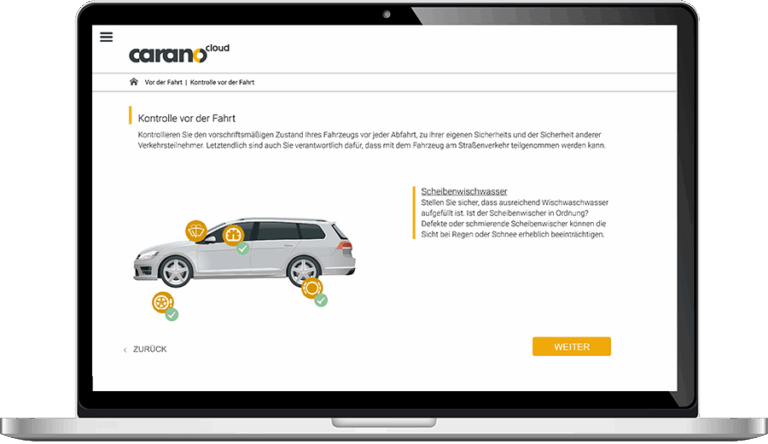
Digital platforms such as Carano Fleet+ help fleet managers to manage vehicle data, documents and appointments centrally. This allows many fleet management tasks to be controlled in a more structured way and significantly reduces the administrative workload in day-to-day operations.
The tasks of a fleet manager
The tasks of a fleet manager are varied, as they include both minor day-to-day activities and lengthy and planning-intensive activities. The most important tasks of a fleet manager include
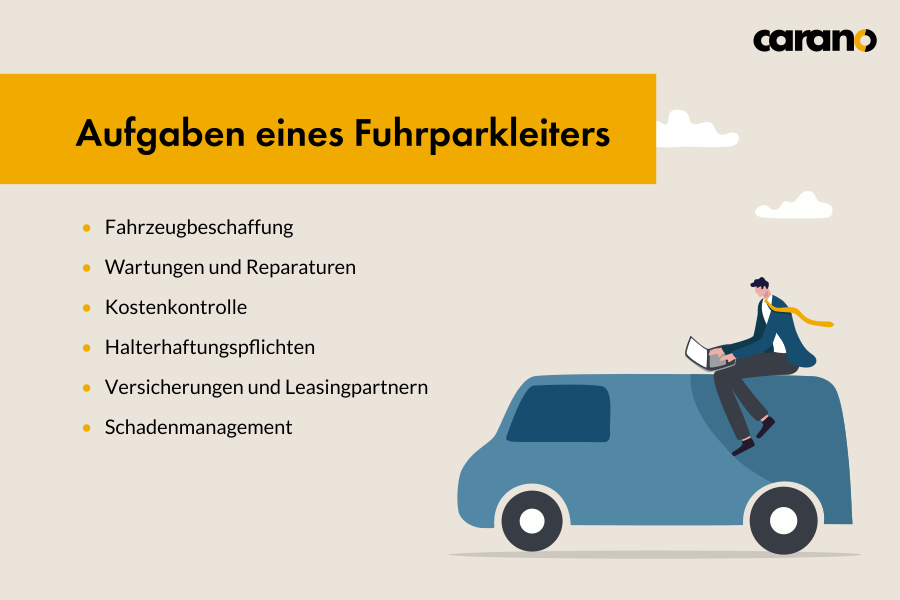
- Vehicle Procurement: The fleet manager is responsible for selecting and procuring suitable vehicles. In doing so, he or she takes into account costs, efficiency, and operational requirements, as well as climate and environmental goals where applicable—such as targets for CO₂ emissions, energy consumption, or alternative powertrains.
- Maintenance and Repairs: The fleet manager coordinates maintenance, repairs, and inspections and monitors the technical condition of the vehicles. Proactive planning helps ensure the operational safety and readiness of the fleet and prevents unplanned repairs and costs. At the same time, legal requirements and mandatory inspection deadlines must be met.
- Cost Control and Optimization: Monitoring the Total Cost of Ownership (TCO) is also one of the fleet manager’s key responsibilities. This includes, among other things, operating and fuel costs, insurance, maintenance, and comparing actual mileage with agreed-upon lease mileage limits. This allows cost drivers and potential savings to be identified early on. Especially with large fleets, analyzing numerous cost and vehicle data points can quickly become complex. Digital solutions like Carano Fleet+ provide transparency and support informed decision-making in fleet management.
- Compliance with keeper liability obligations: Documentation of maintenance work and repairs is also an important part of being able to prove that keeper liability has been fulfilled at all times. This not only minimizes legal risks, but also increases the long-term efficiency of the fleet. The fleet manager must regularly ensure that all drivers are in possession of a valid driving license. In addition, drivers must be regularly trained in the safe handling of vehicles and the correct behavior in the event of an accident. This includes the legally required UVV driver training.
- Selection of insurance and leasing partners: There is a large selection of insurance offers. The fleet manager must compare the various providers and select the conditions that best meet the fleet’s requirements. In doing so, they should ensure that all vehicles have adequate insurance cover. If leased vehicles are part of the fleet, they must also select the best leasing conditions for them.
- Claims Management: Handling claims is also part of a fleet manager’s responsibilities. This typically requires swift action to minimize disruptions to operations and prevent costs from rising unnecessarily. To prevent accidents and damage, loss prevention is therefore also one of the key responsibilities of a fleet manager.
The path to the position of fleet manager: requirements and qualifications
The requirements for the position of fleet manager are varied and require a range of skills, expertise and practical experience. These are the most important requirements and qualifications on the way to becoming a fleet manager:
- Professional Qualifications
There is no standardized training program for the position of fleet manager. Typically, the position requires training in automotive engineering, logistics, or business administration. A college degree, ideally with a focus on fleet management or a related field, is also a strong asset. For smaller fleets, commercial or technical training is often sufficient. The responsibilities of a fleet manager are varied and require a range of skills, specialized knowledge, and practical experience. The role demands not only technical knowledge but also strong organizational skills and the ability to work efficiently. - Practical Experience in Fleet Management
Fleet managers typically already have practical experience with vehicles. Aspiring fleet managers often begin their careers in roles such as fleet coordinator, dispatcher, or vehicle administrator. These positions provide valuable insights into the day-to-day operations of a fleet. - Technical Understanding
To keep pace with the constant changes and technological advancements in the industry, fleet managers need a basic technical understanding. This enables them to utilize technologies such as telematics systems or fleet management software to efficiently manage their fleets. - Communication and Leadership Skills
The role of fleet management also involves collaborating with various departments. These include, for example, Human Resources, Accounting, and drivers, as well as external suppliers and service providers. To manage the fleet professionally and ensure smooth operations, clear communication with all stakeholders is essential.
Training and further education for fleet managers
The role of the fleet manager requires extensive knowledge of theoretical and practical processes in the fleet. Specific further and advanced training can therefore be of great benefit in order to be able to meet the daily challenges.
For example, DEKRA Akademie offers continuing education courses to become a certified fleet manager. These practice-oriented training courses provide knowledge about key tasks and processes in fleet management. This also includes current requirements such as electric mobility as well as climate and environmental considerations in fleet management. As a result, participants gain a comprehensive insight into the tasks and areas of responsibility of a fleet manager.
Legal topics such as owner liability and compliance with regulations, which are of central importance for the safe and efficient management of a vehicle fleet, are also covered. In addition, the course teaches how fleet management processes can be optimized through the use of modern technologies.

Further training not only imparts basic knowledge about efficient fleet management, but also enables participants to understand and apply the latest developments and technologies in fleet management.
Particular emphasis is placed on topics such as the digitization of processes, the integration of telematics solutions, and regular vehicle maintenance. This ensures that the fleet manager maintains a clear overview even in an increasingly connected world and strengthens the company’s mobility in the long term.
Regular further training thus contributes to being able to react appropriately to future challenges and to increasing the productivity of the entire fleet.
Regular further training thus contributes to being able to react appropriately to future challenges.
The position of fleet manager in the future
Advancing digitalization and technologization are also changing the work of fleet managers. They are faced with the challenge of integrating digital tools into conventional administrative processes in order to cope with increasing data volumes and increasingly complex tasks. The scope of tasks is expanding considerably, as the integration of modern technologies and the processing of extensive data are now an essential part of fleet management.
The Topic Sustainability is also gaining importance in fleet management. Companies are increasingly taking CO₂ emissions, energy consumption, and resource use into account when planning their corporate mobility strategies. Concepts such as electric vehicles, carsharing, mobility budgets, or bicycles can complement the traditional company car model.
For fleet managers, this means adapting the mobility mix to meet operational requirements, climate and environmental goals, and employee needs. As a result, fleet managers are gradually becoming mobility managers who oversee all aspects of corporate mobility. In doing so, they must meet not only the company’s goals but also the needs of employees. This requires a clear definition of responsibilities and a strategic approach to reconciling both economic and environmental goals.
Modern requirements for fleet managers in the company
Today, the responsibilities of fleet managers extend far beyond mere vehicle management. They control costs, ensure compliance with legal requirements, and are increasingly taking climate and environmental goals into account when planning corporate mobility.
This role quickly becomes complex, especially in larger companies with many vehicles and drivers. Fleet managers have to coordinate maintenance, document claims, monitor leasing contracts and at the same time keep an eye on the profitability of the entire fleet.
Digital solutions help to structure this multitude of tasks efficiently. Systems such as Carano Fleet+ help fleet managers to record important fleet data centrally, automate processes and maintain an up-to-date overview of vehicles, drivers and costs at all times.
Digital support for fleet managers
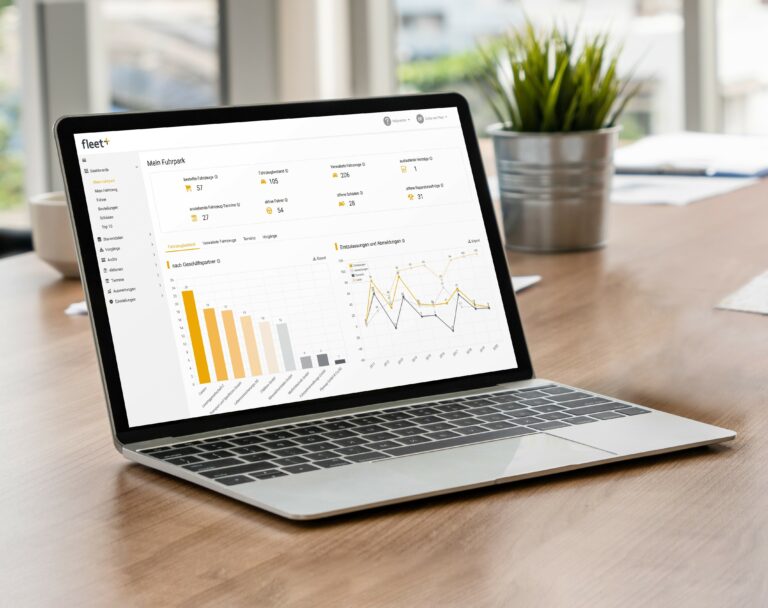
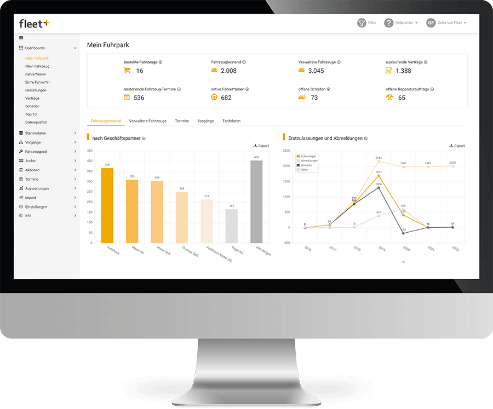
Fleet managers can be supported in their diverse activities by fleet software. This relieves fleet managers in their day-to-day work and helps to optimize processes. The software offers transparent support, especially when it comes to data collection. All relevant information such as mileage, driver qualifications, appointments or fuel consumption can be recorded and processed centrally. The processing of claims can also be digitized and thus accelerated using fleet software. Evaluations and reports at the touch of a button provide an insight into the key figures and cost drivers in the fleet.
The use of such software solutions is becoming increasingly important for fleet managers in order to meet the requirements of modern fleet management. fleet management to meet the requirements of modern fleet management. By automating numerous tasks, efficiency can be increased while at the same time ensuring greater transparency and control over the entire fleet.
Electronic driver’s license checks and driver training can also be carried out using digital tools. This saves valuable time that can instead be spent on the strategic management of the fleet.
Conclusion
- The role of the fleet manager is crucial to the efficiency, safety and cost-effectiveness of a modern fleet.
- With digital tools and data-driven strategies, fleet managers can efficiently manage processes and strategically develop their fleets.
- With extensive specialist knowledge and strong organizational skills, the fleet manager forms the backbone of smooth vehicle management.
FAQ – Fleet manager
A fleet manager is a central position in the company that is responsible for the organization, management and optimization of all vehicles in the fleet. They ensure that the company’s mobility functions smoothly and that legal requirements are met.
Further training in fleet management can be very useful, as fleet managers have to consider legal, technical and economic aspects in addition to organizational tasks. Seminars or certifications provide up-to-date specialist knowledge on topics such as owner liability, cost control or digitalization in the fleet.
The average salary of a fleet manager in Germany is usually between 45,000 and 70,000 euros gross per year. The exact amount depends on factors such as company size, responsibility in the fleet, industry and professional experience.
The biggest challenges include complying with legal regulations, controlling fleet costs, organizing maintenance and repairs and coordinating drivers. As the fleet grows, the effort required for data management, documentation and deadline monitoring also increases.
Fleet management software supports fleet managers in managing vehicles, drivers and appointments. Systems such as Carano Fleet+ help to centrally manage vehicle data, plan maintenance, evaluate costs and efficiently document legal obligations in the fleet.
The fleet manager plans and monitors maintenance and repair work, coordinates drivers, controls costs and ensures compliance with regulations such as driving license checks or driving time regulations. They also analyze data to increase efficiency and develop strategies for sustainable fleet management.
Fleet managers can optimize processes by recording vehicle data centrally, planning maintenance systematically and analysing costs regularly. Digital solutions such as Fleet+ help to automate processes, create transparency and reduce the administrative workload in the fleet.
A fleet manager is required from a fleet size at which the administration becomes time-consuming and complex. This is often the case from around 10 to 15 vehicles or when there are special requirements such as high administrative costs, legal requirements or strategic fleet optimization.