- Vehicle management covers all operational tasks of a vehicle fleet, e.g. data and contract management, scheduling and maintenance monitoring as well as driver and deployment coordination.
- The digital approach replaces manual Excel spreadsheets: Centralized software solutions provide transparency about costs, usage, driver permits and enable automated reminders.
- Modern fleet management not only supports efficiency and compliance, but also provides transparency regarding vehicle usage, fuel consumption, and CO₂ emissions—for example, through telematics integration, usage analytics, and the collection of relevant emissions data.
Structured vehicle management is the basis for a functioning vehicle fleet – and therefore indispensable for many companies. Because as soon as several vehicles are in use, not only do the requirements for organization and planning increase, but also the effort required for documentation, maintenance and monitoring. Those who forgo digital solutions here risk confusing processes, unnecessary costs and legal uncertainties. But what exactly does vehicle management involve? And what tasks does it involve on a day-to-day basis?
In this article, you will learn how modern vehicle management works, what is important when it comes to implementation – and what added value digital systems offer in practice.
Contents
- 1. What is vehicle management?
- 2. Digitalization as the key to modern vehicle management
- 3. Vehicle management as a strategic component of modern mobility
- 4. Why is digital vehicle management so important?
- 5. How does fleet management software help?
- 6. Central functions for efficient vehicle management
- 7. Take Fuel Consumption and CO₂ Emissions into Account in Vehicle Management
- 8. Advantages for fleet managers and companies
- 9. For whom is digital fleet management worthwhile?
- 10. What challenges does professional vehicle management solve?
What is vehicle management?
Vehicle management is a central component of fleet management. It comprises all measures for planning, controlling and monitoring vehicle-related processes.
These include, among others:
- Management of vehicle details in a central database
- Coordination of vehicles and drivers
- Logbook management, claims management, inspection
- Cost and contract overview
- Appointment management for HU, TÜV and maintenance
- Checking driving licenses
- Management of vehicle pools and usage permits
The focus is on efficient and legally compliant management of the entire vehicle fleet.
Digitalization as the key to modern vehicle management
In an increasingly networked working world, it is essential to digitize administrative processes relating to vehicles. Traditional methods such as Excel spreadsheets or handwritten notes are no longer sufficient to manage a growing fleet in a targeted manner. This is precisely where modern vehicle management comes in: it uses modern solutions to create a central, automated platform that combines transparency and control.
The use of telematics systems makes fleet management particularly effective. These systems provide real-time data on the location, usage, and condition of vehicles, which serves as a solid basis for decision-making regarding operational and strategic measures.
Companies that consistently digitize their fleet processes lay an important foundation for future-proof, sustainable fleet management that also takes energy consumption, CO₂ emissions, and resource use into account.
Vehicle management as a strategic component of modern mobility
Vehicle management goes beyond the classic administration of data and schedules. It focuses on the entire vehicle fleet and ensures that vehicles are used efficiently, planned sensibly and operated economically. The aim is a mobility structure that remains transparent, reliable and flexible – regardless of fleet size or area of use.
Effective vehicle management combines operational processes with a sound basis for decision-making. This includes a clear overview of the use and condition of the vehicles, economic assessments and ongoing adaptation to operational requirements. Vehicle management thus becomes an integral part of the corporate strategy and contributes directly to efficiency and cost control in the fleet.
Why is digital vehicle management so important?
Manual administration is not only prone to errors, but is simply no longer up to date in modern working life. Digital vehicle management provides a structured overview, automated reminders, simple documentation and saves considerable resources.
A scalable and flexible software solution is crucial, especially for more complex fleets with changing drivers, electric vehicles or multiple locations. Because only those who invest in the right systems today will remain competitive in the future.
How does fleet management software help?
Fleet management software helps fleet managers to simplify processes and make relevant vehicle data centrally available. It creates transparency regarding costs, maintenance cycles, important dates in the fleet and fuel consumption. It also helps to implement legal obligations such as driving license checks or documenting journeys in a reliable and legally compliant manner.
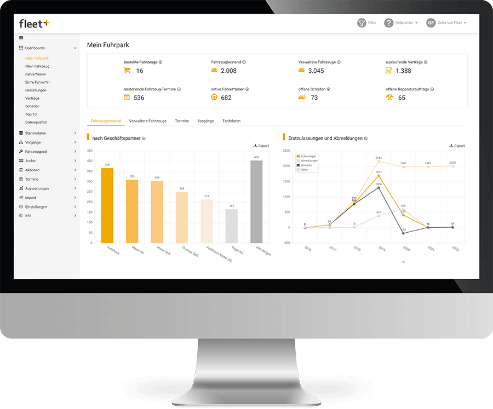
With the help of intelligent evaluations and dashboards, decisions can be made based on data. For example, if you recognize which vehicles regularly cause high repair costs, you can react at an early stage – for example by replacing or leasing alternatives.
Central functions for efficient vehicle management
The most important features of professional fleet software include
- Management of vehicle details, drivers and locations
- Automated reminders for inspection and service appointments
- Evaluations of the economic efficiency of vehicles
- Integration with telematics systems for monitoring vehicle usage
- Management of leasing and insurance contracts
- Support with the carbon footprinting of mobility
The software thus becomes the control center for efficient, digitalized fleet management.
Take Fuel Consumption and CO₂ Emissions into Account in Vehicle Management
In modern fleet management, energy consumption and CO₂ emissions are becoming increasingly important. Companies must balance legal requirements, economic goals, and their own climate and environmental objectives. Software-based fleet management provides a central data foundation for this. For example, it can support the integration of electric vehicles, analyze consumption data, and provide transparent information on vehicle usage and driving behavior.
Analyzing route profiles, utilization rates, and downtime helps identify opportunities for optimization within the fleet. Telematics data can also be used for more efficient route planning, helping to reduce unnecessary trips as well as fuel and energy consumption. Relevant key performance indicators can be centrally collected and analyzed, making trends easier to track and enabling more targeted planning of measures.
In this way, modern fleet management helps companies pursue economic, climate, and environmental goals based on concrete data.

Advantages for fleet managers and companies
Digitized vehicle management offers numerous advantages:
- Targeted processes and reduced administrative costs
- Improved compliance with legal requirements
- More effective utilization of the vehicle fleet
- Transparent decision-making basis for fleet managers
- Support for Electrification and CO₂ Reduction in the Fleet
- Reducing risks through reliable data
These advantages have a direct impact on a company’s competitiveness and future viability.
For whom is digital fleet management worthwhile?
Whether it’s a medium-sized trade business with ten vehicles or an internationally active logistics company with hundreds of units: Structured management becomes especially important when it becomes increasingly difficult to keep track of vehicles, costs, schedules, and processes.
As requirements for cost efficiency, compliance, electrification, or the collection of consumption and emissions data increase, digital fleet management can help you maintain an overview and manage processes efficiently.
What challenges does professional vehicle management solve?
Managing a vehicle fleet involves many operational challenges – from approving vehicle bookings to coordinating workshop appointments. Digital systems provide noticeable relief here.
They help with:
- compliance with regulations
- the regular monitoring of vehicle information
- Seamless integration into existing administrative processes
- the evaluation of vehicle use and driving behavior
This also provides a more solid strategic foundation for planning new vehicles or transitioning to alternative powertrains.
Conclusion: Modern vehicle management as the key to efficiency
- Digital solutions create clarity and structure. Modern vehicle management software simplifies the management of vehicles and processes – and ensures transparent workflows throughout the company.
- Focus on sustainability and future-proofing. Digitizing now lays the foundation for an environmentally friendly, economical and legally compliant fleet strategy – today and in the future.
- Telematics & automation increase efficiency. Real-time data and automated tasks help to optimally manage maintenance, vehicle use and availability.
FAQ – Frequently Asked Questions About Vehicle Management
Vehicle management is a central component of fleet management and covers all operational tasks relating to the management, maintenance and control of the company’s own vehicles. This includes recording vehicle data, monitoring maintenance and inspection dates, checking driving licenses and documenting damage, journeys and costs. The aim is to ensure that vehicles are used in a targeted, safe and compliant manner – and at the same time to create the basis for well-founded decisions in the fleet.
Professional vehicle management ensures clear processes, reduced costs and better vehicle utilization. Companies maintain an overview, avoid unnecessary downtime and can make decisions based on up-to-date data.
Efficiently organized vehicle management increases transparency in the fleet and significantly reduces the workload of those responsible on a day-to-day basis. By using modern systems, processes can be automated, important deadlines reliably monitored and costs clearly displayed. This reduces the administrative workload while at the same time improving compliance with legal requirements. In addition, up-to-date, centrally available data improves the quality of decisions – for example in vehicle procurement, maintenance planning or fleet conversion.
In many companies, fleet management is associated with a great deal of manual effort. A lack of standards, scattered information, paper-based processes or incomplete documentation often lead to unclear responsibilities, missed deadlines and unnecessary costs. Added to this are increasing requirements for compliance, data protection and sustainability. Without a suitable software solution, it is becoming increasingly difficult to maintain an overview, reliably manage all relevant processes and ensure long-term productivity in the fleet.
Excel can be a temporary solution for small fleets, but it quickly reaches its limits. Manual maintenance, a lack of automation, no reminder functions and low data security make the work error-prone and time-consuming. Important information is often not up-to-date or not centrally available. As soon as several users access data simultaneously or more complex evaluations are required, professional fleet software offers a much more robust, reliable and time-saving solution.