
The company car has been a status symbol for decades and is still an attractive benefit for many employees. After all, around a third of employees stated in a survey conducted by the online review platform kununu (2025) that the company car is one of the most attractive benefits.
In light of rising costs and more flexible mobility concepts, employers are increasingly asking themselves: Is a company car still worth it today—both economically and strategically? In addition to tax considerations , long-term costs, business mobility needs, and employee requirements should also be taken into account.
This article sheds light on whether a company car is worthwhile for both employees and employers and when alternative mobility solutions make more sense.
Contents
- 1. What is a company car?
- 2. Is a company car worthwhile for employers?
- 3. Creating Transparency with CarWise
- 4. Alternatives to the company car: a comparison of mobility models
- 5. Is a company car worth it for employees?
- 6. Save Money with CarWise
- 7. Company cars and gross list price: Why the price on paper counts
- 8. Owner liability in the vehicle fleet: Observe legal requirements for company cars
- 9. Electric vehicles in the fleet: when the switch pays off
What is a company car?
A company car is a vehicle provided by a company that is typically used for business purposes. This includes, for example, visiting customers or making delivery runs.
Company cars are not only common in sales and field service jobs, but are also frequently used as an incentive in management positions. Employees are also often allowed to use company cars for private use.
Is a company car worthwhile for employers?
For employers, a company car concept offers both economic and strategic advantages. However, whether the model is suitable for the respective company depends heavily on the utilization, administration and total costs of the vehicle fleet(total cost of ownership).
Advantages for employers
- Ensuring mobility: A company car is often indispensable, especially in the field or when there are many customer appointments. It keeps employees flexible and mobile.
- Employee motivation and loyalty: Company cars continue to be perceived as a strong incentive and can help to retain skilled workers or attract new employees.
- Image factor: A well-maintained and uniform fleet can contribute to a professional public image. The use of electric vehicles can also demonstrate that a company is committed to new propulsion technologies and reducing CO₂ emissions.
- Tax Benefits: Lease payments and operating costs are often tax-deductible, which reduces the company’s overall tax burden.
- Calculable cost structure: Thanks to leasing, monthly vehicle costs are easier to plan. This makes budgeting easier and enables efficient fleet management.
Disadvantages for employers
- High costs: Purchase, leasing, insurance, maintenance, and taxes can add up—especially when there are many vehicles in the fleet. Fleet managers should keep track of both the initial purchase costs and the ongoing expenses. For a transparent overview of all costs, fleet management software such as Carano Fleet+ from CarWise can be well worth the investment.
- Administrative effort: Managing a vehicle fleet requires time and resources – especially for larger companies. In order to significantly reduce the administrative workload, the use of powerful fleet management software can also pay off here.
- Lack of flexibility and idle time: If every employee is assigned a company car, this often results in high idle times. At the same time, employees have to wait for a replacement if a vehicle breaks down. This organization is inefficient for many fleets and leads to delays in operations.
Creating Transparency with CarWise
Whether the use of company cars is worthwhile for employers is determined less by the vehicle model than by the transparency of the overall costs. In addition to the purchase or leasing rate, ongoing operating costs, utilization, downtimes and administrative expenses play a key role. Only those who keep an eye on the total cost of ownership can make a well-founded assessment of whether the concept makes economic sense.
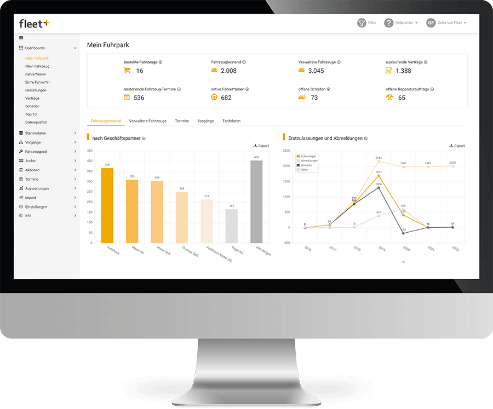
This is precisely where the added value of digital support becomes apparent: Fleet management software like CarWise’s Carano Fleet+ provides an overview of all vehicles, consolidates all relevant data in one place, and makes cost structures transparent. This makes it possible to identify potential savings , plan budgets more accurately, and manage the fleet strategically —a crucial foundation for answering the question “Is a company car worth it?” based on data.

Alternatives to the company car: a comparison of mobility models
The classic company car model is not the best solution for every company. Many companies now rely on more flexible alternatives in their vehicle fleet to ensure the mobility of their employees – either as a supplement or as a replacement.
- Corporate car sharing: instead of providing each employee with their own vehicle, several employees share the vehicles. This not only saves costs, but also parking spaces. This solution is also particularly attractive for companies with the same or short routes or multiple locations. With a large number of pool vehicles, fleet software for corporate car sharing can be very helpful in terms of organization and administration.
- Mobility budget: Employees receive a fixed mobility budget that can be used flexibly for public transportation, car-sharing services, e-bikes, or rental cars. According to the Arval Mobility Observatory Barometer 2025, 36% of companies have already implemented a mobility budget.
- Company Bikes: For short trips, company bikes can be a flexible alternative to cars. They expand the range of mobility options available to employees and produce no direct CO₂ emissions from the exhaust when used.
- Car Allowance: Some companies allow employees to use their private vehicle for business purposes. Reimbursement is then based on kilometers driven or flat rates. The mileage, place of work and purpose should be clearly documented.
Such models can effectively complement modern fleet management strategies. They offer greater flexibility in corporate mobility and, depending on usage, can help reduce costs and resource requirements. Digital solutions help companies efficiently organize various mobility options and tailor them to employees’ needs.

Is a company car worth it for employees?
For employees, a company car can seem very attractive at first glance – especially when used privately. However, whether the vehicle is financially worthwhile depends on individual driving behavior and the taxation of the non-cash benefit.
Advantages for employees
- No own acquisition costs: The car is provided by the employer – leasing rate, insurance and often also maintenance and repairs are included.
- Private use often possible: Many employers allow private use of the vehicle.
- Predictable costs: the monthly costs are transparent thanks to deferred compensation or flat-rate taxation. There are no unexpected costs like with your own car.
- Tax advantages for private use: Those who use the company car for both business and private trips often benefit from the 1 percent rule or can use a logbook if they have complete documentation. This ensures that the taxation of the non-cash benefit remains transparent and comprehensible. A logbook is particularly worthwhile for employees who only rarely undertake private journeys.
Disadvantages for employees
- Taxing the monetary benefit: Company car taxation can also be a disadvantage, because the higher the list price, the more expensive the monthly deduction can be – even with low private use.
- Limited choice: Many employers specify models, brands or leasing providers. Personal preferences or the desire for special features may not be taken into account.
- No ownership, no flexibility: the vehicle belongs to the company. Conversions, sale or free choice of model are not possible. If you change jobs, the car usually has to be returned.
Save Money with CarWise
Since the administrative costs of company cars are a key factor for employers, using cost-saving software can be particularly worthwhile. A customizable fleet management software solution like Carano Fleet+ from CarWise can significantly reduce the administrative burden for fleet managers. It provides a transparent overview of all vehicles in the fleet and helps quickly identify cost drivers.
A digital solution also facilitates the central management of leasing contracts, insurance rates and maintenance intervals. Companies not only benefit from increased transparency, but also from automated reminders, which supports compliance with legal deadlines and avoids additional costs.
By continuously analyzing vehicle data, the utilization, mileage and operational use of the vehicles can be precisely evaluated. On this basis, the fleet can be strategically optimized – for example, by specifically calculating costs per kilometer or adjusting the vehicle mix.
Company cars and gross list price: Why the price on paper counts
For the tax valuation of a company car, it is not the actual purchase price that is decisive, but the official gross list price. This also applies if the vehicle was leased more cheaply or purchased with a discount.
Why is this important? The amount of the non-cash benefit that has to be taxed is based directly on this list price. The higher it is, the higher the taxable amount under the 1% rule – regardless of the actual value or usage.
This can lead to a significantly higher tax burden, especially for high-quality vehicles. It is therefore worth comparing different models and list prices – especially if the car is rarely used for private journeys or employees only use the car for commuting.
Owner liability in the vehicle fleet: Observe legal requirements for company cars
Companies must comply with numerous legal requirements as soon as they make company cars available to their employees. These include, among other things, the owner’s liability obligations, which include the regular instruction of all drivers in accordance with UVV and the driving license check and driving license checks. If violations occur, not only the driver but also the company can be held liable.
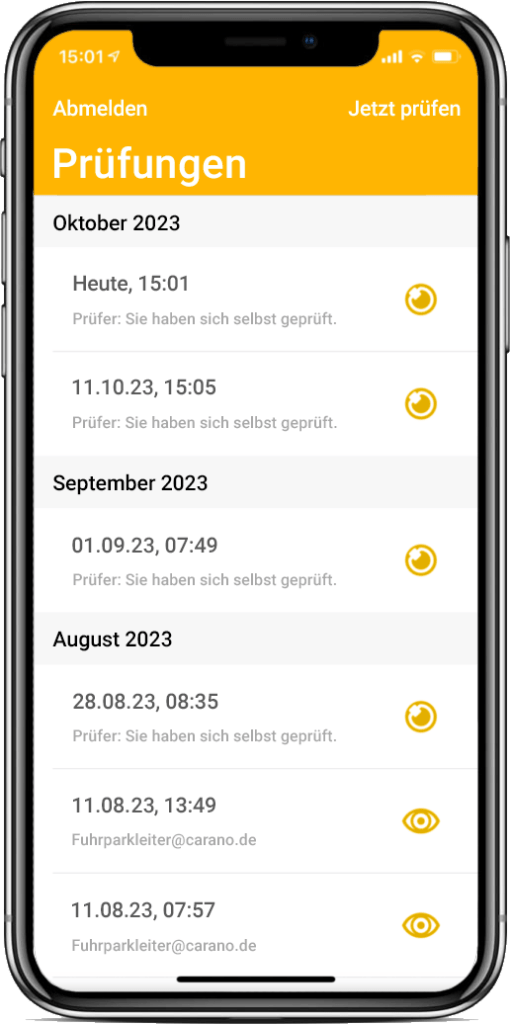
Digital solutions make life easier for both fleet managers and drivers. Instead of organizing in-person training sessions, CarWise’s e-learning course allows drivers to be trained anytime, anywhere. Driver’s license verification can be conveniently performed via a smartphone app. All training sessions and checks are fully documented and serve as proof in the event of a claim.
Electric vehicles in the fleet: when the switch pays off
More and more companies are evaluating whether switching to electric vehicles for their fleets is worthwhile. In addition to CO₂ emissions and energy consumption, economic and tax considerations also play a role. By July 2025 , 23.3% of newly registered company cars were already fully electric.
If an electric company car is provided for private use, generous regulations apply. If the gross list price is less than EUR 100,000, the non-cash benefit for private use is only taxed at 0.25% – a flat-rate calculation that is attractive for many employees. For e-vehicles with a gross list price of over EUR 100,000, 0.5% is applied.
When converting to e-vehicles, it becomes clear how important a sound data basis is for economic decisions. In addition to tax advantages, factors such as charging infrastructure, electricity costs, range profiles and actual use play a key role.
Fleet management software such as Carano Fleet+ helps companies analyze fuel consumption data, compare costs per kilometer, and transparently document CO₂ emissions. This makes it possible not only to assess whether individual electric vehicles are cost-effective, but also to determine how the entire vehicle mix can be strategically optimized.
Conclusion
- A company car brings advantages for both employers and employees, but also tax and financial challenges. The decision should always be made on the basis of usage, costs and alternatives.
- By using fleet software, companies can significantly reduce administrative costs, identify cost drivers and organize their fleet more efficiently.
- Instead of traditional company cars, more and more companies are turning to modern mobility concepts. Whether it’s company bicycles, mobility budgets, or shared vehicles, the future lies in flexible, needs-based solutions.
FAQ – Important questions about company cars
A company car ensures the mobility of employees and at the same time increases the attractiveness of the company as an employer. In addition, leasing rates and operating costs can be claimed for tax purposes.
This depends above all on the individual usage profile and the overall costs. Decisive factors include annual mileage, area of use, drive type and tax conditions. While e-models often impress with lower operating and tax costs, mid-range or hybrid vehicles can also make sense for field service or frequent drivers. Not only should the list price be taken into account, but also the total costs over the vehicle’s useful life (total cost of ownership).
Leasing is ideal if companies want to protect their liquidity and have regular access to modern vehicles. The predictable installments and maintenance options also make fleet management easier.
As a rule, a company car is not worthwhile if it is rarely used or the tax burden of private use is too high. In such cases, alternative concepts such as car sharing or a mobility budget can be more economical. A company car is worthwhile if it suits the company economically and at the same time meets the requirements of the employees.
Yes, the private use of a company car is considered a non-cash benefit for tax purposes. This means that if an employee also uses the vehicle privately – for example for shopping, vacation trips or commuting to work – this benefit must be taxed. Taxation can be carried out using either the flat-rate 1 percent rule or a logbook. Both methods determine the non-cash benefit based on the gross list price or the actual kilometers driven.
Yes, a company car can generally also be used by several employees – for example as a so-called pool vehicle. In this case, private use is generally excluded and the car is provided exclusively for business trips. This has the advantage that there is no taxation of a non-cash benefit. What is important here is that the employer must clearly document the use and regulate it organizationally, for example via booking systems and regular driver’s license checks.
Whether private journeys with a company car are permitted depends on the employment contract or the company car policy. Many companies allow private use – in this case, a non-cash benefit arises that is taxable for the employee. Those who use the car exclusively for business purposes, on the other hand, avoid an additional tax burden. It is important to note that journeys between home and work also count as private use and must be taken into account accordingly.
Other useful articles on the topic of company cars
- Employer Driving License Check: Legal Regulations and Tips for Implementation
- UVV inspection in the vehicle fleet: definition and importance in the vehicle fleet
- 10 Tips for Successful and Efficient Fleet Management
- Mobility Budget Instead of Company Car: Flexible Mobility for Employees
- Vehicle management: efficient processes for a modern vehicle fleet