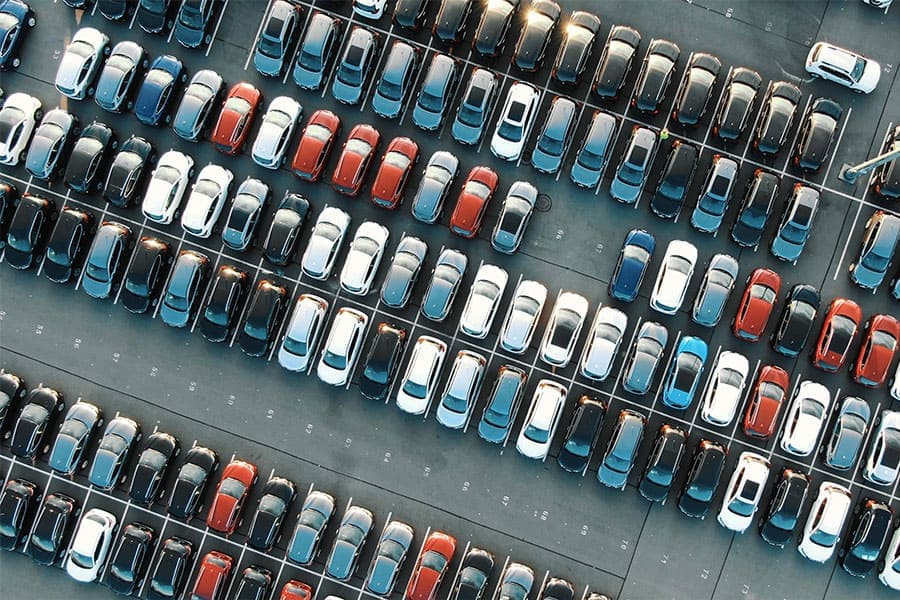
As fleets grow in size, complexity, data volumes and requirements for transparency, efficiency and compliance increase significantly. At the same time, companies expect cost-effective management and a clear basis for decision-making. This is precisely where traditional tools and manual processes quickly reach their limits. Structured, digital fleet management is becoming a prerequisite for operating large fleets efficiently, safely and sustainably.
In this article, you will find out what fleet software should do and how you can ensure compliance and cost transparency.
Contents
- 1. What challenges arise in fleet management for large fleets?
- 2. Why does Excel reach its limits when managing large fleets?
- 3. What functions should fleet software offer for managing large fleets?
- 4. How do you ensure compliance and legal security in your fleet?
- 5. How do you avoid hidden costs in large fleets?
- 6. What issues will shape fleet management for large fleets in the future?
- 7. Fleet Management for Large Fleets with Carano Fleet+
What challenges arise in fleet management for large fleets?
According to a recent study (Dataforce 2024), over 80% of fleet managers report increasing complexity in their day-to-day business – a trend that is becoming more pronounced as fleets grow. At the same time, there is often a lack of transparency and clearly defined workflows.
Because with every additional vehicle, the effort required for administration, coordination and control increases. Vehicle and driver data, maintenance dates, contracts and costs must be reliably recorded and maintained. At the same time, this information is distributed across different systems, Excel lists or even departments in many companies.
Our work with fleet managers has shown that this usually results in media disruptions, increased coordination effort and delayed decisions for large fleets. Without a central database, there is no overall view and therefore no basis for efficient fleet management. For large fleets in particular, organizational complexity quickly becomes a real cost factor.
Why does Excel reach its limits when managing large fleets?
While Excel can be a solution for very few vehicles, the tool is not designed for the requirements of large fleets.
Many companies start their fleet organization with spreadsheet solutions. However, as the size of the fleet grows, the limits quickly become apparent: Data has to be maintained manually, errors creep in and versions are often not clearly traceable. What’s more, Excel does not allow processes to be automated. Maintenance dates, contract periods or inspection deadlines must be actively monitored. Real-time data or cross-system evaluations are hardly possible.
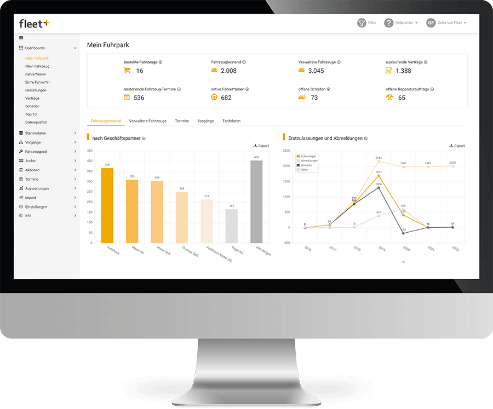
For large fleets, this means, in practical terms: a significant time investment, an increased risk of errors, and a lack of information on which to base decisions. Specialized fleet management software such as Carano Fleet+ from CarWise provides the necessary structure and scalability.
What functions should fleet software offer for managing large fleets?
Modern fleet software must bundle all relevant data centrally and largely automate processes. This creates transparency and enables data-based decisions.
Fleet+ offers the following functions, for example:
- Central management of all vehicle, driver and contract data
- Automated scheduling and maintenance management with reminder function
- Transparent cost overview including reporting and evaluations
- Digital document management
- Interfaces to existing systems (e.g. ERP or accounting)
A large fleet can only be managed efficiently if all relevant data is bundled and available in real time. The aim is not just to manage, but to actively control.
How do you ensure compliance and legal security in your fleet?
In the vehicle fleet, you ensure legal certainty with automated processes and seamless documentation.
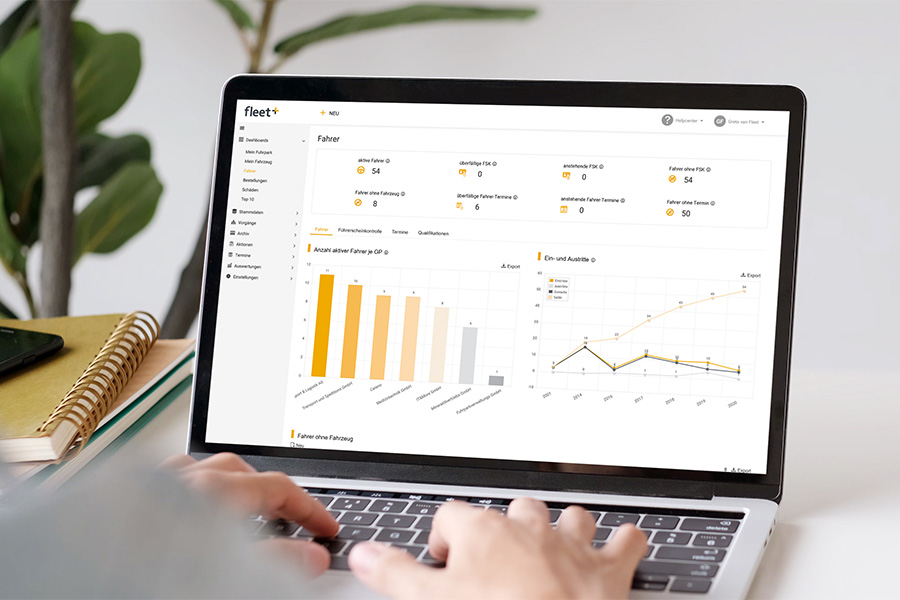
Fleet managers are confronted with a multitude of legal requirements: from regular driver’s license checks to UVV driver training and UVV vehicle inspections. In large fleets, it is almost impossible to reliably meet these requirements manually. And there is a particularly high risk here, because in the event of damage, severe penalties can be expected if obligations are neglected.
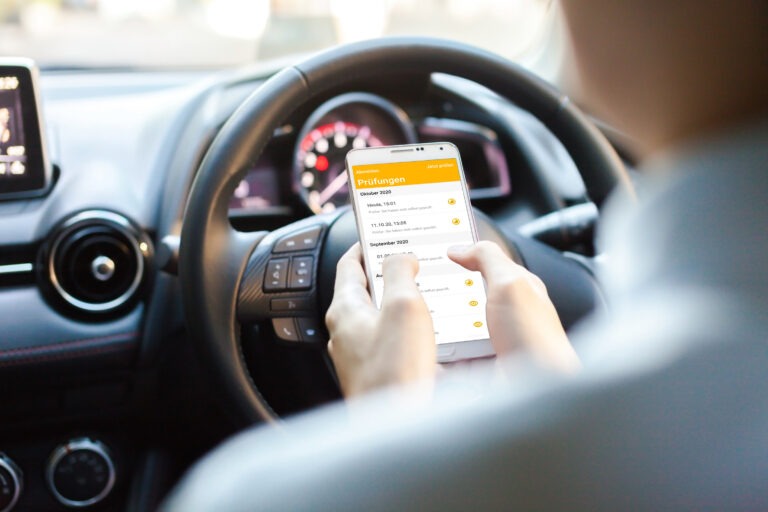
Digital fleet solutions provide support by automatically monitoring deadlines, reminding drivers of deadlines and documenting all measures in an audit-proof manner. This not only reduces the administrative workload in the fleet, but also the risk of infringements and liability cases.
Compliance is thus transformed from a reactive, mandatory task into a structured, plannable process.
How do you avoid hidden costs in large fleets?
In large fleets, costs often arise not only from obvious factors such as leasing rates or fuel. Inefficient use, unnecessary downtimes or uncoordinated maintenance often remain undetected for a long time.
Fleet software provides a transparent breakdown of these expenses. Detailed evaluations allow optimization potential to be specifically identified. This enables companies to make well-founded decisions, for example on vehicle utilization, maintenance intervals or fleet structure.
The result: a long-term reduction in total cost of ownership and significantly improved fleet management.
What issues will shape fleet management for large fleets in the future?
The electrification of the fleet brings new challenges, ranging from charging infrastructure to the analysis of suitable usage profiles. At the same time, CO₂ emissions, energy consumption, and related corporate goals are becoming increasingly important. Fleet managers must collect relevant data and take it into account when selecting vehicles and managing the fleet.
At the same time, the vehicle fleet is increasingly evolving into a comprehensive mobility offering. In addition to traditional company cars, flexible solutions such as corporate carsharing can complement the mobility mix and support more efficient vehicle use.
This makes the role of the fleet manager more strategic. Digital solutions provide the necessary data foundation to transparently manage costs, vehicles, usage, and other key metrics.
Fleet Management for Large Fleets with Carano Fleet+
Growing volumes of data, legal obligations, and environmental and climate goals: The demands placed on fleet managers are constantly increasing. Therefore, the efficient operation of large fleets is only possible with a software solution specifically designed to handle this complexity.
Carano Fleet+ was specifically developed for large, multi-location fleets. It helps companies consolidate all relevant data in one place, automate processes, and make informed decisions based on reliable metrics. At the same time, it ensures the necessary security for compliance requirements and significantly reduces the administrative burden in day-to-day operations.
Fleet+ transforms fleet management from a mere administrative effort into a strategic management tool – efficient, transparent and future-proof.
Conclusion: Digital solutions for managing large fleets
- As the number of vehicles increases, complexity grows significantly. Without a central database and clear structures, inefficiencies, coordination problems and unnecessary costs arise.
- Automatic deadline monitoring and seamless documentation minimize risks and reduce the burden on the fleet. Detailed evaluations allow inefficient use and hidden costs to be reduced in a targeted manner.
- With fleet management software like Fleet+, which is tailored to the needs of large fleets, processes are automated, costs are broken down transparently, and workflows are structured.
Frequently asked questions
Fleet software creates transparency, saves time and reduces costs. All relevant data is bundled centrally, processes are automated and real-time evaluations are possible. This allows fleet managers to react faster, make informed decisions and optimize inefficient processes in a targeted manner.
Data provides the basis for efficient and strategic decisions. By evaluating important key figures in the fleet, optimization potential can be identified at an early stage. This enables companies not only to manage their fleet, but also to actively control and continuously improve it.
The software solution has been specially developed for companies with large, complex and multi-site fleets. It supports fleet managers in simplifying processes, creating transparency and efficiently managing all relevant tasks. The software really comes into its own with fleets of 150 vehicles or more.
Whether maintenance, leasing contracts or statutory inspections – the number of deadlines increases significantly with the size of the fleet. Fleet software such as Fleet+ monitors all deadlines automatically and reminds you in good time so that no important deadlines are overlooked.
Further contributions
- Fleet optimization – efficiency and digitalization in modern fleet management
- Vehicle management: efficient processes for a modern vehicle fleet
- Excel fleet management: a practical start or an outdated concept?
- Claims management software: How fleets benefit from digitalization
- Fleet management system: Efficient management of modern vehicle fleets