 Hans-Joachim Guth
In times of rising operating costs, increasing environmental regulations and growing complexity in vehicle management, many companies are faced with the question: how can their own vehicle fleet be made truly efficient, digital and future-proof? With targeted fleet optimization, it is possible to simplify processes, create transparency and make better use of resources: from vehicle procurement to daily use.
It is no longer just a matter of reducing fuel costs or digitizing administrative processes. The key is to manage the fleet cost-effectively throughout its entire lifecycle and to continuously improve its utilization.
As a European software provider for fleet management, leasing, and car rental, the CarWise Group understands these processes from various perspectives. In this article, we’ll show you which factors are crucial for successful fleet optimization and how digital solutions can help.
In a nutshell: Fleet optimization encompasses all measures companies take to reduce the costs, administrative burden, and fuel and energy consumption of their fleets. The key levers for optimization include a centralized database, automated processes, and the regular analysis of key metrics such as cost per kilometer, fuel consumption, and mileage relative to the lease agreement. Fleet management software such as Carano Fleet+ from the CarWise Group consolidates this data into a single system.
Why fleet optimization is crucial for companies
An efficient fleet is much more than just a collection of vehicles—it is a central component of business processes. In many companies, managing a fleet incurs significant costs and ties up valuable resources. Without structured planning and modern tools, there is a risk of inefficiencies, untapped potential, and rising operating expenses.
Successful fleet optimization therefore addresses several areas: vehicle costs, actual usage, administrative processes, and long-term fleet planning. The goal is to identify opportunities for cost savings and to use available resources as efficiently as possible.
Through continuous analysis and improvement of processes, it is possible to achieve cost savings, increase profitability, and reduce fuel consumption at the same time. Professional fleet management, in particular, clearly demonstrates how closely efficiency, cost control, and transparency are linked.
Those who invest today in the digital and efficient management of their mobility are laying the foundation for a future-proof fleet strategy.
The biggest challenges in fleet management
The requirements for a modern fleet management are constantly growing. Companies must efficiently coordinate their vehicles, drivers, and processes while complying with legal requirements and ensuring the fleet’s cost-effectiveness. Many fleet managers face the challenge of maintaining an overview of complex structures, data, and processes.
Lack of transparency due to different data sources
A key problem is the lack of transparency. Without centralized systems or digital workflows, information is often recorded manually—such as maintenance schedules, driver’s license checks, or fuel consumption.
In addition, important information is often held by different parties. While fleet management maintains vehicle and driver data, the accounting department has access to cost information. Leasing companies, in turn, manage contract data and other relevant processes. If there is no data exchange between these systems, data silos are created, leading to additional administrative work.
Increasing Demands for Cost-Effectiveness and Compliance
Fleet managers must not only control costs but also take into account numerous legal and organizational requirements. These include, for example, driver’s license checks, driver training, and monitoring inspection schedules. Especially with larger fleets, manual processes can quickly become confusing and lead to errors.
Electrification and New Mobility Requirements
The transition to alternative powertrains also presents new challenges for companies. Which models are suitable for electric operation? What charging infrastructure is needed? And how will the total costs change? To answer these questions, fleet managers need reliable data on driving profiles, costs, and usage patterns.
Those who fail to actively address these factors risk incurring unnecessary costs, inefficiencies, and compliance risks. A modern, digital fleet management system provides a solution: It enables automated workflows, up-to-date data insights, and effective control of all operational mobility processes.
Digital solutions for efficient fleet management
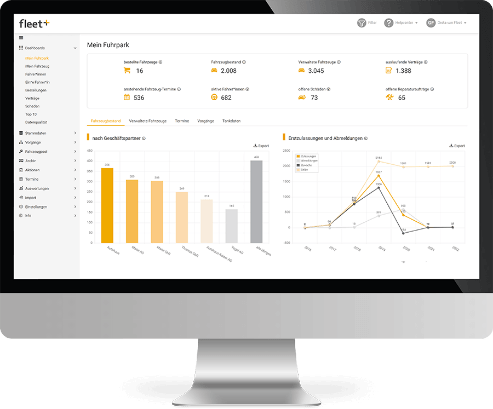
Digitalization is transforming fleet management fundamentally. More and more companies are realizing that manual processes are no longer sufficient to keep pace with rising demands, costs, and regulatory requirements. Modern fleet management software provides a solution by automating processes, centralizing data, and offering a solid basis for decision-making.
Fleet management software: functions and advantages
Modern fleet management software forms the backbone of an efficient fleet organization.
With Carano Fleet+, the CarWise Group offers a solution specifically tailored to the needs of larger and more complex corporate fleets as well as fleet management service providers. The software integrates operational management processes with features for cost-effective fleet management.
The most important advantages at a glance:
- Automated processes: Less manual work thanks to digital workflows and reminder functions.
- Transparent database: All relevant vehicle data available centrally – for well-founded decisions.
- Integrated analytics: Reports on costs, consumption, CO₂ emissions, and cost-effectiveness via interactive dashboards.
- Appointment Management: Automatic reminders for recurring appointments such as vehicle inspections, driver training, or driver’s license renewals.
- Digital Claims Management: Digitally record, document, and analyze claims.
- Flexible Interfaces: Seamless integration with systems such as accounting software, fuel card providers, or HR software—for example, via a standardized REST API.
Digital Vehicle Record
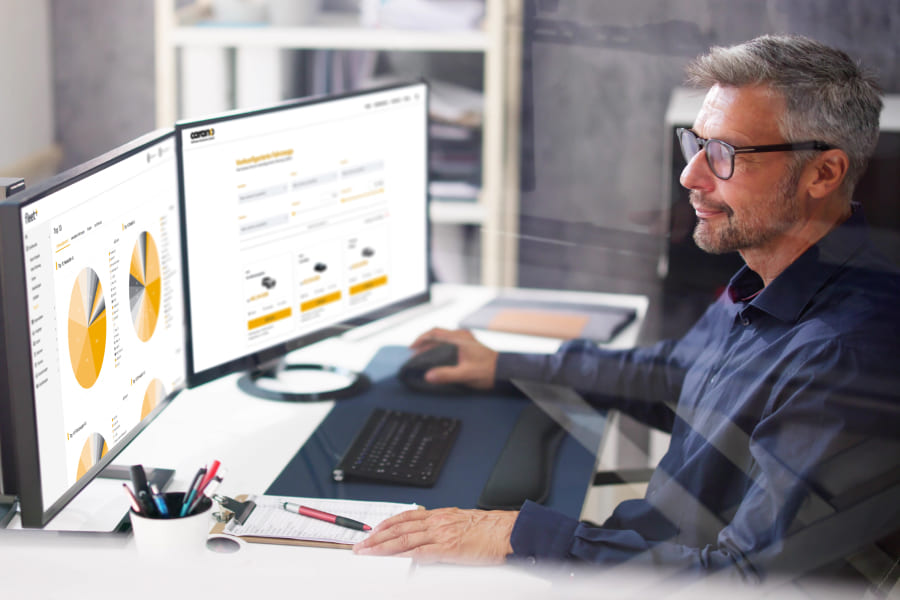
At the heart of the system is a digital vehicle file that consolidates all information on master data, contracts, and costs. This allows companies to maintain a clear overview of maintenance, lease terms, and claims at all times. Recurring tasks such as driver’s license checks, schedule tracking, and fuel consumption tracking run automatically in the background—reliably and comprehensively documented.
Analyze Fleet Metrics in a Targeted Manner
Anyone looking to optimize their fleet needs to know where costs arise and how efficiently existing resources are being used. Carano Fleet+ allows you to analyze key metrics such as cost per kilometer, fuel consumption, CO₂ emissions, and vehicle utilization:
| Key figure | Benefits |
|---|---|
| Total cost of ownership | Compare the total cost of a vehicle |
| Cost per kilometer | Identify Cost Drivers |
| Vehicle Utilization | Identifying Unused Capacity |
| Actual mileage | Optimize Lease Agreements |
| Maintenance and Repair Costs | Identify High-Cost Vehicles |
| Fuel and Energy Consumption | Evaluate Consumption and Efficiency |
It is crucial to consider these metrics in conjunction with one another. For example, a vehicle with a low monthly lease payment may end up being more expensive overall than an alternative model due to high operating costs.
Automate Recurring Tasks
Another key lever is the automation of routine administrative tasks. Instead of tracking maintenance schedules in separate calendars or manually compiling information, many tasks can be organized digitally. This reduces the administrative burden and frees up more time for strategic fleet management.
Everything in One System
A key factor for success is integrating all relevant information into a single, centralized platform. This allows fleet managers to maintain a clear overview of their vehicles, costs, and driver activities at all times. Digital solutions such as Carano Fleet+ support this approach by efficiently mapping the entire fleet optimization process, from administration to strategic management.
The benefits are obvious: less administrative work, better data foundations, and a clear path to greater efficiency and sustainability in fleet management.
Fleet service providers that serve multiple clients also use Carano Fleet+ as a multi-client platform: client data is processed separately, and prepaid fleet costs can be passed on transparently.
Effectively Manage Fleet Leasing Costs
For many companies, lease payments are among the largest cost categories related to corporate mobility. What matters most is not just the amount of the payment, but whether actual usage aligns with the terms of the contract.
Review mileage and lease agreements regularly
If a company car is driven significantly more or less than agreed, additional costs may arise. Therefore, fleet managers should regularly compare the actual mileage with the contractually agreed mileage.
Carano Fleet+ automatically imports lease invoices and analyzes lease forecasts as well as mileage and contract variances. This allows you to identify early on which contracts require action—such as swapping vehicles between drivers with high and low mileage or negotiating a contract adjustment with the leasing company.
Digitizing Leasing Processes
There is also room for improvement in the management and processing of leasing data. Among other features, Carano Fleet+ enables the automatic import of leasing invoices and helps companies centrally analyze contract and cost information.
The example of Müller Service GmbH illustrates how digital workflows can simplify administrative processes. According to Jörg Bültmann, the company’s fleet manager, Carano Fleet+ enabled the company to significantly simplify the previously complex IFRS depreciation calculations and integrate additional service providers, such as fuel card companies.
How Leasing Companies Help Their Customers Optimize Their Fleets
Leasing companies have access to much of the data that fleet managers need for optimization: mileage, maintenance, damage, and fuel costs. In LeaseWise, the CarWise Group’s lease management software, these transactions are assigned to the respective leased vehicle. Mileage variances are identified early on for each contract and driver using KilometerToCheck, allowing the lessor and customer to discuss an adjustment in a timely manner.
Through the FleetDisk online management portal, fleet managers on the customer side have direct access to up-to-date reports on their fleets. For leasing companies, this transparency becomes an additional service that strengthens customer loyalty.
CO2 Emissions and Cost-Effectiveness in the Fleet
Lower CO2 emissions and cost-effectiveness are among the most important goals of modern fleet management strategies today. Companies face the challenge of balancing CO2 targets with cost objectives.
Planning Electrification Cost-Effectively
The switch to electric vehicles offers the potential to reduce costs and emissions. However, whether an electric powertrain is actually worthwhile depends on various factors, including driving habits, mileage, energy costs, and charging infrastructure.
A data-driven analysis helps fleet managers identify suitable areas for electrification and compare the total costs of different powertrain types.
Improving Vehicle Utilization Through Corporate Car Sharing
Making better use of existing company cars can also reduce costs and emissions. Corporate carsharing allows employees to reserve and share pool vehicles as needed. This can increase utilization rates and, under the right conditions, reduce the number of vehicles required.
With digital solutions for fleet management and corporate carsharing, the CarWise Group helps companies make their mobility offerings more transparent and efficient.
Transparently Analyze CO₂ Emissions
Anyone who wants to reduce emissions in a targeted manner first needs an overview of their fleet’s current fuel consumption and composition. Digital analyses help identify high-emission vehicles and track trends in CO₂ emissions.
Carano Fleet+ makes it possible to centrally analyze relevant data and use it as a basis for further fleet optimization.
Those who structure their fleets in this way reduce costs and fuel consumption and create a robust data foundation for future requirements, such as CO2 pricing and EU fleet regulations.
Conclusion: How to achieve comprehensive and efficient fleet optimization
- Keep track of costs and vehicle usage: By regularly analyzing operating costs, mileage, and utilization rates, you can identify opportunities for savings and manage your fleet to meet your needs.
- Digitizing and Automating Processes: Centralized fleet management software reduces administrative overhead, creates transparency, and facilitates informed decision-making.
- Improve collaboration with leasing companies: Sharing up-to-date usage, cost, and contract data helps identify discrepancies early on, optimize lease agreements, and avoid unnecessary additional costs.
FAQ on fleet optimization
Fleet optimization refers to all measures that help make a fleet more cost-effective and transparent and reduce its fuel and energy consumption. This includes analyzing costs and usage, automating administrative processes, and using modern fleet management software. By digitizing processes, decisions can be made based on data, and overall management can be made more efficient.
Fleet optimization aims to reduce costs, simplify processes, and increase efficiency. Companies want to reduce fuel consumption, better plan maintenance, and optimize vehicle usage. At the same time, reducing CO2 emissions is becoming increasingly important—for example, by switching to electric vehicles or implementing data-driven management of all trips.
A vehicle fleet can be optimized by consistently digitizing processes and regularly analyzing key performance indicators. Digital tools help automate maintenance scheduling, analyze fuel and leasing costs, and manage the use of company cars. By creating transparency and relying on integrated systems, companies can increase cost-effectiveness while simultaneously reducing fuel consumption.
Modern fleet management software can handle virtually all types of vehicles—from passenger cars to vans and commercial vehicles, all the way to electric vehicles and shared vehicles. Company cars, leased vehicles, and car-sharing vehicles can also be managed centrally. By digitally recording all relevant data, companies can maintain a clear overview of their entire fleet at all times.
Intuitive operation, flexible interfaces, and a high degree of automation are important. A good software solution should cover all relevant areas—from vehicle management to reporting. Issues such as data protection, scalability, and regular updates are also crucial for working efficiently in the long term. Those who lease vehicles should also ensure that lease invoices and contract data can be imported automatically.
Leasing companies can provide their fleet customers with up-to-date data on mileage, costs, and activities such as maintenance or damage. With LeaseWise and the FleetDisk portal, fleet managers have direct access to these reports. Mileage discrepancies are identified early on, allowing contracts to be adjusted in a timely manner.
Carano Fleet+ is designed specifically for larger, more complex fleets of 100 or more vehicles—for both in-house managed fleets and fleet service providers. Service providers can use the software for multiple clients with a combined total of tens of thousands of vehicles.
Further contributions
- Fleet insurance: cover for your vehicle fleet
- 10 Tips for Successful and Efficient Fleet Management
- Mobility Budget Instead of Company Car: Flexible Mobility for Employees
- Fleet Management: Modern vehicle management for maximum fleet efficiency
- Claims management software: How fleets benefit from digitalization