 Hans-Joachim Guth
The larger the vehicle fleet, the more complex the requirements for managing it. From the use of individual company cars to the management of large fleets – without structured processes and digital support, companies quickly reach their limits.
A professional fleet management system helps to maintain an overview, deploy resources more efficiently and reliably manage operational and strategic tasks. But what does such a system actually do? How can modern technology be used to better manage fleets, drivers and processes?
This article provides an overview of the functions, benefits and possible applications of a fleet management system – and shows why it pays to set up your own vehicle fleet digitally.
What is a fleet management system?
A fleet management system is a digital solution for managing and controlling vehicle fleets. It helps companies to coordinate their vehicles, drivers and processes centrally, regardless of the size or composition of the fleet.
Modern fleet management systems record a wide range of data in real time and link it intelligently. This gives fleet managers a complete overview of the condition, utilization and use of their vehicles. At the same time, all relevant tasks can be efficiently mapped.
Typical functions of a fleet management system:
- Management of vehicle data, drivers and usage times
- Automated deadline monitoring (e.g. for HU, UVV, maintenance)
- Recording fuel consumption and driving behavior
- Digital driver’s license check and logbook management
- Cost overview for individual vehicles or the entire fleet
- Support with route and deployment planning
A professional fleet management system is a strategic tool for companies that want to make their mobility efficient, transparent and future-proof.
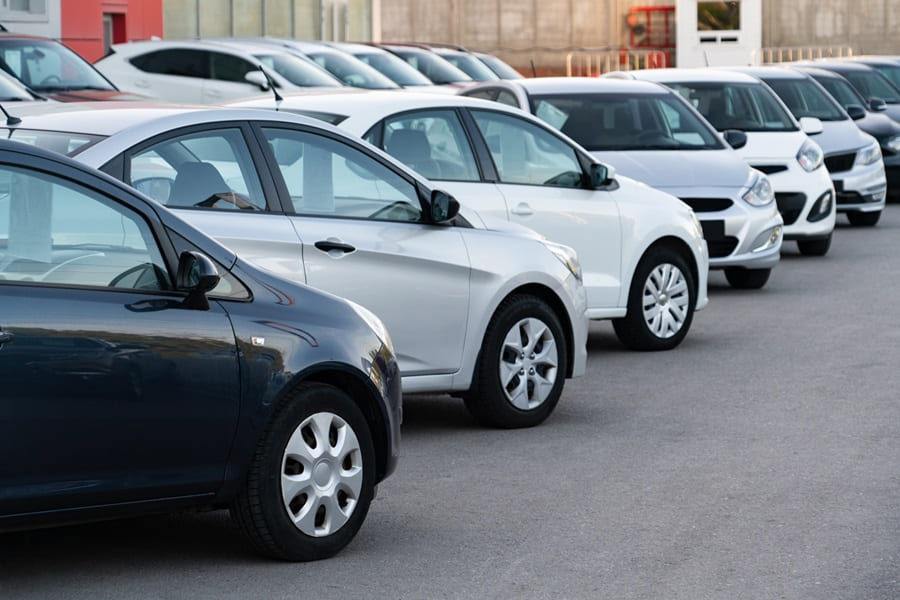
Tasks and goals in the modern vehicle fleet
A modern vehicle fleet faces complex requirements. The tasks have long since extended beyond pure vehicle management. Today, companies have to coordinate a wide variety of processes relating to vehicles, drivers and operations.
Typical tasks in fleet management:
- Management of the vehicle fleet including documentation and deadlines
- Organization of maintenance, repairs and regular checks
- Coordination of drivers and their authorizations
- Monitoring of costs, fuel consumption and capacity utilization
- Ensuring compliance with legal requirements
- Management of mobility requirements and deployment planning
The goals of professional fleet management:
- Increase efficiency: Automated processes and digital tools allow many tasks to be completed in a time-saving and error-free manner.
- Create transparency: A central overview of all vehicles and processes is crucial for strategic decisions.
- Reduce costs: Optimized use, lower fuel consumption and predictive maintenance allow resources to be used in a more targeted manner.
- Increase safety: Regular vehicle inspections and driver documentation ensure legally compliant operation.
- Reducing CO₂ Emissions: The integration of electric vehicles and more efficient route planning can help reduce the use of fossil fuels and direct CO₂ emissions in the fleet.
Modern fleet managers need a fleet management system that reliably supports them in these tasks – digital, scalable and flexible.
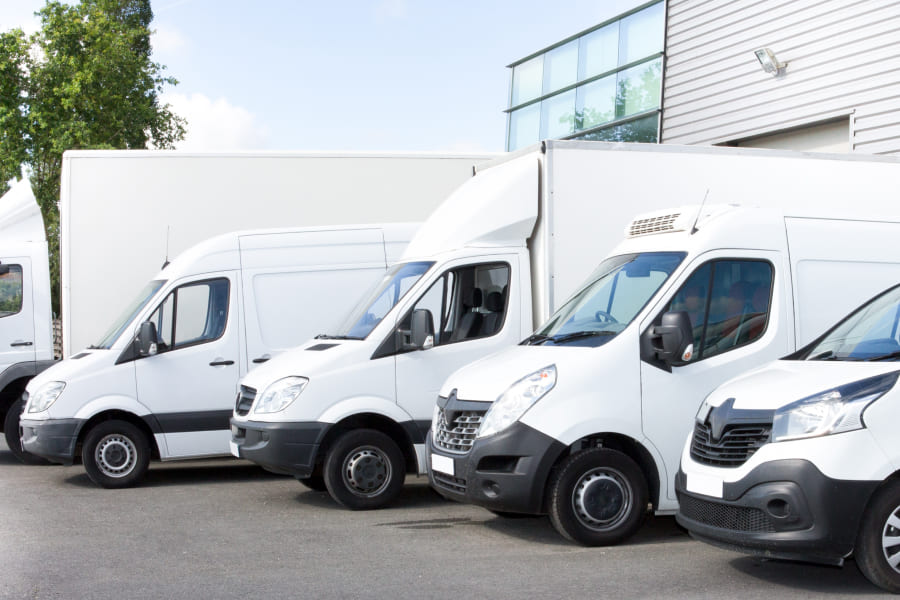
Advantages for companies with their own vehicle fleet
A professional fleet management system brings tangible benefits for companies with their own vehicle fleet, both in day-to-day business and in the strategic orientation of the fleet. Those who rely on digital and automated processes not only increase efficiency, but also gain a competitive advantage in the long term.
These advantages make all the difference:
- More efficient processes: Recurring tasks such as scheduling, logbook management or driver communication can be automated and digitally mapped, saving time and reducing sources of error.
- Lower operating costs: The precise evaluation of data on fuel consumption, capacity utilization and driving behavior helps to identify potential for optimization in the fleet at an early stage and reduce costs.
- Greater transparency: A central fleet management system provides a clear overview of vehicles, maintenance intervals, operating times and availability at all times.
- Higher productivity: Optimized processes and better planning enable vehicles and drivers to be deployed more efficiently.
- Legal certainty: Regular inspections and deadlines can be monitored digitally – this minimizes risks in the event of owner liability or driver training.
For companies that rely on their vehicles on a daily basis, professional fleet management not only pays off economically – it also ensures greater control, flexibility and future-proofing in fleet operations.
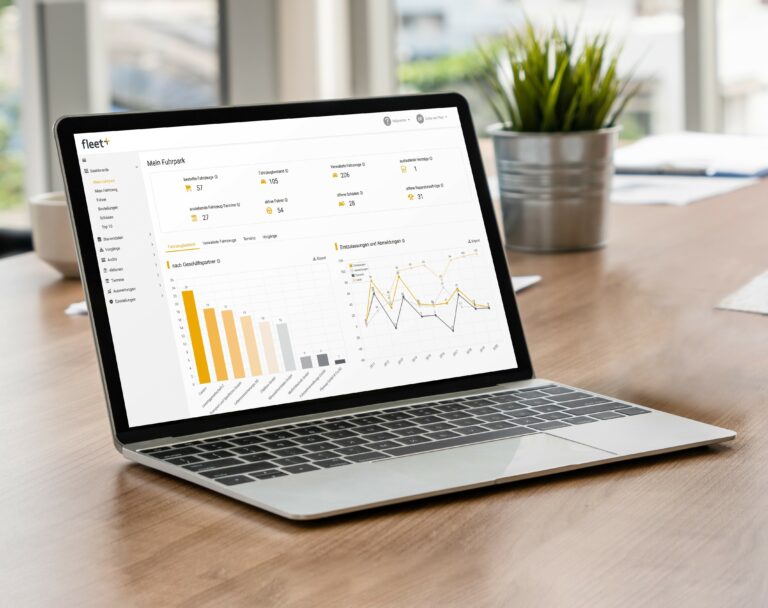
Digital fleet management as the basis for modern fleet management
Digital fleet management opens up new opportunities for companies to manage their fleet efficiently, transparently and proactively. Instead of scattered information, all relevant data is available centrally, from operating times and vehicle status to cost trends. This provides a clear overview of the entire vehicle fleet that goes far beyond traditional administration.
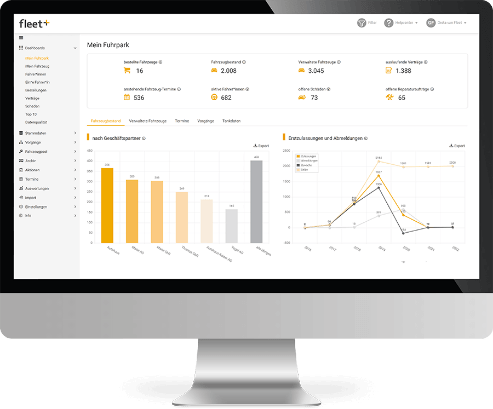
At the heart of digital fleet management is the intelligent combination of real-time data, clear dashboards and automated processes. This combination helps to make more informed decisions and align the fleet in a targeted manner. Thanks to the uniform database, those responsible can react more quickly, simplify processes and make optimum use of the vehicle fleet. Digital fleet management really comes into its own in growing fleets: The solution scales with and supports companies in making mobility predictable and economical in the long term.
Digital fleet management therefore not only creates structure, but also strategic added value – both in day-to-day operations and in the long-term development of the fleet.
How digital transparency improves everyday life in the fleet
A clear view of all relevant information is crucial in order to manage the fleet reliably. Digital fleet management ensures that data is not only collected but also put to good use. Availability, capacity utilization, costs or upcoming measures can be called up at any time and integrated into the daily process.
This digital transparency offers several advantages:
- Faster response times: deviations, bottlenecks or unnecessary downtimes become visible at an early stage.
- Reliable planning: deployment times and availability can be better coordinated, which improves capacity utilization.
- Clean documentation: All information is maintained centrally and is available for evaluations or internal coordination.
- More security: deadlines, documents and evidence remain in view at all times.
Companies thus benefit from a fleet that can be operated reliably, economically and sustainably. Digital fleet management creates the necessary basis for managing mobility in a structured way and mastering the challenges in the fleet with confidence.
Mastering challenges in fleet operations
A modern fleet of vehicles brings with it numerous challenges that can quickly become a burden without structured processes and reliable systems. Complex processes relating to driver management, scheduling, maintenance and vehicle use require precise coordination. This is the only way to avoid downtime and unnecessary costs.
Effective fleet management starts with a clear overview of all journeys, vehicles and relevant key figures. For fleet managers, it is crucial not only to keep an eye on fuel consumption, but also to efficiently manage the use of each individual company car. A good solution provides detailed evaluations of vehicle usage and also makes it possible to permanently optimize fleet management processes. In this way, the entire fleet can be managed in a resource-saving, economical and reliable manner.
It should be noted that companies are under increasing cost pressure: Rising fuel prices, increased administrative costs and regular maintenance are putting a strain on the budget. At the same time, many companies lack the necessary transparency regarding the utilization, driving behavior and fuel consumption of their vehicle fleet. Without sound data, it is hardly possible to make economically sensible decisions.
Legal requirements are also increasingly putting everyday fleet operations to the test. Driving license checks, owner obligations and regular driver training are essential, but require complete documentation and a reliable system for implementation.
If you also work with different tools or manual processes, you risk losing information and inefficient administration. A professional fleet management system can provide targeted relief here by automating processes, centralizing data and thus enabling sound control of the entire fleet.
Electrification of the Fleet
Electrification is becoming increasingly important in fleet management. When managing their fleets, companies take into account not only economic considerations but also energy consumption and CO₂ emissions. One possible approach is the gradual integration of vehicles with alternative powertrains.
Electric vehicles produce no direct CO₂ emissions from the exhaust while driving and can help reduce the use of fossil fuels in a fleet. Whether they also offer economic benefits depends, among other things, on purchase costs, mileage, electricity prices, maintenance, and charging infrastructure. At the same time, their integration brings new challenges: range, charging times, charging infrastructure, and vehicle availability must all be taken into account during planning.
A professional fleet management system can help with this transition. It provides transparency regarding vehicle usage, utilization, energy consumption, and charging processes, and helps plan and manage the use of electric vehicles based on demand.
Based on this data, companies can track the development of their fleet, identify economic opportunities, and pursue targeted goals to reduce energy consumption and CO₂ emissions.
Conclusion: Why the use of a fleet management system is worthwhile
- A professional fleet management system makes all relevant data visible in real time and thus optimizes workflows, cost control and decision-making processes.
- Digital tools make administration easier, reduce manual effort and ensure that legal obligations such as logbook management or driver’s license checks are reliably fulfilled.
- Moderne Systeme sind flexibel skalierbar und unterstützen eine wirtschaftliche und emissionsbewusste Unternehmensmobilität.
FAQ on the fleet management system
A fleet management system is a software solution for the central control, monitoring and optimization of a company’s entire vehicle fleet. It supports the management, planning and analysis of all relevant processes in the fleet.
The software collects data on journeys, vehicle status, maintenance and costs in real time. A central dashboard allows fleet managers to evaluate all information, automate processes and manage the fleet more efficiently.
Digital fleet management describes the digital control of all fleet tasks. Data on vehicles, operations and costs are recorded centrally and enable efficient, transparent management.
It is suitable for any size of fleet. Kleine Fuhrparks gewinnen Struktur, große Flotten profitieren zusätzlich von Skalierbarkeit und detaillierten Auswertungen.
A fleet manager is responsible for organizing and optimizing the vehicle fleet – from vehicle procurement, maintenance, deployment planning and driver data to compliance with legal regulations and cost control.
Depending on the size of the company, fleet management is handled internally by fleet managers or by external service providers. Mixed models are also possible, in which software solutions provide digital support for central tasks.
Thanks to automated processes, precise evaluations and better planning, the system helps to avoid unnecessary journeys, optimize maintenance appointments and reduce fuel consumption – which sustainably improves the economic efficiency of the fleet.
Further contributions
- The 5 advantages of fleet management software for your company
- Fleet management tasks: The 10 most important fleet activities
- Fleet Management: Modern vehicle management for maximum fleet efficiency
- Fleet optimization – efficiency and digitalization in modern fleet management
- Vehicle management: efficient processes for a modern vehicle fleet
- Excel fleet management: a practical start or an outdated concept?