
- Employers are required to verify the driver’s licenses of their employees when vehicles are used for business purposes. The basis for this requirement is, among other things, Section 21 of the Road Traffic Act (StVG) (prohibition on driving without a valid driver’s license) in the context of vehicle owner and fleet management obligations.
- There are no legally mandated intervals. It is recommended to conduct an inspection upon taking delivery of the vehicle and then at least twice a year. Each inspection must be documented in a manner that is audit-proof and archived in compliance with the GDPR.
- Digital solutions offer benefits such as automatic reminders and comprehensive documentation, and they make it easier to fulfill vehicle owner liability requirements.
Employer-conducted driver’s license checks are one of the most important tasks for fleet managers, as they enhance safety for employees and all other road users. As part of the vehicle owner’s liability, these checks are required by law and must be conducted on a regular basis. How often are driver’s license checks really necessary, and under what circumstances are they even permitted? This issue raises many questions, especially when it comes to rotating drivers, work-from-home arrangements, or external employees. One thing is clear: Employers who leave these checks to chance risk more than just a fine.
In this article, you’ll learn about the legal basis for employers’ driver’s license checks, the various verification methods available, and how digital solutions make the process easier.
Contents
- 1. What is an employer-conducted driver's license check?
- 2. Employer-Conducted Driver's License Checks: What Is the Legal Basis for Them?
- 3. How often should an employer check an employee's driver's license?
- 4. Employer Driver's License Checks: What Methods Are Available?
- 5. Employer-Conducted Driver's License Checks: What Role Does Data Protection Play?
What is an employer-conducted driver’s license check?
The law requires that every company that provides a vehicle to its employees must ensure that they have the necessary qualifications to operate vehicles. Fleet managers must verify that the driver’s license is valid and that the driver holds the required license classes to operate the specific vehicle in the fleet .
Depending on the type of fleet and vehicles, different driver’s license classes may be required, such as passenger car classes, truck classes, or special classes for transporting hazardous materials. It does not matter whether the vehicle is a company car assigned to a specific employee or a shared pool vehicle.
For employers, this means specifically: A driver’s license check is required for all employment relationships in which company vehicles are provided, regardless of whether the employee uses the vehicle regularly or only occasionally. Any vehicle owner who fails to verify that a driver has a valid driver’s license and nevertheless permits the use of the vehicle is acting negligently in the legal sense and, in the worst case, may even be subject to criminal prosecution.
Employer-Conducted Driver’s License Checks: What Is the Legal Basis for Them?
Although the obligation to check driver’s licenses is not enshrined in law, Section 21 of the Road Traffic Act (StVG) sets forth the criminal penalties for individuals who either drive a vehicle themselves without the required driver’s license or, as vehicle owners, allow such driving to take place.

§21 des StVG regelt
“Any person who, as the owner of a motor vehicle, orders or permits another person to drive the vehicle who does not have the required driver’s license or who is prohibited from driving the vehicle under Section 44 of the Criminal Code, shall be punished by imprisonment for up to one year or a fine.” any person who, as the owner of a motor vehicle, orders or permits another person to drive the vehicle who does not have the required driver’s license or who is prohibited from driving the vehicle under § 44 of the Criminal Code or under § 25 of this Act.”
If driver’s license checks are not conducted at all or are performed only irregularly, both the fleet manager and the company face the risk of heavy fines, loss of insurance coverage, and, in the worst case, even criminal penalties. Therefore, driver’s license checks should be carefully planned, carried out, and, above all, thoroughly documented. This allows companies to prevent negative legal consequences as much as possible.
The term “vehicle owner liability” refers not only to the regular verification of driver’s licenses but also to the annual UVV driver training required by law under DGUV Regulation 70. This is intended to ensure workplace safety for employees and minimize the risk of accidents.
How often should an employer check an employee’s driver’s license?
While the law clearly specifies the possible consequences of failing to have a driver’s license checked, there is no legally mandated minimum frequency for such checks. It is important to check driver’s licenses regularly to ensure that all drivers have a valid license. The following procedure is recommended:
- Verifying the Driver’s License Before Using the Vehicle for the First Time: Before driving a company vehicle for the first time, you should verify that your driver’s license is valid.
- Semi-annual checks: After that, driver’s license checks should be conducted twice a year to ensure that company car users are qualified to drive the vehicle. This can also be done digitally using an electronic driver’s license verification system, thereby simplifying fleet management tasks.

How often you, as an employer managing a vehicle fleet, ultimately conduct driver’s license checks depends on various factors and can be handled differently based on the individual risk assessment. If drivers receive traffic tickets particularly frequently or if there is serious suspicion of unfitness to drive, driver’s licenses should be checked more frequently.
In addition to technical and organizational measures, clear guidelines should also be established within the framework of the employment relationship. Through transparent communication and obtaining employees’ written consent to driver’s license checks, companies can avoid uncertainties and legal pitfalls.
In any case, every inspection should be documented in a way that allows for verification so that, in the event of a claim, you can provide appropriate proof of the inspections that were performed.

Employer Driver’s License Checks: What Methods Are Available?
Employers can verify driver’s licenses in various ways. Generally, a distinction is made between manual and digital methods for verifying driver’s licenses. Since the first option involves a significant amount of red tape and organizational effort, more and more fleet managers are turning to electronic driver’s license verification to minimize the workload in their fleets and save costs.
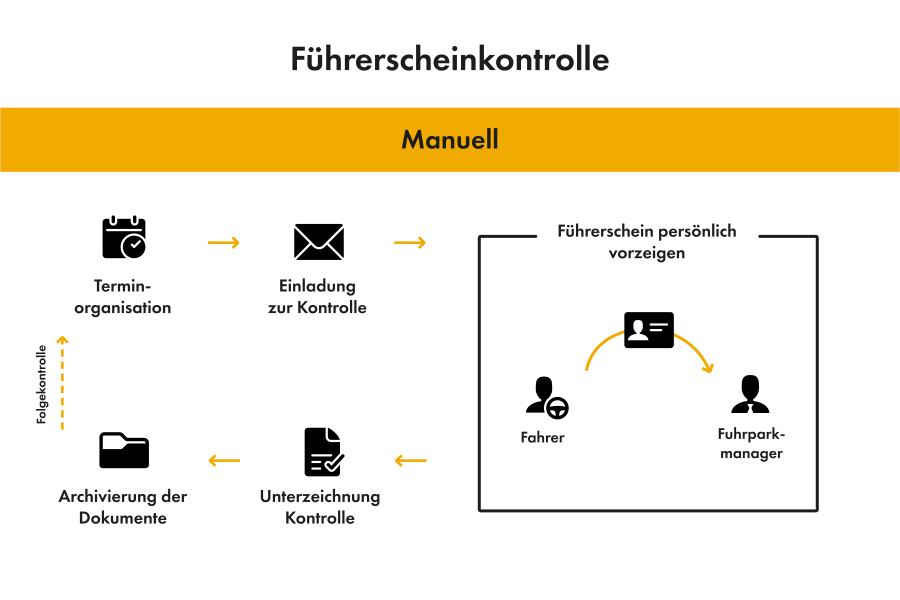
Manual Driver’s License Check
The employer must conduct manual driver’s license checks on-site at the fleet facility under the supervision of the fleet manager. The fleet manager then verifies the validity of each driver’s license and checks for other characteristics, such as the watermark or the typeface. In doing so, the fleet manager should always ensure that the original driver’s license is inspected, as a copy of the license is not permitted. After a thorough inspection, everything must be documented in a legally compliant manner.
For manual verification, there is a designated driver’s license verification form where all relevant information can be recorded and which is signed by both parties. To complete the documentation, the fleet manager can also make a copy of the original driver’s license and place it in the driver’s file. In doing so, the manager is required to ensure the secure handling of data and to protect the verification documents from access by third parties.
At first glance, this inspection method seems simple, but it requires a significant investment of time and organizational effort. This is because a personal appointment must be scheduled with the driver for each driver’s license inspection, the inspection documents must be organized manually, and the results must be securely documented and archived. As a result, electronic driver’s license verification is becoming an increasingly popular alternative.
Electronic Driver’s License Verification
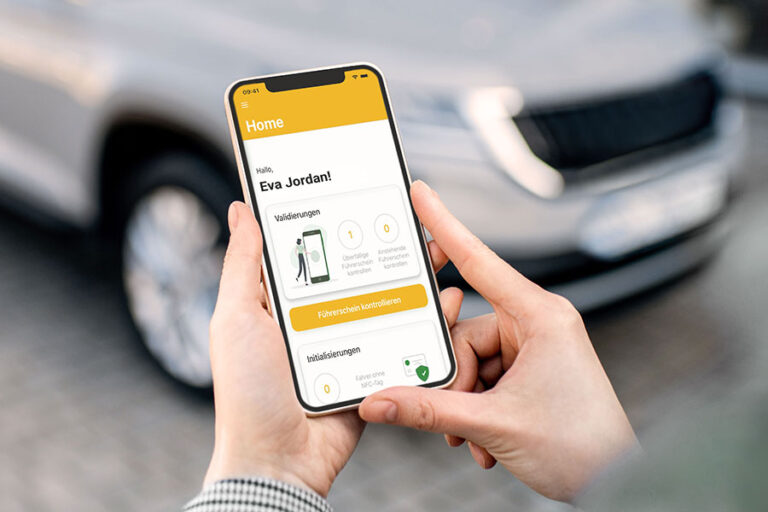
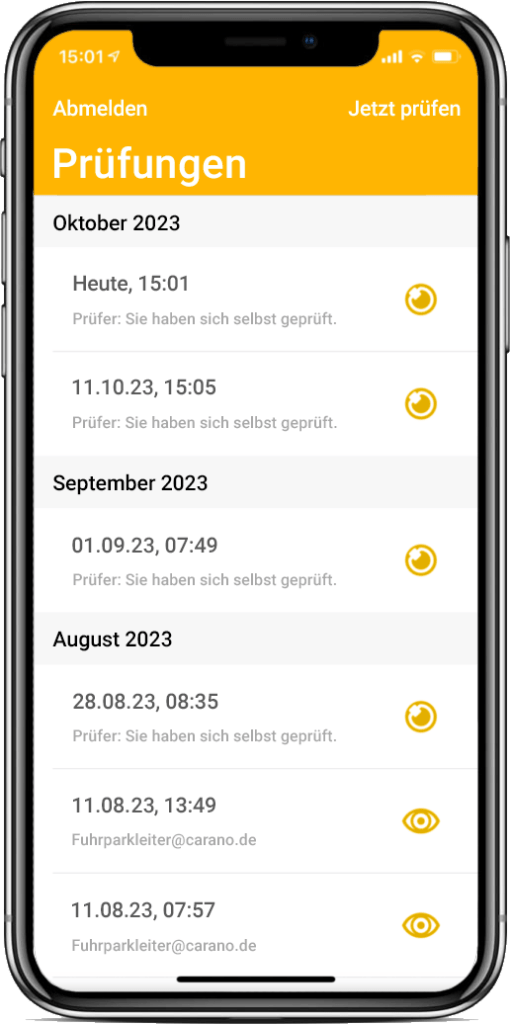
There are many ways to conduct electronic driver’s license inspections. First, an NFC tag (NFC = Near Field Communication) is attached to the driver’s license and initialized. Drivers can then complete the inspection by scanning the tag at special inspection stations, using a smartphone app, or via a web application. Inspection intervals can be set flexibly, and drivers automatically receive notifications for upcoming and overdue appointments. If deadlines are missed, fleet managers are notified immediately. All inspection results are automatically stored in a traceable manner and can be viewed at any time.
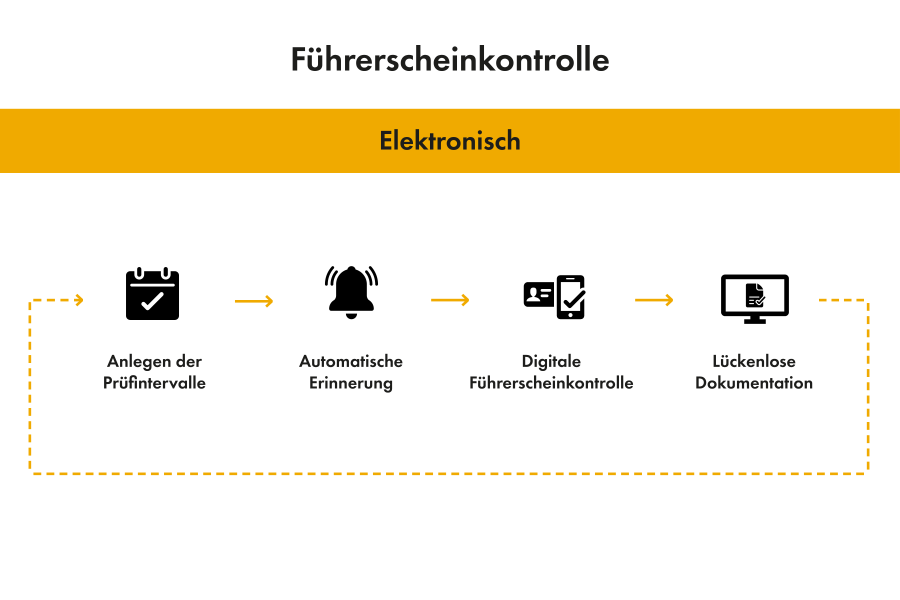
In addition, digital driver’s license verification ensures greater security and efficiency in fleet management. Automated reminders and transparent documentation minimize the risk of violations of legal requirements. Companies benefit from significant time savings, as manual checks are largely eliminated and administrative processes are optimized. Furthermore, the digital solution protects the company from potential liability risks.
Employer-Conducted Driver’s License Checks: What Role Does Data Protection Play?
The fleet manager is responsible for ensuring that the results of driver’s license checks are stored in an audit-proof manner and are inaccessible to unauthorized third parties. A digital, password-protected system is a good way to achieve this. Nevertheless, many fleet managers still rely on analog storage methods. Copying a driver’s license—which often occurs during manual inspections—presents a legal gray area. Many fleet managers keep copies of these documents. Strictly speaking, this could be considered document forgery. To comply with legal requirements and data protection regulations, fleet managers should therefore opt for a digital solution. This allows them to reliably fulfill their obligations to verify driver’s licenses while protecting their employees’ data.
When selecting the right provider to conduct the driver’s license check, you should definitely ask where your data will be stored. According to Section 11 of the Federal Data Protection Act and Article 28 of the EU GDPR, when selecting a provider, you must ensure that the technical and organizational measures in place meet all requirements for secure data processing on behalf of a client. If this is not the case, you can object to the storage of your data and should look for another software provider.
CarWise’s electronic driver’s license verification system offers fleet managers greater safety for their fleets and ensures efficient processes and time savings thanks to its fast and straightforward procedures.
Conclusion
- Employer-conducted driver’s license checks are one of the key responsibilities in fleet management and should be performed regularly.
- There are generally two methods for checking driver’s licenses: manual and electronic. Since the manual method involves a great deal of effort, the electronic alternative is preferable.
- Data protection plays an important role in driver’s license verification. Fleet managers must store the collected data securely and keep it inaccessible to third parties.
A reliable process for verifying driver’s licenses is necessary not only for organizational reasons—it also protects the vehicle owner from legal consequences. If a company car is used without a valid driver’s license and this fact is not regularly checked, the company may be held liable in the event of an accident—and may even face criminal charges in cases of gross negligence.
Employers should therefore establish clear rules for inspecting company vehicles. It is also important that all employees be informed of the necessity of such inspections as part of their employment relationship. Consent to driver’s license inspections, for example, can be addressed in a car policy or directly in the company vehicle use agreement.
FAQ—Frequently Asked Questions About Employer Driver’s License Checks
There are no legally mandated regulations regarding the frequency of driver’s license checks. However, it is generally recommended that these checks be conducted at least twice a year. Some companies also set shorter intervals to fulfill their duty of care and minimize legal risks.
Employers have several options for verifying driver’s licenses. Traditionally, this is done through a manual visual inspection, during which the driver’s license must be presented in person. However, digital solutions—such as verification via NFC tags, checkpoints, smartphone apps, or web applications—are more efficient. These systems enable automatic documentation and ensure complete traceability.
The employer is legally required to ensure that only authorized individuals drive a company vehicle. If an employee refuses to submit to a check, the employer may prohibit that employee from using the vehicle. In some cases, this may even have consequences under labor law, as checking driver’s licenses is part of the employer’s duty of care.
Yes, in general, employees are required to present their valid driver’s license to their employer if they are provided with a company car or other company vehicle as part of their employment. Without this proof, the employer cannot verify that the employee is authorized to drive the vehicle. This verification is not intended as surveillance but is necessary to comply with legal requirements and to avoid potential criminal violations of the vehicle owner’s liability.
As soon as a company provides its employees with vehicles—whether they are personal company cars or shared pool vehicles—the employer is legally required to verify that the employee has a valid driver’s license. This obligation stems from what is known as “owner liability,” under which the employer, as the vehicle owner, must ensure that only qualified individuals operate the vehicles. This verification should be conducted before each initial use and subsequently at regular intervals to minimize traffic risks and ensure the employer’s own legal protection.