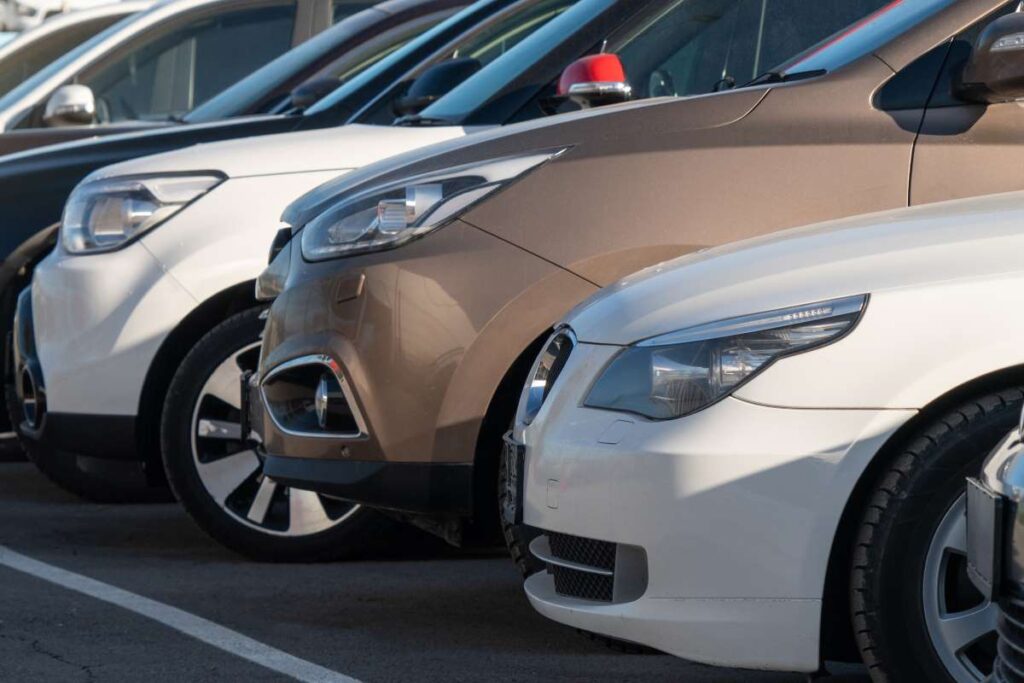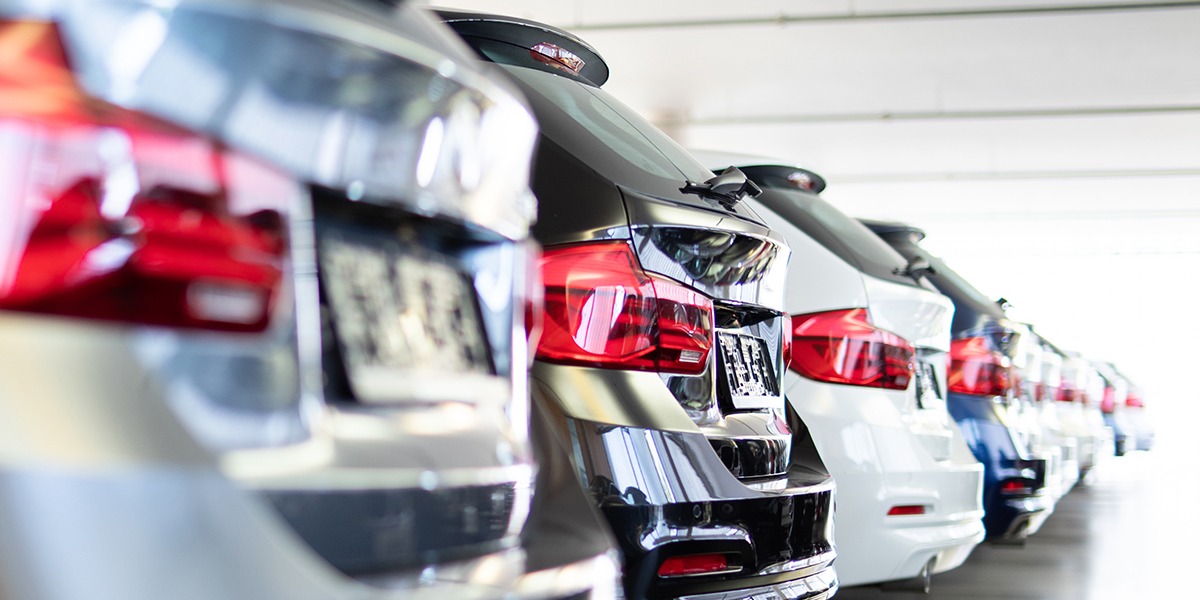
Vehicle sharing is becoming increasingly important in fleet management because it offers the opportunity to utilize the fleet more efficiently and thus reduce costs. Even though the traditional company car assigned to an individual employee remains popular, more and more companies are considering the concept of pooled vehicles.
In this post, we take a closer look at fleet vehicle management, explain how it differs from company cars, and discuss how car-sharing software simplifies the organization and booking of fleet vehicles.
Contents
- 1. What is a pool vehicle?
- 2. Pool Vehicle vs. Company Car: Differences and Similarities
- 3. The Benefits of Pool Vehicles in a Fleet
- 4. What Matters Most in Fleet Management
- 5. Software-Based Fleet Management: The Benefits of Car-Sharing Software
- 6. Key Considerations for Efficient Fleet Management
- 7. Taxation of Pool Vehicles
- 8. Agreement for Pool Vehicles: Car Policy for the Car-Sharing Fleet
- 9. Here's what to keep in mind regarding owner liability in a car-sharing fleet
- 10. Vehicle Access: Digital Key Management
What is a pool vehicle?
A shared vehicle is a vehicle used by multiple people. A fleet may consist entirely of shared vehicles or only partially of them. A shared vehicle agreement should clearly specify who is permitted to use the car-sharing vehicles and who has access to them. This is because there may be exceptions to the usage rights.
Compared directly to a traditional company car used by only one driver, pool vehicles are used more frequently for business trips and are therefore utilized more heavily. This is a good thing—and exactly what’s intended—because it means that pool vehicles experience significantly less downtime. Thanks to carsharing, you can optimize fleet utilization and use your vehicles more economically. Even just a few vehicles are enough to make a shared fleet worthwhile. After all, the higher the utilization of the company vehicles, the greater the efficiency of the fleet.
Pool Vehicle vs. Company Car: Differences and Similarities
Pool vehicles differ from company cars primarily in terms of who is authorized to use them and their availability. While a company car is assigned to a specific employee and, as a rule, may only be used by that employee, a pool vehicle is available to multiple employees. This also means that employees must reserve a car-sharing vehicle in advance, whereas this is not necessary with a company car.
The following applies to both types of vehicles: The fleet manager must comply with the legally mandated owner liability requirements and regularly check the drivers’ driver’s licenses. Furthermore, when providing driver training in accordance with the UVV, no distinction is made between pool vehicles and company cars. It is mandatory for everyone who uses company vehicles. If personal use is permitted, employees must report the non-cash benefit for tax purposes using the 1% rule or a logbook.
However, fleet managers do not have to choose between the traditional company car model and a car-sharing concept. Both mobility solutions can be combined to meet the individual needs of the company and its employees.
Company Car
- Permanently assigned to a person
- No advance reservation required
- Incentive for one person
- Often long service life
Pool vehicle
- Shared use by multiple employees
- Advance reservation required
- Flexible mobility for all authorized employees
- Higher Utilization Through Shared Use
The Benefits of Pool Vehicles in a Fleet
There are many reasons to use shared vehicles: They can help reduce costs, improve vehicle utilization, and make corporate mobility more accessible to as many employees as possible.
Reducing Fleet Costs
One of the most important benefits of fleet vehicles is cost reduction. By having employees share vehicles in the fleet, utilization rates increase. Instead of assigning a separate vehicle to each driver, multiple employees share a single pool vehicle. This allows you to minimize the number of vehicles needed and reduce expenses for purchase, maintenance, and repairs.
On average, pooled vehicles can reduce fleet costs by up to 30 percent. After all, fewer vehicles with high utilization rates make more economic sense than many vehicles with low utilization rates.
Optimal vehicle utilization increases efficiency
In many fleets, company cars often sit idle. However, by having multiple employees share the same vehicle, you can reduce idle time and downtime. This results in greater fleet efficiency. If you use car-sharing software, you can further optimize vehicle utilization.
Pooled vehicles allow for more efficient vehicle use
Fleet vehicles can offer both economic and resource-related benefits. When vehicles are shared among several employees, their utilization rate can increase and the required fleet size can be reduced. This results in more efficient use of existing vehicles.
Electric vehicles can also be integrated into car-sharing programs. They produce no direct CO₂ emissions from the exhaust while driving and can help reduce the use of fossil fuels in a fleet.
Flexible Mobility Options for Employees
The demands of workplace mobility are changing. In addition to the traditional company car, flexible mobility options such as corporate carsharing can offer employees additional ways to tailor their work-related mobility to their needs.
For companies, a diverse mix of mobility options can also be part of their employee benefits package. Pooled vehicles, carsharing, and other mobility options expand the choices available to employees and can serve as a useful complement to the traditional company car.
Pooled Vehicles for Interim Mobility
According to the 2024 DAT Barometer, 86% of fleet managers surveyed rely on pool vehicles to meet short-term mobility needs within their fleets. For example, if vehicles are in the shop or the delivery of a new car is delayed, pool vehicles offer a flexible alternative.
What Matters Most in Fleet Management
Sharing vehicles within a fleet offers a number of economic benefits. This requires implementing the right measures to ensure that pool vehicles in the fleet are managed as efficiently and cost-effectively as possible. Keep the following points in mind when managing pool vehicles:
Efficient Booking and Management Systems
One of the most important tools for effectively managing a fleet of vehicles is an efficient booking and management system. This system should be easy to use to ensure that employees can book a vehicle quickly and easily on their own. In addition, the system should provide an overview of the vehicle’s status, including availability, mileage, and maintenance needs.
Automated Notifications
Another key feature of efficient fleet management is automated notifications. These notify employees and managers when a fleet vehicle has been booked for a trip and when it has been returned. They also provide information about delays and trip cancellations. This ensures transparency and prevents double bookings.
Regular Maintenance and Servicing
Regular vehicle maintenance and servicing are also important to ensure that all fleet vehicles remain in top condition. You should make sure to have all essential maintenance tasks performed on the fleet vehicles, such as oil changes, brake inspections, and tire pressure checks. Cleaning and refilling fuel and coolant should also be done regularly. A well-organized maintenance system can ensure that problems are identified and resolved early on. This ultimately minimizes costs and downtime.
Reliable Range Management
Ensuring that electric vehicles are ready to drive is a particularly critical issue. After all, every company wants to ensure that the electric vehicles in its fleet are sufficiently charged and available for drivers to use. Efficient range management is difficult to achieve without a smart software solution.
Some companies try to make their vehicles available to employees only during a specific time window. This is to ensure that the vehicles can be charged outside of that time window in preparation for their next trips. While this is one possible option, it limits the long-term potential of corporate carsharing.
Key Handovers
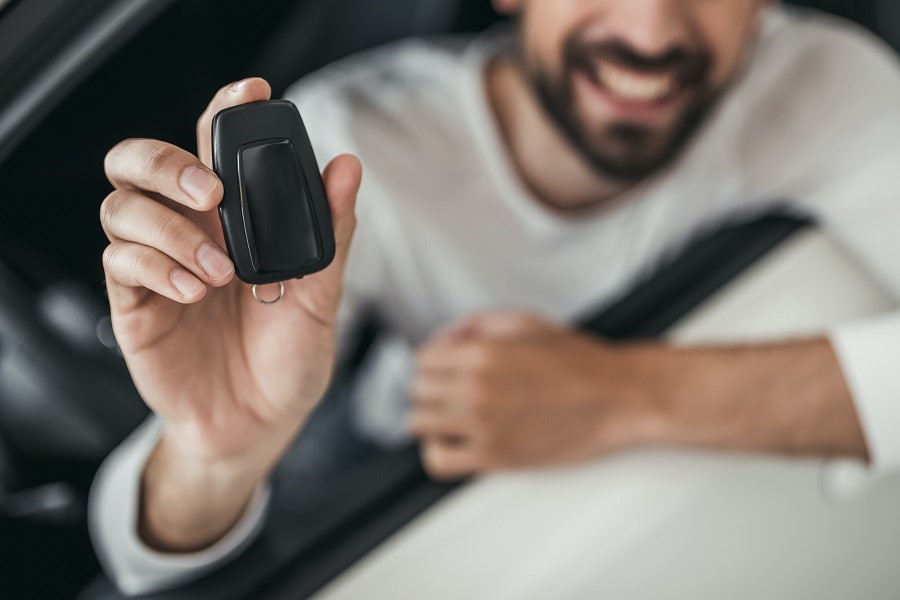
Another important aspect concerns the handoff of keys to the driver. It is necessary to determine how employees can access the keys to the shared vehicle and at what times they are permitted to take the keys. Manual key handoffs often involve time-consuming scheduling. With digital key management, tools such as a key box—which is placed in the vehicle and receives the unlock signal via Bluetooth—make this process easier. Drivers then only need a smartphone to unlock the car.
Regular Review and Optimization
It is important to regularly review and optimize the management of your fleet vehicles. For example, you should assess whether it makes sense to add more vehicles or replace older models. You should also regularly review vehicle utilization to ensure that you are using them efficiently for trips.
Software-Based Fleet Management: The Benefits of Car-Sharing Software
With fleet management software, you can manage your fleet transparently and be confident that you’re utilizing your vehicles efficiently and in a way that conserves resources. Thanks to a clear booking calendar, employees can see at a glance which vehicles are available and can book them quickly and easily.
In the event of delays, rescheduling, or cancellations of a vehicle, the software notifies employees via email, and the system automatically arranges for the reservation to be transferred to another available vehicle. In addition, the software generates reports that help further optimize vehicle utilization and inform strategic decision-making.

Key Considerations for Efficient Fleet Management
With careful planning and implementation, car-sharing programs can provide a cost-effective and flexible mobility solution for businesses and help improve the utilization of existing vehicles. Fleet managers should therefore ask themselves the following questions:
- Which vehicles in the fleet are suitable as shared vehicles?
- How many pool vehicles are needed?
- How should vehicles be booked and organized?
- How is key management and vehicle access organized?
- How are the pool vehicles maintained and cleaned?
- What measures are necessary to prevent damage, theft, or vandalism—or to respond appropriately?
- What are the rules regarding the personal use of company vehicles?
- How do you measure employee acceptance of and satisfaction with the car-sharing program? How is feedback collected and analyzed to optimize the program and better meet employees’ needs?
- How can shared vehicles be integrated into the company’s comprehensive mobility strategy and combined with other mobility solutions, such as public transportation, company cars, or e-bikes?
Taxation of Pool Vehicles
If personal use of car-sharing vehicles is permitted, drivers must pay taxes on the resulting monetary benefit. There is no difference here compared to a traditional company car. Employees can use two methods for tax reporting: the 1% rule or a logbook.
1 percent rule
Under the 1-percent method, 1% of the vehicle’s gross list price is recognized monthly as a benefit in kind. Unlike with a company car assigned to a specific employee, this portion of the benefit in kind is allocated among all vehicle users. In addition, there is a commuting allowance for trips between home and work amounting to 0.03% of the gross list price per kilometer traveled (one-way). The amount calculated in this way is added to taxable income as a non-cash benefit. The 1% rule is particularly beneficial for employees who make many personal trips using the car-sharing vehicle.
Logbook
Alternatively, drivers can also calculate and report the non-cash benefit using a logbook. A logbook documents all business and personal trips. The tax liability is then based on the kilometers driven for personal purposes and the resulting costs. For those who drive only a few kilometers for personal use in a car-sharing vehicle, it’s generally more worthwhile to report the income using a logbook.
Agreement for Pool Vehicles: Car Policy for the Car-Sharing Fleet
Companies that provide pool vehicles to their employees should be sure to draw up a written pool vehicle agreement. In this agreement, you should specify all rights and obligations related to the use of car-sharing vehicles, just as is typically defined in a car policy for company cars assigned to specific employees.
Here are some key points that should be included in such an agreement:
- Definition of Pool Vehicles and Authorized Users: Define which passenger cars are considered pool vehicles and which employees are authorized to use them. The conditions under which their use is permitted (e.g., client appointments, business trips) should also be clearly defined.
- Personal Use: The agreement should also specify whether employees are permitted to use the vehicles for personal purposes. If this is not the case—that is, if the vehicle may only be used for business trips—this must be explicitly stated.
- Rights and Responsibilities When Using the Vehicles: What are the rules for using the vehicles? This includes, for example, cleaning the cars after each trip.
- Liability and Insurance: Determine who is liable for damage to the pool vehicle and how insurance coverage is handled. Responsibilities in the event of an accident should also be clearly defined.
- Fuel Policy: How should fuel levels be handled? Do vehicles need to be returned with a full tank? And will fuel costs be billed?
- Violations and Penalties: In the event of violations of the agreement—such as unauthorized use or improper handling of the vehicle—the agreement should also include appropriate penalties. These may include, for example, a written warning or claims for damages.

Here’s what to keep in mind regarding owner liability in a car-sharing fleet
Whether it’s a company car or a shared-use vehicle, anyone who provides vehicles to their employees must also ensure their safety. Therefore, regular checks of driver’s licenses and UVV driver training are required by law. These are part of the vehicle owner’s liability obligations that every fleet manager must fulfill. This is intended to minimize the risk of accidents for employees and increase safety within the fleet.
Anyone who fails to fulfill these obligations adequately—or fails to fulfill them at all—can expect severe penalties. Digital solutions not only make compliance easier, but also document all results comprehensively and in a traceable manner.
Driver’s License Check
You should check the validity of your drivers’ licenses every six months. Drivers can conveniently check the validity themselves while on the go using a smartphone app.
UVV Driver Training
All drivers must receive training at least once a year on the safe operation of company vehicles and on how to respond in the event of an accident. Drivers can complete the driver training as an e-learning course at any time and from any location.
Vehicle Access: Digital Key Management
Vehicle access is also an important aspect of fleet management. Manually handing over keys at the office usually involves a lot of effort to coordinate appointments and, especially in the age of working from home and remote work, is not always practical for many companies. With the help of practical tools, key management can be handled electronically. These include the key cabinet and the key box:
Key cabinet
After booking the vehicle, the driver can open the key cabinet using a PIN or an RFID chip (e.g., on a company ID card) and retrieve the correct key. This key is marked by a light signal, making it easily recognizable. The other keys remain locked and cannot be removed.
Key Box
The key box is portable and is placed inside the vehicle. It receives the signal to lock and unlock the vehicle via Bluetooth, and the driver only needs a smartphone app to operate it. The key box is compatible with all makes and models and is ready for immediate use, as no modifications to the car are necessary. One provider of key boxes, for example, is the company flinkey.
FAQ – Fleet Management
Companies with employees who use the pooled vehicles only occasionally or have few client appointments can benefit greatly from carsharing. Fleet operations where drivers make many short trips are also well-suited for a carsharing program.
A company’s car policy should specify which employees have access to and are permitted to use the company’s fleet vehicles.
Whether the private use of car-sharing vehicles is permitted depends on the specific company. Both scenarios should be clearly outlined in a pool vehicle agreement to prevent misunderstandings and conflicts.