The use of pooled vehicles offers companies the opportunity to manage their fleet efficiently and at the lowest possible cost. The advantages are clear: more flexible corporate mobility, which allows more drivers to use company vehicles, as well as more efficient—and therefore more cost-effective—utilization of the vehicle fleet. But how can you best manage shared vehicles? In this article, we’ll explain what’s important when it comes to organization and how shared vehicle software can help you.
What is pool vehicle software?
Pool vehicle software makes it easier to manage pool vehicles in a fleet. The tool provides an overview of each pool vehicle, bookings, and availability. In addition, it can also simplify accounting and billing.
The Benefits of Fleet Management Software
Many fleet managers rely on their email provider’s calendar feature to manage their vehicle fleet. While this may seem straightforward at first glance, it isn’t sufficient for a more in-depth analysis of utilization efficiency. After all, things start to get confusing even with just a handful of fleet vehicles. Which company car is used most frequently? Are there bottlenecks during peak times—that is, periods of increased demand or times when vehicles are idle? Intelligent, digital car-sharing software not only simplifies vehicle booking but can also reliably identify cost outliers and highlight opportunities for savings.
Easy Booking and Communication with Drivers
Drivers can reserve vehicles on their own. This can be done via a smartphone app or a web application. The car-sharing software handles all subsequent communication. Drivers receive a reservation confirmation and are automatically notified by email in the event of delays, rescheduling, or cancellations. A booking calendar clearly displays all bookings and availability.
Using a return dialog, drivers can document dirt, defects, or damage so that these issues can be processed internally.
Vehicle Scheduling
Fleet management software assigns an appropriate vehicle for each reservation. In doing so, it takes into account factors such as the range of electric vehicles or the number of kilometers allowed under a lease agreement.
Increased Efficiency
Software-based fleet management allows for the automation of many recurring processes, such as vehicle reservations, access to company cars, and monitoring of maintenance work. This minimizes the risk of human error and reduces the workload for fleet managers. Car-sharing software optimizes the use of company cars through effective planning and monitoring. It ensures that the right vehicles are always assigned to trips and prevents double bookings.
Monitoring and Traceability
A software-based solution for fleet vehicle management provides a high degree of transparency and traceability for fleet management. All information regarding trips and vehicle usage is stored centrally and can be accessed at any time. This makes it easier to make informed decisions and simplifies the management of fleet vehicles.
With this software, you can monitor all key data and metrics, generate reports at any time, and take appropriate steps to optimize operations. This includes, for example, the utilization rate of vehicles across the entire fleet, the number of kilometers driven, and the cost per vehicle. This information is essential for the optimal management of vehicle fleets. It provides insight, for example, into whether the number of vehicles should be reduced further, additional vehicles should be purchased, or alternative mobility options should be integrated.
Compliance with keeper liability obligations
Even with fleet vehicles, fleet managers must comply with the legally mandated owner liability requirements. This includes regularly checking driver’s licenses and providing driver training in accordance with UVV regulations. Fleet management software simplifies these tasks by verifying that all required checks and inspections are up to date before each trip begins.
How Fleet Management Works with Software
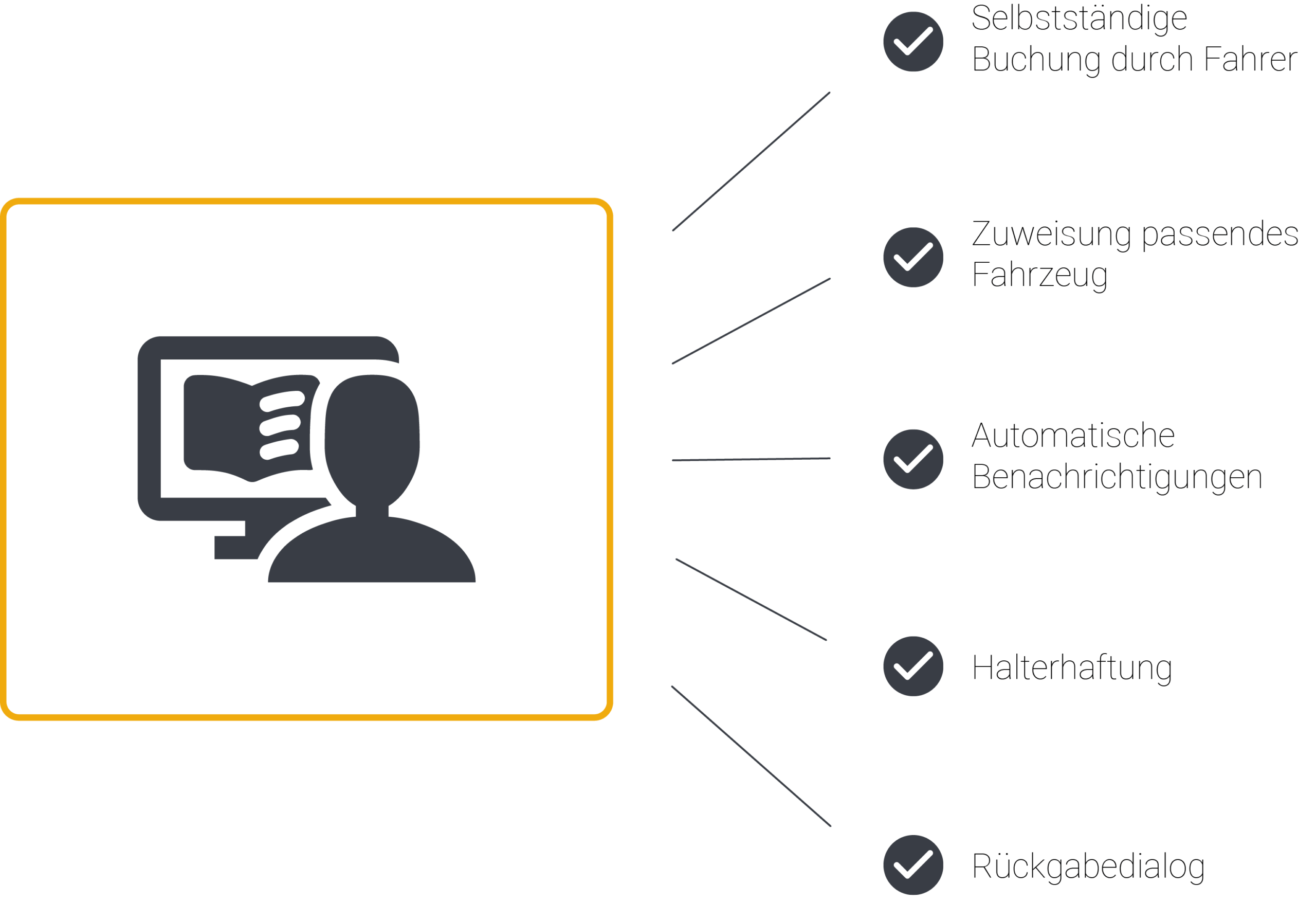
Fleet management software, such as that offered by CarWise, streamlines all processes related to fleet management. In addition to making it easy to reserve vehicles, the software helps fleet managers comply with legal requirements and simplifies the vehicle return process.
- Booking a Vehicle: To use a fleet vehicle, the employee books it through the software. The employee selects the desired date and time for the start of use, as well as the estimated duration of the booking. The software automatically assigns a suitable vehicle for each trip, taking into account the leased mileage and the range of electric vehicles. The driver then receives a booking confirmation via email. If there is a delay or a rescheduling, the driver also receives a notification.
- Vehicle Access: Once the reservation is confirmed, the employee gains access to the vehicle. This can be done using a key box, which is placed inside the vehicle and receives the signal to open and close via Bluetooth. Alternatively, a key cabinet can be installed.
- Vehicle Owner Liability: Before each trip, a check can be performed to verify that drivers’ licenses are valid and that drivers have received the necessary training.
- Return: After the trip is over, the employee parks the vehicle at the agreed-upon location and ends the reservation using the software. Any damage or defects to the vehicle can be documented using a return dialog and forwarded for internal processing.
- Analyses and Reports: Software offers various reporting features to analyze the use of fleet vehicles and further optimize utilization.
Why should a company use fleet management software?
Companies should rely on a software solution to improve efficiency and maintain a clear overview of their fleet vehicle administration. The software offers a simple and effective way to monitor and manage all vehicles, bookings, and trips. It also provides useful analytics that reveal how well the vehicles are being utilized and where there is room for improvement.