Sustainable fleet management combines economic requirements with climate and environmental goals. Companies face the challenge of organizing their operational mobility efficiently while keeping an eye on energy consumption, CO₂ emissions, and resource use.
The focus is not on individual vehicles or isolated measures, but rather on the comprehensive planning, management, and ongoing development of the fleet. This includes, for example, more efficient vehicle utilization, the integration of alternative powertrains and mobility solutions, and the transparent collection of relevant fuel consumption and emissions data.
This article explains what characterizes sustainable fleet management, what goals companies can pursue through it, and what measures are suitable for practical implementation.
Contents
- 1. What does sustainable fleet management mean?
- 2. Strategically managing sustainability in the fleet
- 3. Roles, responsibility and organization in the fleet
- 4. Combining economic efficiency and ecological impact
- 5. Digitalization as the basis for sustainable fleet management
- 6. Implement Targeted Measures in the Fleet
What does sustainable fleet management mean?
Sustainable fleet management describes a holistic approach that combines economic requirements with climate and environmental goals. This involves not only individual measures such as electrification, but also the long-term integration of energy consumption, CO₂ emissions, and resource use into fleet planning and management.
A sustainable vehicle fleet takes into account various phases of vehicle use, from procurement through ongoing operation to end-of-life disposal. At the same time, it considers employees, operational requirements, and mobility needs. Clear processes, measurable goals, and relevant metrics help to implement targeted measures and make their progress transparent.
Differentiation: sustainable mobility and sustainable fleet management
Sustainable mobility encompasses various approaches designed to address mobility needs, energy consumption, and CO₂ emissions. These include, for example, alternative propulsion systems, alternative fuels, corporate car-sharing, and other mobility services.
Sustainable fleet management begins with the planning and management of the entire fleet. It integrates such measures into the fleet strategy, taking into account economic and operational requirements as well as climate and environmental goals.
Simply put: Sustainable mobility is about how mobility can be shaped. Sustainable fleet management creates the organizational and strategic conditions needed to plan and implement appropriate measures in a targeted manner and evaluate them based on measurable goals.
Strategically managing sustainability in the fleet
A sustainable fleet requires clear goals and a structured approach. In their fleet management, companies can define the economic, climate, and environmental goals they are pursuing and the measures they will take to achieve them.
These include, for example, guidelines on vehicle selection and use, driving behavior, and the gradual integration of alternative powertrains. Key focus areas include reducing CO₂ emissions and fuel consumption, as well as promoting more efficient vehicle use. Measurable goals and appropriate metrics help steer development over the long term and make progress transparent.
Roles, responsibility and organization in the fleet
Sustainable fleet management is also an organizational task. Clear responsibilities and coordinated processes help to systematically pursue goals for reducing energy consumption and CO₂ emissions in the fleet. This often requires close collaboration between fleet management, executive management, and other departments within the company.
Drivers and employees also play an important role. Their driving and usage habits can affect fuel and energy consumption as well as vehicle costs. Regular communication, clear rules, and targeted training can, for example, promote fuel-efficient driving and the efficient use of vehicles.
Processes and guidelines as a foundation
Without clear processes, it is difficult to systematically track climate and environmental goals within a fleet. Sustainable fleet management therefore establishes clear guidelines for the procurement, use, and management of vehicles. These may include guidelines on vehicle selection and alternative powertrains, car-sharing models, and the regular tracking of fuel consumption and vehicle usage.
Such processes create transparency and provide a reliable basis for decision-making. At the same time, they ensure that measures to reduce consumption and CO₂ emissions can be integrated into existing operational processes and managed over the long term.
Combining economic efficiency and ecological impact
Sustainable fleet management does not necessarily have to involve higher costs. Efficient use and management of vehicles can help reduce operating costs, prevent downtime, and improve predictability within the fleet.
Measures to optimize vehicle utilization, fuel consumption, and energy use can offer economic benefits and help reduce CO₂ emissions. In this way, fleet management can address both economic requirements and climate and environmental goals simultaneously.
Digitalization as the basis for sustainable fleet management
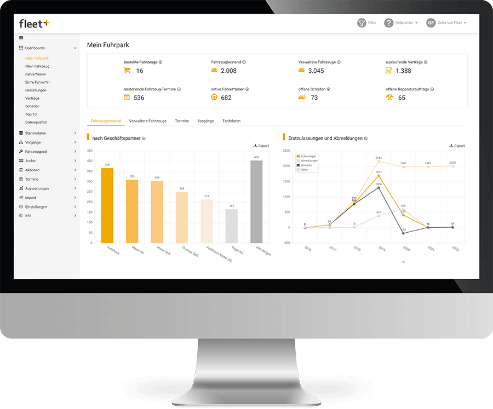
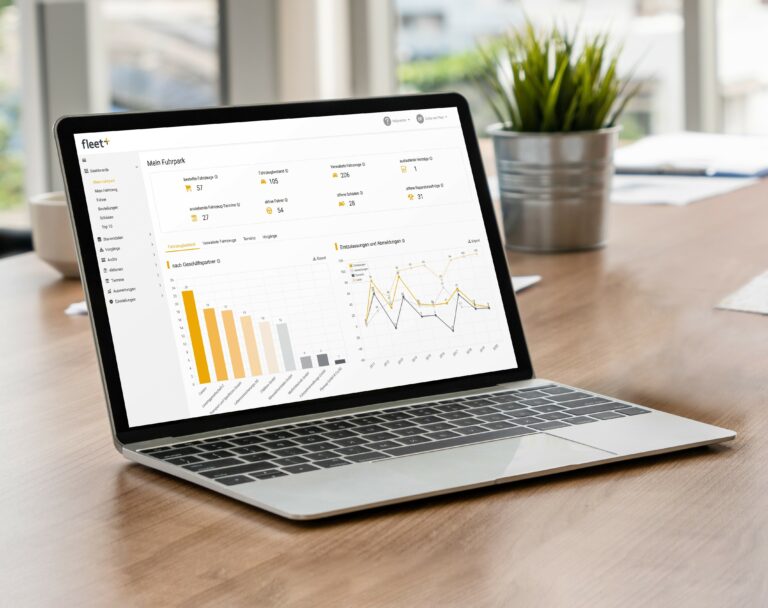
Digital technologies provide a crucial foundation for sustainable fleet management. They make it possible to transparently track vehicle usage, fuel consumption, and costs, and to identify opportunities for optimization based on this data. Digital fleet management software centrally consolidates relevant data and helps manage economic requirements as well as goals for reducing energy consumption and CO₂ emissions in the fleet.
Modern systems support companies in the following areas in particular:
- Central fleet management: All vehicles can be recorded and managed uniformly, regardless of the size or composition of the fleet.
- Transparency on consumption and usage: Data on mileage, usage patterns and consumption make potential savings visible.
- Measurable sustainability targets: Emissions and consumption can be recorded, evaluated and reduced in the long term.
- Efficient processes: Digital workflows reduce manual effort and ensure consistent processes in fleet management.
- Well-founded decisions: A reliable database supports sustainable and economically sensible decisions.
On this basis, fuel consumption, costs, and vehicle usage within the fleet can be managed in a transparent manner. Fleet management software helps integrate defined goals and targets into daily processes and track their progress using relevant data.
This makes changes and opportunities for optimization visible at an early stage, allowing measures to be tailored as needed. In this way, digitalization lays an important foundation for further developing fleet management in an efficient, transparent, and data-driven manner.
Implement Targeted Measures in the Fleet
The implementation of new measures in a fleet is a structured change process. Strategic fleet management lays the foundation for integrating new approaches into existing processes while taking into account operational requirements, cost-effectiveness, and climate and environmental goals.
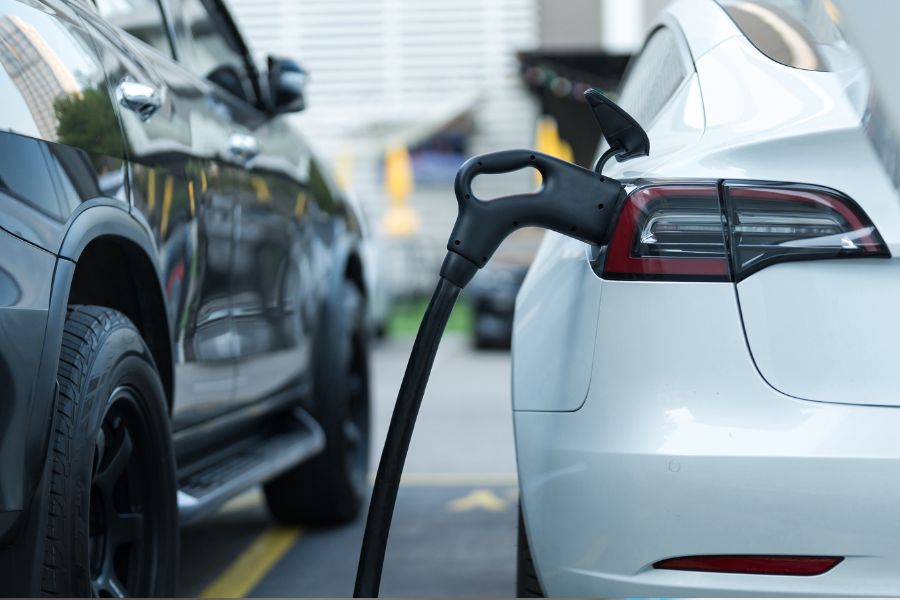
In the gradual electrification of the fleet, factors such as usage patterns, range, charging times, and charging infrastructure must be taken into account. Digital systems provide transparency regarding vehicle usage and offer a crucial data foundation for decisions regarding the further expansion of e-mobility.
Organizational measures can also complement the fleet strategy. Corporate carsharing can help improve vehicle utilization and reduce vehicle demand. At the same time, driving behavior affects fuel and energy consumption as well as vehicle wear and tear. Clear rules, regular communication, and training can support efficient vehicle use.
It is crucial to coordinate the various measures and manage them over the long term. This allows for the integration of electrification, carsharing, and other mobility options into the vehicle fleet in a way that meets actual needs, and enables their development to be tracked using specific metrics.
Conclusion: Sustainable fleet management as a management task
- Sustainable fleet management is a long-term management task that takes into account both economic requirements and climate and environmental goals.
- Clear processes, digital data, and measurable goals help optimize vehicle usage and fuel consumption and reduce CO₂ emissions.
- A coordinated fleet strategy lays the groundwork for the targeted integration of electrification, efficient vehicle utilization, and new mobility offerings, and for the continuous development of the fleet.
FAQ on sustainable fleet management
Sustainable fleet management refers to the holistic management of the fleet from an ecological, economic and organizational perspective. The aim is to make vehicles, processes and participants sustainable in the long term.
Companies benefit from lower emissions, lower operating costs, better predictability and a stronger position as a responsible employer and business partner.
Employees and drivers significantly influence consumption, efficiency and sustainability through their behavior. Their involvement is crucial for the long-term success of sustainable strategies.
It helps companies to meet legal requirements, reduce costs and anchor sustainability in their operations on a permanent basis – instead of just implementing selective measures.
The development begins with clear goals, defined processes and a gradual changeover. A long-term strategy that includes the organization, vehicles and employees is crucial.
Digital technologies create transparency, enable data-based decisions and support the management of a sustainable fleet across all processes.
Further contributions
- Fleet optimization – efficiency and digitalization in modern fleet management
- Vehicle management: efficient processes for a modern vehicle fleet
- Excel fleet management: a practical start or an outdated concept?
- Fleet management: How to manage your fleet successfully
- Sustainable mobility starts with the vehicle fleet: electrification & environmental measures