Municipal vehicle fleets are the backbone of many public services. Whether it’s the public works department, the parks and recreation department, street cleaning, or winter maintenance—without reliable vehicles, part of the municipal infrastructure can quickly come to a standstill.
At the same time, the demands placed on fleet management are growing. Maintenance must be performed on schedule, mandatory inspections must be documented, and costs must be accounted for transparently. Added to this are new issues such as electric vehicles, sustainability, and the increasing pressure to digitize administrative processes.
From our daily work with fleet managers, we know that the biggest challenge is rarely the individual vehicle. It’s the many small processes running in the background that take up time—and that’s exactly where the greatest potential for digitization lies.
Contents
- 1. Why municipal fleets have special requirements
- 2. The biggest challenges in municipal fleets
- 3. Vehicle owner liability in municipal fleets: understanding and fulfilling obligations
- 4. Digital transformation doesn't start with software
- 5. Digitization creates freedom—not more bureaucracy
- 6. Municipal vehicles, company cars, and electric vehicles: The fleet of the future
- 7. Checklist: is your municipal fleet already organized digitally?
- 8. Conclusion
- 9. Frequently asked questions (FAQ)
- 10. Other useful articles
Why municipal fleets have special requirements
Municipal fleet management differs fundamentally from fleet management in small and medium-sized businesses or private companies. Fleet supervisors and managers in cities and municipalities bear a wide range of responsibilities: Not only must they ensure the fleet’s efficiency, but they must also comply with legal obligations and fulfill their liability as vehicle owners—often with limited resources. Regular inspections, comprehensive driver management, and transparent cost reporting are not optional but mandatory.
Instead of a homogeneous fleet of vehicles, it is often necessary to manage a wide variety of vehicles and machines:
- Vans for the municipal maintenance yard
- Winter maintenance vehicles
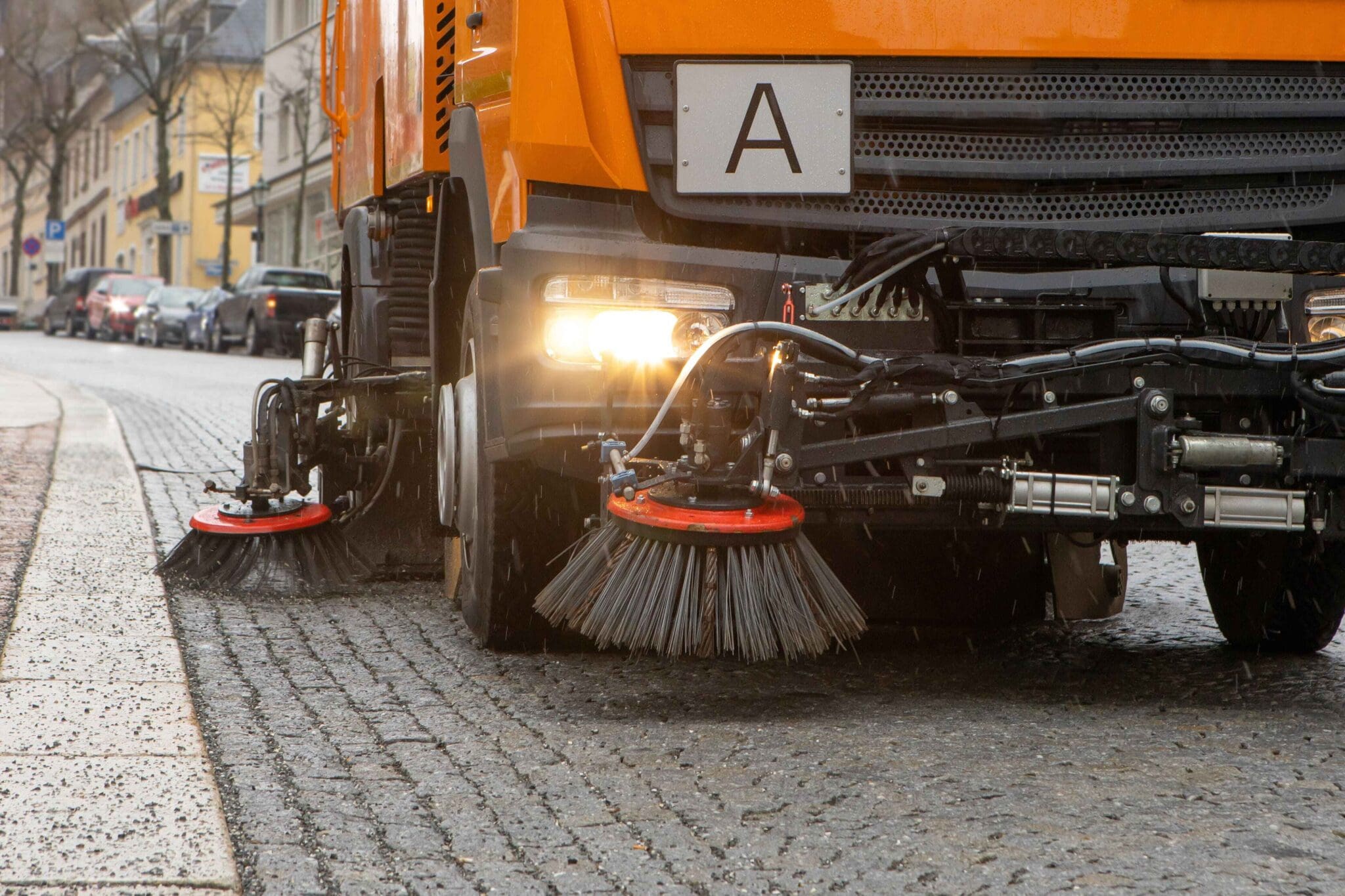
- Sweepers
- Small vans
- Trailers
- Passenger cars for administrative and field service use
- Special-purpose vehicles for various departments
In addition, multiple agencies or departments often have access to the same vehicles. At the same time, strict documentation requirements apply, and budgets must be used in a transparent manner.
Our experience shows that the complexity in this context usually stems not from the number of vehicles, but from the vast amount of information scattered across various locations—in Excel spreadsheets, Outlook calendars, paper files, or individual specialized applications.
The biggest challenges in municipal fleets
Today, municipal fleets must balance cost-effectiveness, legal compliance, and sustainability—while ensuring smooth operations.
The BBM benchmark study “Potential and challenges in municipal fleet management” (2024) also confirms that municipalities are under pressure to take action. It shows that while sustainability and digitalization are increasingly becoming part of modern fleet strategies, many organizations still operate with legacy processes and a lack of digital standards.
From our perspective, it is primarily the many small administrative tasks that take up time in day-to-day operations. Fleet managers in municipal fleets face the following challenges particularly often.
Keeping track of the municipal fleet
The larger the vehicle fleet, the harder it becomes to keep track of everything at all times.
Which vehicle is currently in the shop? When is the next vehicle inspection due? Which vehicles have the highest operating costs?
In many municipalities, information is maintained in multiple places or stored in different locations. This not only increases the workload but also makes collaboration between the departments involved more difficult.
Reliably organizing maintenance and mandatory inspections
Municipal vehicles are subject to numerous inspection and maintenance schedules. These include, for example:
- Annual Inspections
- Safety Inspections
- UVV inspections
- Inspections
- Tire changes
- Maintenance according to manufacturer specifications
Every missed maintenance appointment can lead to unplanned trips to the repair shop and, in the worst case, limit a vehicle’s operational readiness. That is why structured maintenance management is much more than just an organizational task.
However, many municipal vehicle management departments still rely on calendar reminders or Excel spreadsheets. This works—as long as the fleet remains manageable. As the fleet grows, however, the risk of missing deadlines or keeping incomplete records increases.
The BBM study also concludes that there is still room for improvement in many municipal organizations, particularly with regard to driver’s license checks, usage regulations, and documentation. It is precisely in these areas that avoidable manual work often arises in day-to-day operations.
Presenting costs transparently
Transparency is crucial, especially in the public sector. Those in charge must be able to track at any time what costs a vehicle incurs and how those costs are changing.
That’s why it’s no longer enough to simply file gas receipts and repair bills. What’s needed are reliable analyses of:
- Fuel costs
- Repair costs
- Maintenance costs
- Total costs per vehicle
- Cost trends over several years
Only through centralized analysis can well-informed decisions be made regarding replacement purchases or the cost-effective use of individual vehicles.

Reducing administrative burden in municipal fleets
From driver’s license checks to vehicle records and damage documentation: Many administrative tasks require a significant amount of manual effort.
The BBM Benchmark Study shows that digital processes are still far from being universally established in municipal vehicle fleets. This is often due to processes that have evolved over time, a lack of standards, or disparate systems.
This finding aligns with our experience from digitization projects: Many processes work well in principle—but they operate side by side rather than in tandem.
For fleet managers today, modern fleet management means much more than simply managing vehicle records. It’s about the efficiency of the entire fleet—from regular maintenance planning and driver management to comprehensive documentation of all owner liability obligations. Digitizing these processes lays the foundation for future-proof, comprehensive municipal fleet management.
Vehicle owner liability in municipal fleets: understanding and fulfilling obligations
For municipal fleet managers, owner liability is a key issue. As owners of company vehicles, cities and municipalities are legally required to ensure that all drivers hold a valid driver’s license and receive regular training on safe driving practices. These obligations apply regardless of the size of the fleet.
The necessary measures include, among other things:
- Regular driver’s license checks —documented in a verifiable and audit-proof manner
- Annual UVV driver training sessions —for all drivers of company vehicles
- Complete record-keeping —accessible at any time for internal and external audits
- Automatic deadline monitoring —so no mandatory deadline is overlooked
Anyone who still manages these tasks manually or using Excel spreadsheets risks not only a heavy administrative burden but also serious liability consequences in the event of a claim. Digital fleet management provides the necessary security—efficiently, in compliance with the law, and without additional red tape.
Digital transformation doesn’t start with software
In conversations with municipal fleet managers, we often hear the same question: “Which software is right for us?”
Our answer is usually: “The more important question is, which processes are causing the most effort today.”
After all, digital transformation doesn’t mean simply transferring analog workflows one-to-one into a digital system. Successful projects start with an assessment of the current situation:
- Where do media breaks occur?
- What information is maintained in duplicate?
- Which tasks waste time unnecessarily every month?
Only once these questions have been answered can fleet management software deliver its full value. That is why we view digital transformation not as an IT project, but as an organizational project.

Carano expert tip
The results of the BBM benchmark study confirm what we have been observing for many years in our digitalization projects: Municipal fleets often have clear strategic goals—for example, in the area of sustainability. At the same time, operational disconnects arise in day-to-day operations because vehicle data, documentation, and inspection schedules are managed in different systems. A centralized digital fleet management system helps bridge precisely this gap.
Digitization creates freedom—not more bureaucracy
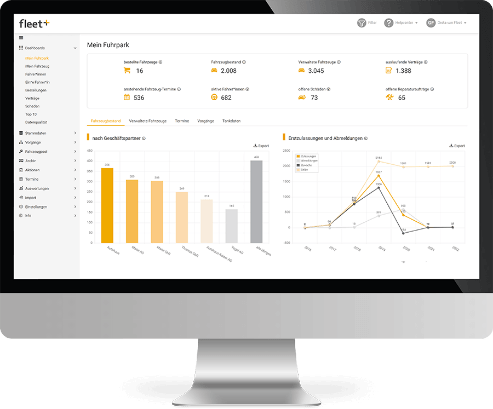
Digital fleet management creates exactly this centralized information base.
It helps to,
- Centrally manage vehicles,
- automatically track maintenance and inspection schedules,
- transparently analyze vehicle costs,
- maintain digital vehicle records,
- documenting driver’s license and occupational safety inspections, and
- recording damage and repairs in a traceable manner.
Although the benefits of digital processes are obvious, municipal vehicle fleets, for example, have so far made only limited use of electronic driver’s license checks or digital administrative processes. Implementation is often hindered by entrenched structures or a lack of technical standards.
In our day-to-day work, we repeatedly see that many municipalities start out wanting a digital appointment management system. As the project progresses, however, it often becomes clear that the greatest benefit comes from having all information centrally available. Instead of searching for data, employees can focus on their actual tasks.
Municipal vehicles, company cars, and electric vehicles: The fleet of the future
In today’s municipalities, modern fleet management means managing a wide variety of vehicle types under one roof—from traditional service vehicles to municipal vehicles and electric vehicles. The increasing shift toward electrification is placing new demands on mobility, charging infrastructure, and range planning.
At the same time, the same legal requirements apply to all vehicles: regular maintenance, thorough monitoring of roadworthiness, and verifiable compliance with all relevant inspection requirements. By managing these requirements through a centralized digital system, you lay the foundation for future-proof municipal fleet management—today and tomorrow.
Checklist: is your municipal fleet already organized digitally?
See for yourself:
- Are all vehicles documented centrally?
- Are maintenance and inspection schedules automatically tracked?
- Can vehicle costs be analyzed at any time?
- Can driver’s license checks be digitally documented?
- Is there a digital vehicle file for each vehicle?
- Are damages and repairs documented in a traceable manner?
The more questions you answer “No” to, the greater the potential to reduce administrative burdens and make processes more efficient.
Conclusion
In the coming years, municipal vehicle fleets will face further changes. Electric mobility, alternative powertrains, and new reporting requirements will further increase complexity. Those who invest in digital processes today are laying the groundwork to efficiently meet future requirements as well.
For many years, Carano Fleet+ has been helping municipalities digitize their fleet management.
Our experience from numerous digitization projects shows that the key is not to digitize as many processes as possible—but rather the right ones. By consolidating information, automating routines, and creating transparency, organizations can sustainably reduce the workload on employees and lay the foundation for a future-proof municipal vehicle management system.
Frequently asked questions (FAQ)
Municipal fleets manage a significantly more diverse range of vehicles—from passenger cars and vans to specialty vehicles. Added to this are strict documentation requirements, public budget accountability, and the fact that multiple departments have access to the same vehicles. This makes professional fleet management a legal and organizational necessity.
Required obligations include regular driver’s license checks, annual UVV driver training sessions, adherence to maintenance schedules, and audit-proof documentation of all records. Violations can result in serious liability consequences in the event of an accident—for the municipality and the responsible fleet manager personally.
The key lies in transparency. If you know at all times which vehicles are incurring the highest operating costs, you can take targeted action—through early maintenance, optimized utilization, or more cost-effective replacements. Digital fleet management software provides exactly this data foundation.
In general, municipalities of all sizes benefit from it—because maintenance schedules, driver’s license checks, and cost documentation are necessary regardless of fleet size. A digital solution pays for itself particularly quickly if information is still managed in a decentralized manner or if multiple departments have access to the same vehicles.
Successful projects don’t start with the software, but with an assessment: Where are there gaps in the workflow today? Which processes take the most time? Only then can fleet management software deliver its full value. Carano Fleet+ supports municipalities throughout this process, from the initial analysis to successful implementation.
Other useful articles
- Fleet management for energy providers: Efficient, digital, and reliable
- Fleet management service providers: How to efficiently digitize your clients’ fleet management