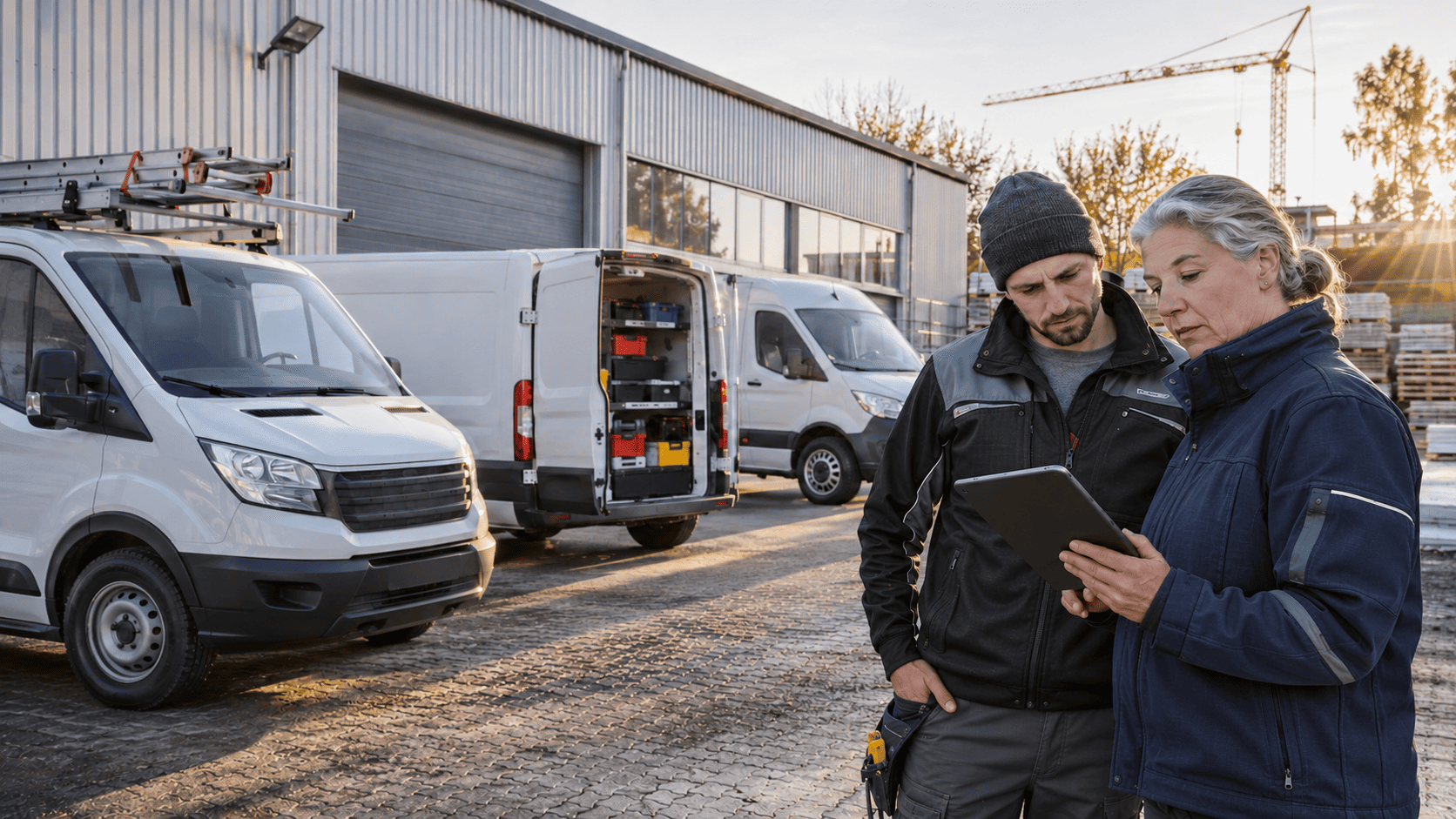
Vans transport technicians to the construction site, service vehicles carry tools and materials, and panel vans serve as mobile workshops—in short: Without a functioning fleet, operations quickly come to a standstill.
At the same time, maintenance schedules must be adhered to, costs must be monitored, and legal obligations must be reliably fulfilled. Modern fleet management provides a solution here. Digital processes help simplify administrative tasks, reduce downtime, and maintain an overview of vehicles, drivers, and costs.
In this article, you’ll learn about the challenges that trades and construction companies face today in fleet management, the potential offered by digitalization, and the features that modern fleet management software should provide.
Contents
- 1. Why fleet management is more important than ever for small businesses today
- 2. The biggest challenges in the fleets of trades and construction companies
- 3. Modern fleet management: these are the tasks companies should keep in mind
- 4. Digital solutions instead of excel: How trades businesses can save time and money
- 5. Checklist – Is your fleet still managed the old-fashioned way?
- 6. Digitizing your fleet: How to get started
- 7. Digitally documenting vehicle pickup and return
- 8. Conclusion: Why modern fleet management is a key to success
- 9. FAQ – Fleet management in the skilled trades and construction industries
- 10. Other useful articles
Why fleet management is more important than ever for small businesses today
Rising fuel and repair costs, increasing documentation requirements, and the ongoing shortage of skilled workers are presenting new challenges for trades and construction companies. This makes it all the more important to use existing resources efficiently—and that includes the vehicle fleet.
The Bitkom study “Digitalization of the Skilled Trades 2025” shows that digitalization plays an important role in this context . According to the study, 89% of businesses see it as an opportunity . However, many companies lack the time, amid their demanding day-to-day operations, to consistently drive digitalization projects forward.
In our experience, however, many companies only begin to pay closer attention to their fleet when problems arise: a vehicle breaks down unexpectedly, a maintenance task is overlooked, or the administrative burden grows with every new purchase. Yet many of these challenges can be proactively avoided through clearly defined processes and digital tools.
The biggest challenges in the fleets of trades and construction companies
A well-functioning fleet is the foundation for smooth workflows. But especially in the skilled trades and construction industries, companies face daily challenges that cost time, money, and patience. Many of these challenges don’t arise on the road, but rather during the behind-the-scenes organizational process.
From conversations with our customers, we know that it’s often small, recurring tasks that become a burden in day-to-day operations and add up as the fleet grows.
Vehicle breakdowns cost money
An unplanned vehicle breakdown rarely comes at a good time. If a van breaks down in the morning, routes must be rescheduled, employees reassigned, or replacement vehicles arranged. In the worst-case scenario, projects are delayed or customer appointments have to be rescheduled.
In conversations with fleet managers, one thing becomes clear time and again: The actual costs of a vehicle breakdown often do not arise at the repair shop. In addition to repair costs, there are other associated costs, such as lost production, additional rental vehicles, or longer travel times.
This makes it all the more important to keep track of the fleet’s technical condition and plan maintenance well in advance. This helps prevent many breakdowns before they disrupt daily operations.
Construction sites require maximum flexibility
In the skilled trades and construction industries, no two workdays are alike. Vehicles move between job sites, teams are reassigned on short notice, and requirements often change within a matter of hours. This increases the need for transparent vehicle management.
The ongoing shortage of skilled workers is adding to the pressure. Automated processes help reduce the organizational burden and make better use of valuable work time.
Knowing at all times which vehicles are available, where they are being used, and what equipment they are carrying allows you to respond more quickly and deploy resources more efficiently.
Maintenance is often overlooked
Inspections, general inspections, or occupational safety inspections are part of everyday life for every fleet. Nevertheless, deadlines are often only noticed when they are already imminent or have even passed.
The reason is rarely a lack of diligence, since many companies are aware of their maintenance schedules —the challenge lies in not losing track of them amid the hustle and bustle of day-to-day operations. This is especially true when vehicles are in constant use.
Daily vehicle inspections are often neglected
In addition to scheduled inspections, simple daily checks performed by the drivers themselves also play an important role—such as a quick check of tire pressure, lights, or fluid levels before setting out. In practice, however, these checks often fall by the wayside amid the hectic daily routine on construction sites, since they are neither documented nor required.
For fleet managers, this is an underestimated lever: If a technical defect is detected early, it can often be fixed with minimal effort—but if it’s overlooked, it can result in a costly breakdown. A simple digital checklist that drivers fill out briefly before starting their trip provides a solution here and makes responsibility for the vehicle’s condition part of the daily routine rather than a tedious extra task. In this way, the daily inspection becomes an integral part of effective fleet management, rather than being left to chance.
Driver’s license checks and driver training take time
Companies are required to regularly check their drivers’ driver’s licenses and train drivers in the safe operation of company vehicles. In addition, they must document these activities in a traceable manner. What may seem straightforward with just a few employees quickly becomes a major organizational challenge as the fleet grows.
Schedules must be coordinated, records archived, and inspection intervals monitored. If these routine tasks are performed manually, they take up valuable work time—both for fleet managers and for the drivers themselves.
Vehicle costs are often unclear
What are the actual costs of a vehicle? Which models incur particularly high repair costs? And how are the fleet’s total expenses trending?
In many companies, these questions can only be answered with a significant amount of research. Fuel costs, repairs, lease payments, and insurance premiums are often recorded in different systems and are difficult to consolidate.
Only when all expenses per vehicle are consolidated does a realistic picture of the actual operating costs emerge.
Modern fleet management: these are the tasks companies should keep in mind
Professionally organized fleet management reduces the administrative burden, ensures greater transparency, and helps keep vehicles reliably operational.
In this way, the vehicle fleet transforms from an organizational burden into a key component of efficient operations and long-term business success.
Especially in the skilled trades and construction industries, where vehicles are in daily use, structured management is crucial for smooth day-to-day business operations.
For the fleet manager at the company, this means one thing above all else in day-to-day operations: not losing track of regular trips, upcoming inspection appointments, and the condition of the vehicles. Well-organized fleet management not only increases efficiency but also contributes to greater sustainability in the fleet—for example, through better utilization and the targeted avoidance of unnecessary trips.
The most important tasks include:
- Vehicle management: Centrally record all relevant vehicle data—from master data and mileage to maintenance intervals, insurance, and inspection dates
- Driver management: Assign drivers and their qualifications to vehicles, manage permissions, and provide relevant information in a consolidated format
- Cost control: Break down fuel/charging, repair, insurance, and leasing costs by vehicle to identify cost drivers and make informed decisions about future investments
- Maintenance management: Plan and document maintenance, inspections, and vehicle inspections
- UVV driver training and driver’s license checks: Reliably organize statutory testing and documentation requirements
- Pool vehicle management: Efficiently coordinate shared vehicles to avoid double bookings and improve fleet utilization
- Fuel card management: Transparently track and analyze fuel and charging costs
- Lease management: Keep track of contract terms, return dates, and contract details to avoid unnecessary additional costs
- Claims management: Document and process claims, and analyze the causes of damage to implement appropriate optimization measures
- E-Mobility: Integrate electric cars and charging infrastructure into the fleet—according to a recent industry survey, 42% of trades businesses already use electric vehicles, and another 28% are actively considering making the switch
The greatest strength of modern fleet management lies in not viewing these tasks in isolation, but rather in linking them together. Instead of managing information across different systems, all relevant data is consolidated in one central location.
This provides clarity, reduces manual tasks, and helps companies organize their fleets in a cost-effective, safe, and future-proof manner—regardless of whether a company has ten or several hundred vehicles in operation.
Digital solutions instead of excel: How trades businesses can save time and money
Many trades and construction companies have been managing their vehicle fleets for years using Excel spreadsheets, Outlook reminders, or paper files. However, as their fleets grow, these solutions quickly reach their limits.
Recent figures also confirm that digitalization offers great potential in this regard. According to a Bitkom study, many companies see digitalization as an opportunity to streamline workflows and reduce the workload on employees in their day-to-day operations. At the same time, a lack of time, high investment costs, and the shortage of skilled workers are among the biggest challenges in implementing these changes.
In practice, we often find that it’s rarely a single major problem that takes up time. Rather, it’s the accumulation of many small tasks: updating vehicle data, checking deadlines, searching for documents, or consolidating costs. This is exactly where software solutions provide tangible added value.
Less administrative work
Instead of maintaining information multiple times or compiling it from different systems, all relevant data is available in one central location. This saves time on many small tasks in day-to-day operations and reduces the potential for errors.
Reliably meeting deadlines
Whether it’s driver training, UVV inspections, vehicle inspections, or driver’s license checks—automatic reminders provide greater peace of mind. They notify fleet managers in a timely manner about upcoming deadlines and make it easier to plan the necessary actions.
This makes it possible to comply with legal requirements more reliably, document evidence completely, and avoid unnecessary delays or downtime.
More time for core business
Less administrative work means more time for tasks that drive the company forward. Instead of monitoring deadlines or hunting down documents, fleet managers can focus on the economic management of the fleet. This leaves more time for the tasks that truly drive the company’s success.
Data-driven business decisions
Many fleet management decisions—such as vehicle replacements, new purchases, or the optimal deployment of individual vehicles—are often based on experience in day-to-day operations.
Digital fleet management, on the other hand, provides reliable data and thus creates a solid foundation for decision-making.
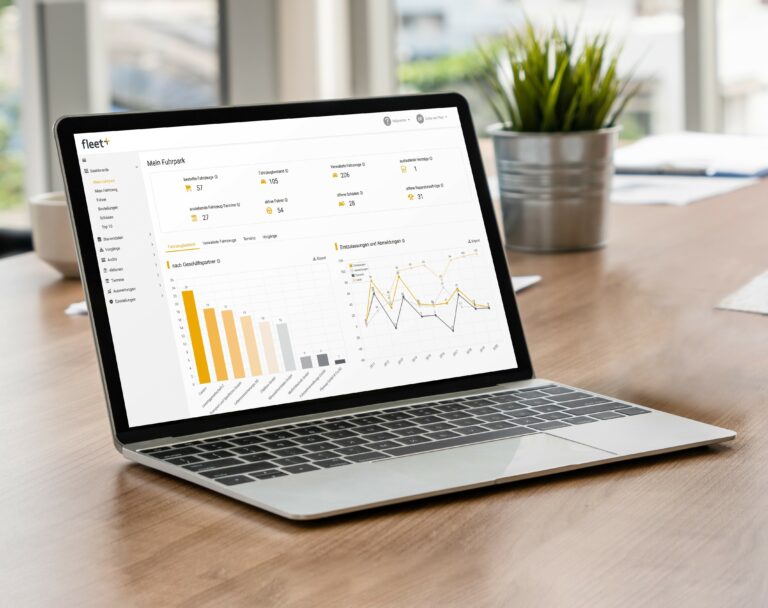
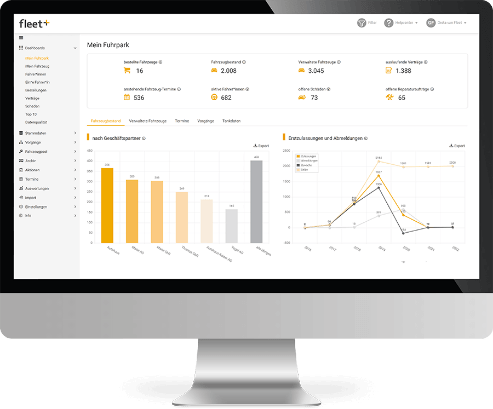
Reports generated with a single mouse click show at a glance how fuel, maintenance, repair, and leasing costs are trending. This makes it possible to identify cost drivers early on, pinpoint opportunities for savings, and plan investments more effectively.

From our practice
Many companies initially assume that digitizing fleet management will primarily reduce fuel costs. In practice, however, it turns out that the greatest economic benefit often comes from increased transparency. Knowing the actual operating costs allows companies to plan maintenance more effectively, identify inefficient vehicles in a timely manner, and make investment decisions based on reliable data.
Checklist – Is your fleet still managed the old-fashioned way?
Do several of these points apply to your company?
- Vehicle data is managed in Excel.
- Maintenance appointments are listed in the Outlook calendar.
- Vehicle documents are stored in various folders.
- Driver’s license checks are documented manually.
- It is difficult to analyze vehicle costs.
The more you agree, the greater the potential to digitize your fleet management processes.
Digitizing your fleet: How to get started
Digitizing your fleet doesn’t have to be a major project. On the contrary: Our projects show that companies achieve the greatest success when they take a step-by-step approach and start by optimizing the routine tasks that require the most effort in day-to-day operations.
This isn’t about completely reinventing existing workflows. Rather, analog or manual processes should be supported by digital solutions wherever they are time-consuming or prone to errors.
1. Analyze existing routines
The first step is to get an overview of current processes. Where is vehicle data managed? How are maintenance schedules tracked? And what information needs to be searched for or compiled manually on a regular basis?
Especially in established companies, a variety of systems have often become entrenched—from Excel spreadsheets and Outlook reminders to paper files. Identifying these systems is the foundation for successful digitization.
2. Choosing the right fleet management software
Not every fleet management software solution meets the needs of a construction company. It is crucial that it effectively supports existing workflows and can be easily integrated into day-to-day operations.
From our perspective, it’s better to focus not on having as many features as possible, but on your company’s specific needs. Intuitive operation, automatic reminders, and the ability to expand the feature set as needed are often more important than a long list of features.
3. Digitize in stages
Not every process needs to be converted right away. Many companies, for example, start with digital fleet management or document management and then expand the solution to include other areas, such as driver’s license checks or driver training.
It’s understandable that many companies are still hesitant. According to Bitkom, a lack of time and high investment costs are among the most common reasons why digitalization projects are postponed. A step-by-step approach helps keep the effort manageable and integrate new solutions into daily work routines without major disruptions.
Digitally documenting vehicle pickup and return
When vehicles are frequently transferred between employees or construction sites, maintaining complete documentation quickly becomes a challenge.
Who was the last person to use the vehicle? In what condition was it handed over? Were any pre-existing damages noted? Digital handover and return documentation—such as photos and checklists directly on a smartphone—provides clarity and protects both companies and employees. This makes it much easier to resolve disputes over newly discovered damage, and even with fleet vehicles that have multiple users, it remains clear at all times who took which vehicle and when.
Conclusion: Why modern fleet management is a key to success
An efficient fleet isn’t created by having more vehicles, but by having better processes.
For trades businesses, digitalization doesn’t mean introducing as many new technologies as possible. What matters is simplifying processes where they bring the greatest benefit to day-to-day operations. This is precisely where the greatest value of modern fleet management lies: it frees up time for the actual core business.
Those who organize their fleet digitally today are investing not only in software—but also in greater transparency, less effort, and a future-proof business structure.
FAQ – Fleet management in the skilled trades and construction industries
In the skilled trades and construction industries, vehicles are in daily use and play a vital role in creating value. If a van breaks down or important vehicle documents are missing, it can delay construction projects and significantly disrupt day-to-day operations. Professional fleet managementhelps keep vehicles operational, simplifies administrative tasks, and ensures reliable compliance with legal requirements.
Modern fleet management software is suitable for nearly all types of vehicles. These include, among others, vans, box trucks, service vehicles, trailers, and trucks. In most cases, electric vehicles can also be integrated into the management system.
There’s no set number of vehicles. Even smaller businesses can benefit from automated processes when maintenance appointments, paperwork, or driver’s license checks start taking up more and more time. As the vehicle fleet grows, the benefits of fleet management software generally increase significantly.
Digital fleet management simplifies the organization of the fleet. Important information is available in one place, deadlines are automatically tracked, and administrative tasks can be handled more efficiently. This saves time, ensures transparency, and provides full cost control.
Recurring administrative tasks are particularly well-suited, such as maintenance and inspection schedules, driver’s license checks, driver training, managing vehicle documents, or tracking vehicle costs. In these areas, the administrative burden can often be significantly reduced.
Yes. The benefits depend less on the number of vehicles than on the organizational effort involved. Even smaller companies can benefit from centralized management when they have several vehicles in operation or need to reliably meet legal deadlines.
Modern fleet management software increasingly supports the management of electric vehicles as well. For trades businesses planning to transition to e-mobility, this allows the fleet to be managed uniformly from the start, regardless of the vehicles’ powertrain.
That depends on the size of the fleet and the amount of administrative effort required so far. Many small businesses are already saving a noticeable amount of time and money through reduced manual administrative work, less downtime, and better cost control. In practice, the investment often pays for itself within just a few months, especially if many processes were previously managed manually using Excel or paper.
Other useful articles
- Excel fleet management: A practical start or an outdated concept?
- Setting up a fleet organization: Structure, processes and digital solutions