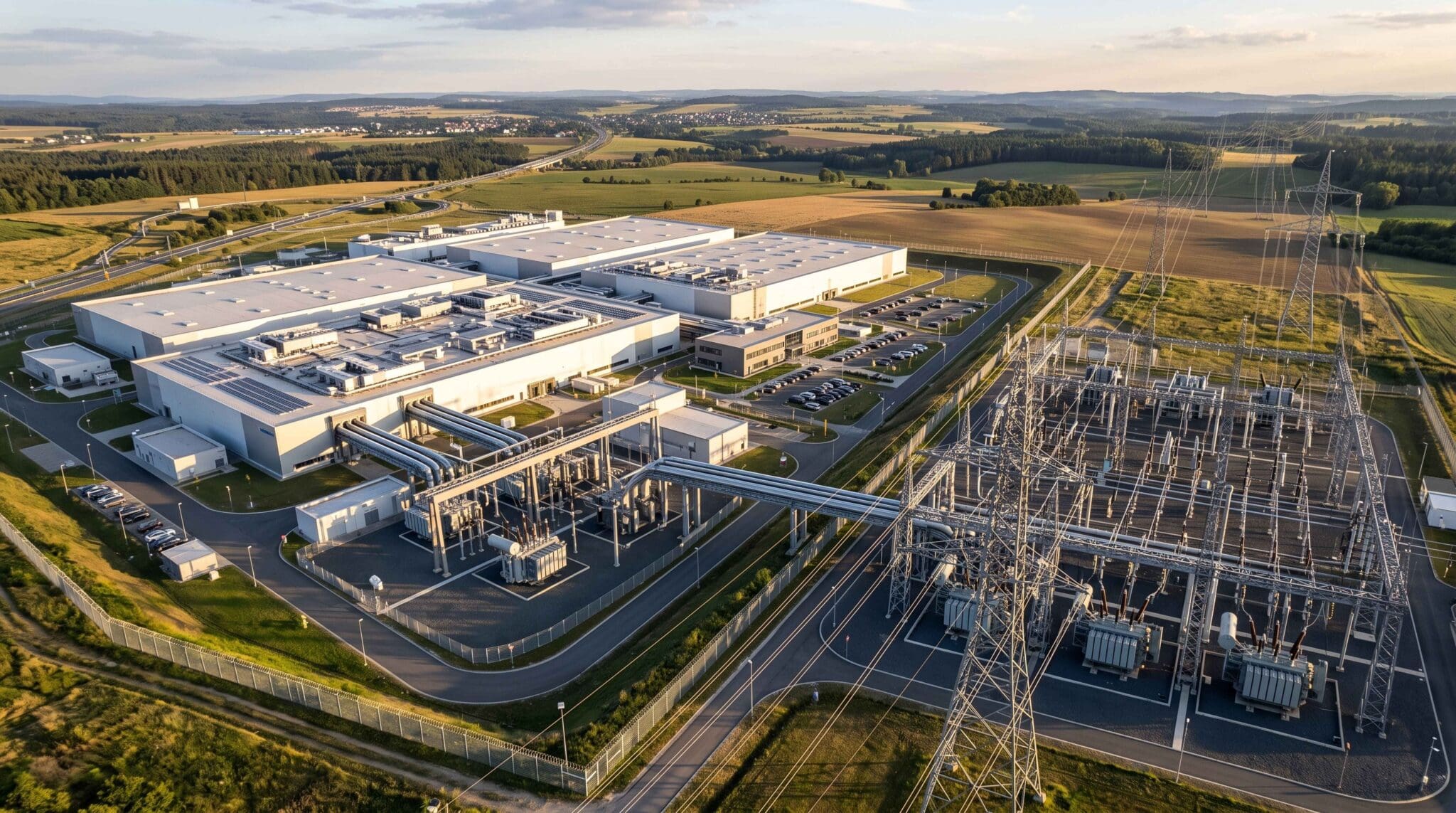
Whether it’s grid inspections, maintenance of substations, troubleshooting, or on-call duty—service vehicles are an indispensable part of daily operations for energy providers.
At the same time, the demands on the vehicle fleet are increasing: Vehicles must be ready for use at all times, legal obligations must be reliably met, and operating costs must be monitored on an ongoing basis. Modern fleet management solutions help energy providers digitize administrative processes and organize their vehicle fleets efficiently.
In this article, you’ll learn about the challenges companies in the energy and utilities sector face today and what’s important in a future-proof software solution.
Contents
- 1. What challenges do energy providers face in fleet management?
- 2. Typical applications of a fleet at energy utilities
- 3. Efficiently coordinating repair shops and partners
- 4. The role of the fleet in the energy sector’s transformation
- 5. Why excel is no longer enough today: The benefits of digital fleet management for energy providers
- 6. What modern fleet management software should offer energy providers
- 7. Energy providers should keep this in mind when selecting a digital solution
- 8. The future of fleet management in the energy industry
- 9. Conclusion: shaping the future with digital fleet management
- 10. FAQ – Fleet management for energy and utility companies
- 11. Other useful articles
What challenges do energy providers face in fleet management?
The requirements for energy providers’ fleets differ in many ways from those of other industries. Vehicles are not just a means of transportation, but indispensable tools for field technicians, service engineers, and on-call crews.
If a vehicle breaks down or important information is missing, this has a direct impact on scheduling, service quality, and—in the worst case—on the reliability of supply.
At the same time, digitalization, the energy transition, and increasing regulatory requirements are changing the operating environment. Anyone who wants to manage their fleet efficiently today must keep track of much more than just maintenance schedules and fuel costs.
Decentralized vehicle fleets
Many energy providers manage their vehicle fleets across multiple grid areas, regional locations, or service centers. This results in scattered data sets and varying work practices.
In practice, this means that vehicle records are stored in different locations, maintenance schedules are managed locally, and important information must first be gathered when needed. As the fleet grows, this increases the organizational burden.
High vehicle utilization in network operations
Service vehicles are in almost constant use in the day-to-day operations of energy utilities. Whether for maintenance, grid inspections, or last-minute emergency calls—vehicles must be reliably available.
Unplanned workshop visits or a lack of replacement vehicles can quickly lead to delays in operations. In addition, vehicles are often used by multiple drivers, making it difficult to clearly trace the source of damage or defects.
The fleet as a component of supply security during major disasters
When storm damage, severe weather, or major disruptions to the grid occur, it becomes clear just how critical a fully operational fleet really is.
In such situations, additional response teams must be mobilized within the shortest possible time, vehicles must be reallocated, and, in some cases, external service providers or neighboring utilities must be coordinated. Anyone who cannot access an up-to-date overview of available vehicles, their locations, and their equipment at these moments loses valuable time—precisely when it is least available.
Complying with legal obligations
Utility companies must also comply with numerous legal requirements. These include, among other things, general inspections, safety inspections, UVV driver training, and driver’s license checks for drivers.
In particular, emergency response vehicles and special-purpose vehicles used for utility network work must comply with legal requirements at all times.
Manually tracking these deadlines can quickly become confusing. Missing deadlines can lead not only to organizational problems in the event of a claim, but also, under certain circumstances, to legal consequences.
Fleet electrification
According to the BDEW (Federal Association of the Energy and Water Industries), the share of electrified fleets among energy utilities is growing steadily. In doing so, many utilities are not only contributing to their own sustainability goals but are also serving as role models for municipalities, businesses, and residential customers.
However, the introduction of electric vehicles is creating new challenges for fleet management. Range must be taken into account, charging infrastructure must be planned, and charging processes must be documented.
Fleet data as the basis for ESG and sustainability reports
As regulatory requirements grow—for example, in the context of EU sustainability reporting—energy providers are also placing greater emphasis on their vehicle fleets. Emissions levels, energy consumption, and the proportion of electric vehicles are increasingly becoming mandatory reporting metrics. For many companies, this means providing data that has not been systematically collected until now. A digital fleet management system that documents consumption and emissions data on a vehicle-by-vehicle basis makes it easier to meet these requirements—while also providing a reliable foundation for internally managing the company’s own sustainability goals.
Manage costs transparently
Fuel prices, repair costs, lease payments, insurance, or tire changes—operating costs are made up of many individual factors. Without a transparent data foundation, it is difficult to identify cost drivers early on and plan investments effectively.
Vehicles with high annual mileage or frequent on-call assignments, in particular, incur significant operating costs that should be analyzed transparently.
In practice, we often find that—especially in large vehicle fleets—there is a lack of standardized analyses of actual vehicle costs or the cost-effectiveness of individual vehicles. Decisions are then based more on experience than on reliable metrics.
Typical applications of a fleet at energy utilities
Depending on the size of the company and its supply mandate, a wide variety of vehicle types are used, each making an important daily contribution to supply reliability.
The requirements for fleet management are correspondingly diverse.
- Network service and maintenance: Service vehicles are used for maintenance work, inspections, and repairs on electricity, gas, water, or district heating networks.
- On-call and troubleshooting service: In the event of malfunctions or emergencies, response teams must arrive on site quickly. On-call service vehicles must therefore be roadworthy at all times, fully equipped, and ready for immediate deployment.
- Technical field service: Whether it’s meter replacement, utility connections, or customer service—field service employees cover many kilometers every day.
- Construction and infrastructure projects: Vans, commercial vehicles, and specialty vehicles are frequently used for the expansion and modernization of energy infrastructure.
Time and again, it becomes clear that requirements vary significantly depending on the area of application. This makes it all the more important to have a digital solution that accounts for different vehicle types, locations, and usage scenarios in a single platform and provides managers with a complete overview of the entire fleet at all times.
Efficiently coordinating repair shops and partners
When managing decentralized vehicle fleets, energy providers often work with multiple repair shops or regional partner companies. Without a centralized overview, it is difficult to track which repair shop is servicing which vehicle, how repair costs are trending by location, or where framework agreements would be worthwhile.
Digitally assigning vehicles to repair shop partners provides a clearer overview and makes it easier to compare costs and service quality across different locations.
The role of the fleet in the energy sector’s transformation
Today, the responsibilities of energy providers extend far beyond the reliable supply of electricity, gas, water, or heat.
Many companies are investing in the expansion of charging infrastructure, helping their customers electrify their fleets, or collaborating with local governments to develop new mobility concepts. The BDEW describes this trend as a shift toward becoming a mobility service provider.
This also changes the requirements for our own fleet.
Service vehicles are no longer needed exclusively for maintenance and troubleshooting assignments; instead, they are increasingly supporting new business areas related to electric mobility and sustainable mobility.
From our perspective, this makes the vehicle fleet strategically more important—as the foundation for efficient processes, sound business decisions, and the successful implementation of new mobility offerings.
Why excel is no longer enough today: The benefits of digital fleet management for energy providers
A wide variety of vehicles and multiple operating sites make fleet management particularly challenging for energy providers.
When vehicle data is managed in various spreadsheets, emails, or paper files, it leads to inconsistencies across different media and requires additional effort to reconcile the information. Data must be updated multiple times, is not always up to date, and important deadlines can easily be overlooked.
This is exactly where the added value of digital fleet management software becomes apparent: It helps streamline administrative processes and lighten the workload for those in charge in their day-to-day operations.
Greater transparency across the entire vehicle fleet
Digital fleet management consolidates all vehicle-related data on a single platform. Managers have a complete overview of vehicles, documents, and schedules at all times. This software ensures efficient processes and confidence in decision-making.
Our experience from numerous digitization projects shows that simply having all vehicle data centrally available reduces the need for follow-up inquiries, simplifies coordination between different locations, and provides a significantly better overview of the entire fleet.
Less administrative work through automated processes
Many tasks in fleet management are repetitive: coordinating maintenance appointments, managing documents, updating vehicle data, or monitoring deadlines.
Digital solutions automate routine tasks, reduce the risk of errors, and free up time for strategic tasks.
Staying on top of legal requirements
Software helps ensure legal compliance for the fleet and minimizes the risk of missing important deadlines.
Reminders about upcoming deadlines are sent automatically, and inspections and audits are fully documented.
Especially in the regulated environment of the energy sector, we see just how important traceable documentation and transparent processes are. Digital systems provide the necessary foundation for meeting compliance requirements consistently and efficiently.
Better understand and target costs
By consolidating and analyzing all fleet costs, you can identify cost drivers early on and make informed decisions—such as those regarding replacement purchases, lease terms, or optimal vehicle utilization.
In practice, it is often the case that cost-saving opportunities do not arise from a single major measure, but rather from the sum of many small optimizations. Only when all costs are broken down transparently and analyzed in relation to one another can a reliable basis for decision-making be established for efficient fleet management.
What modern fleet management software should offer energy providers
A software solution helps energy providers streamline administrative tasks, reliably meet regulatory requirements, and manage resources effectively.
Key features include:
- Centralized fleet management: All vehicle data, documents, contracts, and the complete vehicle history are consolidated in one place. This creates transparency and facilitates collaboration across different locations.
- Automated deadline management: Vehicle inspections, UVV driver training, driver’s license checks, and lease agreements are automatically tracked. Reminders help ensure reliable compliance with legal requirements.
- Transparent cost management: All vehicle-related costs—from fuel and charging costs to repair bills, insurance, and lease payments—are tracked and analyzed in one place. This makes it possible to identify potential savings early on.
- Digital claims management: Vehicle damage can be documented directly, supplemented with photos, and tracked seamlessly. This speeds up processing and ensures transparent documentation.
- Integration of electric mobility: Electric vehicles, hybrid vehicles, and vehicles with internal combustion engines can be managed together. At the same time, charging processes, electricity consumption, and charging costs can be clearly documented and analyzed.
- Insightful reports and key metrics: Customized analyses provide a quick overview of vehicle utilization, operating costs, and upcoming investments, giving fleet managers the confidence to make informed decisions.
Our experience shows that the greatest value is created not by individual features, but by how they work together.
Only when all relevant processes are seamlessly integrated does software become a true management tool for a cost-efficient and future-proof corporate fleet.
Energy providers should keep this in mind when selecting a digital solution
Choosing fleet management software is a long-term decision. After all, it should not only meet current needs but also support the company as it evolves in the future.
From our perspective, it is therefore worth looking beyond just the range of features. What matters most is whether the solution can be integrated into existing workflows and actually makes the day-to-day work of those responsible easier.
When making your selection, pay particular attention to the following criteria:
- Flexibility for different vehicle types: From service vehicles to vans to electric vehicles—the software should be able to support different vehicle types and powertrain technologies on a single platform.
- Scalability: Vehicle fleets are constantly evolving. A future-proof solution grows with the company and can be flexibly adapted to new locations, additional vehicles, or changing requirements.
- Interfaces with existing systems: Software should integrate as seamlessly as possible into existing IT environments—such as ERP systems, fuel card solutions, telematics systems, or accounting software. This helps avoid duplicate data entry and allows workflows to be linked efficiently.
- Meaningful analyses: Standard reports alone are often not enough. It is crucial that key performance indicators can be analyzed flexibly and that decision-makers receive exactly the information they need to make business decisions.
- Data protection and information security: Data protection and IT security play an essential role, especially when it comes to personal data or vehicle-related documents. Modern fleet management software should meet current security standards and reliably protect sensitive data.
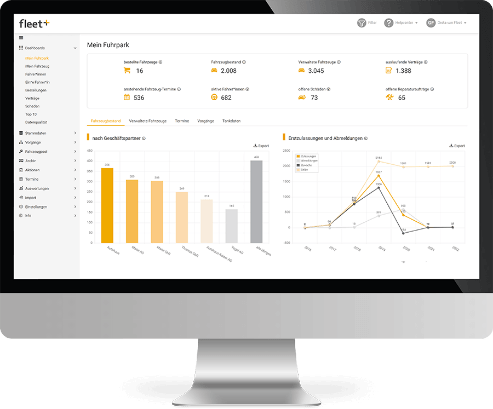
With Carano Fleet+, we have developed a powerful fleet management software solution that is specifically designed to meet these requirements.
Carano Fleet+ helps energy providers manage vehicle fleets across multiple locations, digitize administrative processes, and create a robust information base—regardless of whether the vehicles are conventional or electric.
The future of fleet management in the energy industry
Fleet management will continue to evolve in the coming years. In addition to ongoing electrification, connected vehicles and intelligent data analytics are becoming increasingly important.
At the same time, sustainability goals and legal reporting requirements are placing greater emphasis on key metrics related to CO₂ emissions, energy consumption, and cost-effectiveness.
With smart sensors, connected vehicles, and predictive maintenance, vehicle conditions can be monitored even more precisely in the future. This makes it possible to plan maintenance more proactively—especially for vehicles in networked service—and reduce unplanned breakdowns.
Our projects show that companies that view their fleet as a data-driven business unit are particularly successful. Modern fleet management software creates the conditions necessary to flexibly integrate new technologies and requirements—both today and in the future.
Conclusion: shaping the future with digital fleet management
- The energy sector is undergoing a transformation—and with it, the demands placed on the vehicle fleet. Decisions made today no longer affect just vehicle operations, but also the efficiency of technical operations, the implementation of the energy transition, and the company’s long-term viability.
- Those who strategically develop their fleet early on lay the groundwork for responding flexibly to new requirements and strengthening their organization for the long term.
- With Carano Fleet+, we help energy providers successfully navigate this very transformation—with a solution that creates transparency, automates routine tasks, and flexibly adapts to the energy industry’s requirements.
FAQ – Fleet management for energy and utility companies
Energy providers often manage fleets that are spread across multiple locations and are in daily use. Digital fleet management provides transparency regarding vehicles, costs, and schedules, reduces administrative burdens, and helps ensure reliable compliance with legal requirements.
Modern fleet management software consolidates all relevant vehicle data in one place. Among other things, it helps manage vehicles and drivers, monitor legal deadlines, control costs, and document damage and maintenance. This allows processes to be streamlined and informed decisions to be made.
Fleet managers in the energy and utilities sector must comply with a wide range of legal obligations to ensure the safety and proper operation of their vehicles. These include, among other things, regular general inspections (HU), UVV inspections, driver training, driver’s license checks, and adherence to maintenance schedules. For energy utilities with large and decentralized fleets in particular, a digital solution helps reliably monitor deadlines and document all records in an audit-proof manner.
Yes. Municipal utilities, in particular, benefit from centralized management, since vehicles are often deployed across multiple locations and used by different teams. Digital processes create transparency, facilitate collaboration, and reduce administrative overhead—regardless of the size of the vehicle fleet.
A software solution provides the necessary data foundation to transparently analyze fuel and energy consumption as well as CO₂ emissions. This information helps energy providers measure progress toward electrification, identify potential savings, and track sustainability goals based on data.
In an emergency, every minute counts. A digital fleet management system immediately shows which vehicles are available, where they are located, and how they are equipped. This makes it easier to quickly mobilize response teams and coordinate additional resources in a targeted manner—especially when swift action is critical to ensuring a reliable supply.
Predictive maintenance uses vehicle data to plan maintenance needs proactively rather than rigidly according to fixed intervals. For energy utilities with high vehicle utilization in network services, this can help reduce unplanned outages and plan workshop capacity more effectively. A prerequisite for this is a robust, centrally maintained database for each vehicle.
Since fleet management software often processes personal data—such as driver’s license information or vehicle usage by individual employees—providers should comply with current data protection standards. These include, among other things, granular access control, encrypted data storage, and clearly defined access rights, ensuring that only authorized individuals have access to sensitive information.
Other useful articles
- Fleet management: modern vehicle management for maximum fleet efficiency
- Setting up a fleet organization: structure, processes and digital solutions