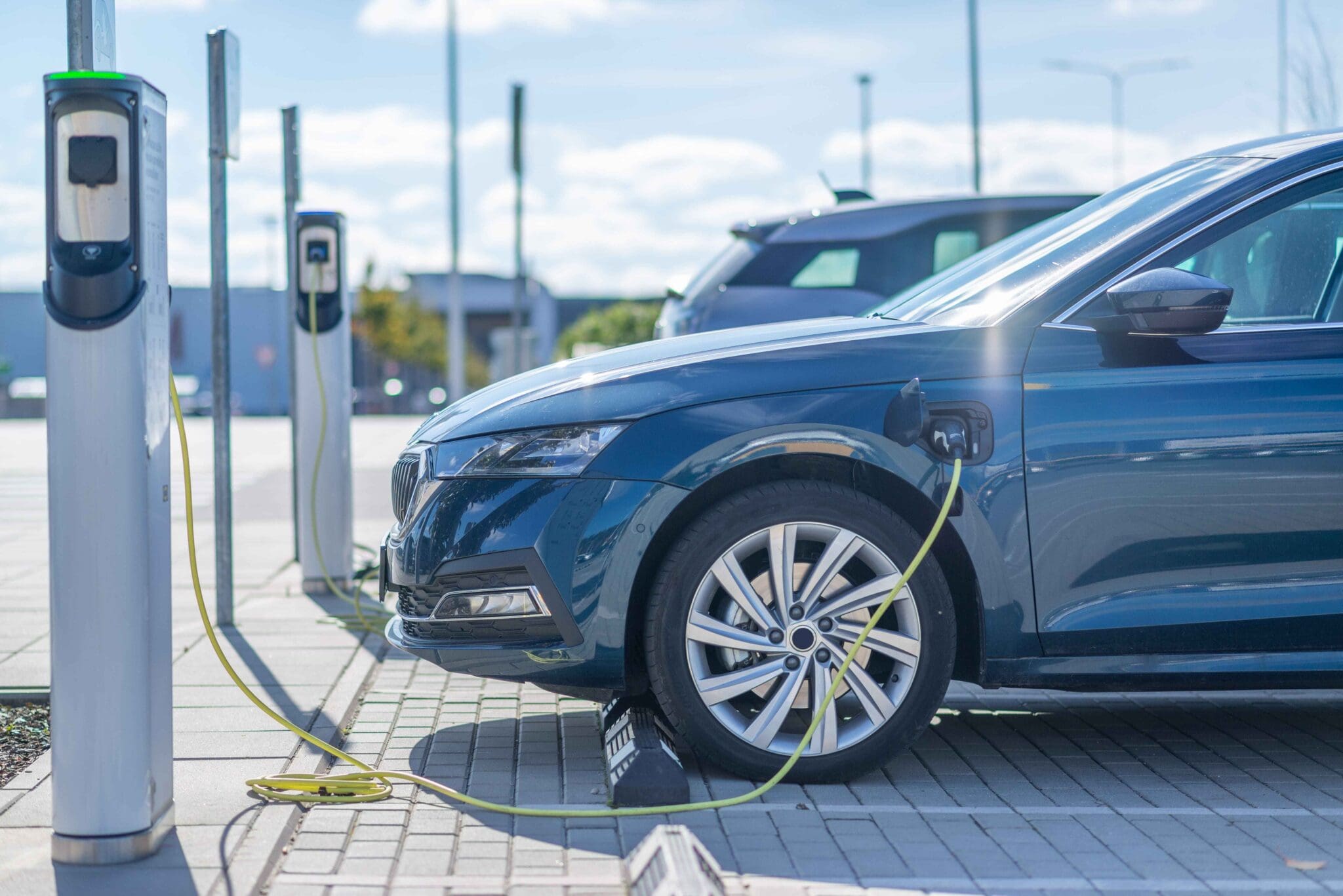
For car rental companies, electromobility is changing not only the type of powertrain in their vehicles, but also the entire operational logic behind them: range instead of a full tank, charging time instead of a fuel stop, and charging stations instead of the gas station around the corner.
Anyone integrating electric vehicles into their rental operations must therefore also adapt their planning, scheduling, and customer communication. This is because an electric car may be parked at the location but still not immediately ready for the next rental. Battery charge level, charging time, and available charging infrastructure thus become additional factors affecting availability and utilization.
Contents
- 1. Why Electric Vehicles Need to Be Scheduled Differently
- 2. Communicate range and charging options transparently
- 3. Charging Stations as Part of Site Planning
- 4. The process of returning vehicles is also changing
- 5. Mixed fleets require unified management
- 6. What this means for the fleet composition
- 7. How CarWise Group Supports Operations
- 8. Frequently asked questions
- 9. Other useful articles
Why Electric Vehicles Need to Be Scheduled Differently
For vehicles with internal combustion engines, the time between return and the next pickup is primarily a matter of cleaning, inspecting for damage, and, if necessary, refueling.
With electric cars, there is another variable to consider: the charge level. A returned electric vehicle with a low charge level may be technically available, but it may not be immediately ready for the next rental. Additionally, it is important to consider whether the vehicle will be sufficiently charged by the scheduled drop-off time.
If the necessary charging time between two bookings is not factored into the schedule, unplanned downtime may occur, which may not be immediately apparent in traditional capacity utilization metrics.
Communicate range and charging options transparently
From the customer’s perspective, too, electric mobility is changing the booking process. In addition to vehicle class, price, and availability, range and charging options can play an important role in choosing a car.
Especially for longer trips, renters want to be able to assess whether the vehicle they’ve chosen is suitable for their planned trip and what charging options are available. The easier it is to access relevant information during the booking process, the better customers can plan their trip.
These include, for example:
- Information on Range
- Information on Charging Options
- Information about charging cards or charging cables
- the expected charge level when picking up the vehicle
- Requirements Regarding the Battery Level Upon Return
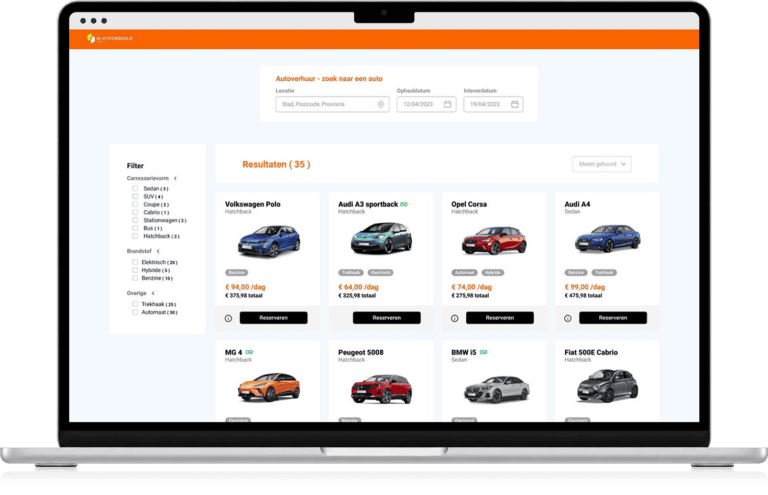
Location data for charging stations and realistic range estimates for each model should therefore be included in the same booking interface as price and availability—not in a separate information sheet.
Charging Stations as Part of Site Planning
A location with many electric cars but few charging stations creates the same kind of bottleneck as having too few rental cars overall: demand must be turned away, even though, on paper, cars would be available.
It’s not just about the number of charging stations. What matters is the interplay of several factors:
- How many electric vehicles are assigned to this location?
- When do they usually come back?
- At what charge level are they returned?
- How soon will they be needed again?
- What is the available charging power?
- How reliable are the available charging options?
For example, several electric cars might arrive at the location at the same time and need to be charged. If the available charging stations are already in use or if the charging capacity is insufficient, the time until the vehicles are ready for the next assignment will be extended.
The number and capacity of charging stations at each location thus become a capacity constraint that must be taken into account in fleet planning just as much as parking spaces or personnel.
The process of returning vehicles is also changing
The charge level is important not only before the rental but also at the time of return. Car rental companies should therefore clearly specify the charge level at which electric vehicles must be returned and how deviations from that level will be handled.
It is also important for the operational process to document the charge level when the vehicle is returned. This makes it possible to determine early on whether a vehicle can be prepared immediately for the next reservation or needs to be charged first.
This information can be crucial, especially when there are short time windows between two rentals. The sooner the actual charging needs are known, the better the vehicle’s future usage can be planned.
Mixed fleets require unified management
Most car rental companies do not operate electric vehicles in isolation, but rather as an alternative powertrain alongside internal combustion and hybrid vehicles. If electric cars are tracked in a separate system or an Excel spreadsheet, this creates two distinct views of the same rental car fleet—with the risk that the location overview and utilization analysis will no longer match.
In RentWise ‘s Planning & Availability module, electric, hybrid, and internal-combustion vehicles are displayed in the same location and availability overview, including charge level and remaining battery capacity as additional availability criteria.
This allows employees to plan and schedule vehicles—regardless of their type of propulsion—using a central overview.

What this means for the fleet composition
There is no one-size-fits-all answer to the question of what percentage of a fleet should consist of electric vehicles—it depends on demand, the availability of charging stations at the location, typical rental durations, and usage patterns.
To make informed decisions about the composition of their fleet, car rental companies can consider various key metrics:
- Utilization by Drive Type
- average lease term
- Time between rentals
- downtime caused by charging
- Booking Trends by Vehicle Type or Powertrain
- Cancellations
- Average charge level at the end of the rental period
- Cost per vehicle or rental
- Utilization of the Existing Charging Infrastructure
Reporting on booking patterns, idle time due to charging, and cancellation rates by vehicle type shows whether the current allocation matches actual demand or whether adjustments should be made before investing in more electric cars.
How CarWise Group Supports Operations
This transition is simultaneously changing the requirements for location planning, scheduling, and customer communication. RentWise manages electric cars within the same, efficient system as the rest of the rental fleet—with charge level as an availability indicator, location-specific information on charging options in the customer portal, and standardized reporting across all drive types, rather than a separate, isolated solution for the electric vehicle fleet.
Frequently asked questions
Not necessarily a separate system, but additional data points within the existing system—primarily charge level, remaining energy, and charging options by location—integrated into the same availability and booking overview.
Charging time reduces the time window during which a vehicle is actually available between two reservations. If this is not factored into the schedule, it results in idle time even though the rental car is theoretically available. Therefore, charging requirements should be incorporated into the scheduling process as early as possible.
That depends on demand, charging options at the location, usage patterns, and typical rental duration. Reporting on downtime and cancellation rates by drive type provides more reliable insights than a flat rate.
The vehicle must be charged before its next reservation and cannot be booked during that time. If this time requirement is not taken into account in scheduling, unplanned downtime will occur despite the availability of electric vehicles. The extent to which this affects availability depends on the current charge level, the required range, the charging power, and the time of the next reservation.
In addition to standard vehicle and rental data, the charge level, available energy, and charging-related downtime are particularly relevant. Depending on the process, information on charging stations, charging power, and charging costs may also be useful.
In addition to overall utilization, other factors of interest include rental duration, downtime, charging-related downtime, booking trends, and cancellations. The average charge level at the end of a rental and the utilization of charging stations can also provide important insights for future fleet planning.
Common extras include supplemental insurance, additional drivers, child seats, navigation systems, and—for electric vehicles—charging cards or cables.
Adhere to the agreed-upon fuel or charge level, return the vehicle on time to the agreed-upon location, and have any damage documented jointly on site.
Yes. RentWise can be integrated with LeaseWise, allowing leased electric vehicles to be rented out and tracked within the same system.