
Car rental companies must navigate multiple sets of regulations simultaneously: consumer protection when making reservations, data protection for driver’s license and payment information, price transparency in advertising, and reporting requirements related to their own fleet.
Anyone who rents vehicles for commercial purposes automatically assumes responsibility for complying with these regulations, regardless of whether customers rent a vehicle for a day or for weeks.
Compliance is not a peripheral issue, but rather one of the key challenges when renting vehicles in large numbers to a rotating customer base. Unlike in many other industries, legal requirements here are closely intertwined with day-to-day operations: This makes clear processes all the more important, as they ensure that regulatory requirements can be reliably integrated into the rental process.
Contents
- 1. Driver's license and identity verification as a key part of the vehicle handover
- 2. Price Transparency and Additional Costs
- 3. Keep Track of Inspection Dates and Operational Safety
- 4. Why Compliance Is a System-Wide Issue, Not an Isolated One
- 5. How CarWise Group Supports Compliance in the Car Rental Industry
- 6. Frequently asked questions
- 7. Other useful articles
Driver’s license and identity verification as a key part of the vehicle handover
Before a vehicle is handed over, the car rental company must not only verify the driver’s identity but also ensure that the driver has the required driver’s license. Clear documentation of the driver’s license check helps provide proof later that the verification was performed.
If there is no verifiable documentation, it may be more difficult to prove, in the event of a dispute, that the required inspection was actually carried out.
Digital and logged processes, rather than paper copies, can simplify the driver’s license exam and ensure that information is documented centrally and in a traceable manner. This reduces manual effort and makes it easier to track completed exams later on. Traceable documentation of the vehicle handover is particularly important, especially in connection with potential damage.
Privacy Policy for Booking and Vehicle Data
Car rental companies process a significant amount of personal data with every rental, and this data must be protected accordingly. The GDPR requires a clear legal basis for this, appropriate data retention and deletion policies, and technical safeguards to ensure compliance with legal requirements. Typical data categories:
- Driver’s license and identification information from the test at the time of pickup
- Payment Information for the Security Deposit and Final Settlement
- Vehicle location and telematics data during the rental period
GPS and telematics data from connected vehicles are particularly sensitive: They reveal movement patterns and must therefore be processed and documented with appropriate restrictions. Anyone who manages bookings, vehicle data, and payment processing in separate systems without a unified authorization framework will quickly lose track of which data is available at what level of detail and how long it may be retained.
Price Transparency and Additional Costs
From a consumer protection standpoint, price disclosure is a key area of focus: The final price, including taxes, fees, and mandatory additional services, must be clearly stated at the time of reservation—not just at the counter—regardless of whether customers are renting for one day or several weeks.
Optional extras, such as supplemental insurance or a second driver, must be clearly marked as optional. Non-transparent pricing structures are a recurring source of complaints to consumer advocacy groups and may result in warnings for violations of competition law.

Keep Track of Inspection Dates and Operational Safety
Regular inspection deadlines, such as the general inspection, as well as maintenance and inspections, must also be reliably tracked across the entire rental fleet. Special inspection deadlines apply to certain vehicles rented for commercial purposes.
Especially when dealing with a large fleet of rental cars and multiple locations, the challenge lies in reliable documentation and scheduling. If an inspection or repair appointment is overlooked or not coordinated with the scheduling department, the vehicle may not be available for use as planned.
The same applies here: The regulatory requirements themselves are usually well known. What is crucial, however, is to reliably document and track deadlines and proof of compliance for each vehicle.
A centralized, vehicle-specific deadline overview helps identify upcoming deadlines early on and coordinate them with the availability and scheduling of the rental fleet.
Why Compliance Is a System-Wide Issue, Not an Isolated One
The individual requirements (identity verification, data protection, price transparency, inspection dates) are well known in and of themselves. The real risk arises when these requirements must be tracked manually across multiple locations and vehicles: Excel spreadsheets that aren’t synchronized, paper logs that can’t be found when needed, or deadlines that are tracked at one location but not at another.
It is precisely this gap between established rules and their full implementation that can prove costly in an emergency. As the rental fleet and network of locations grow, standardized processes, centralized data, and traceable documentation become increasingly important.
How CarWise Group Supports Compliance in the Car Rental Industry
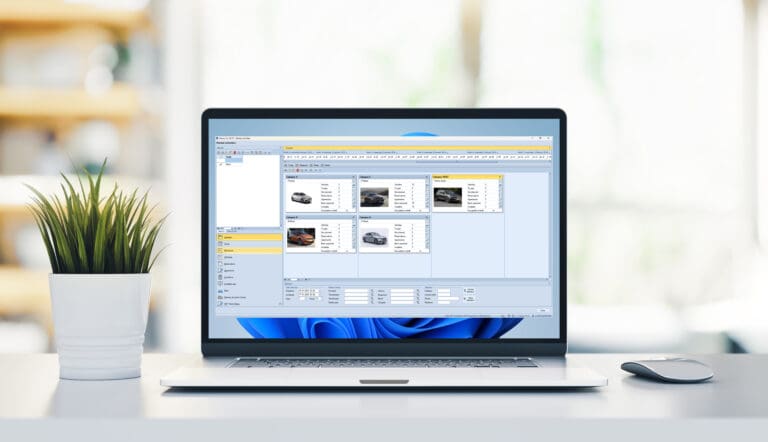
RentWise tracks the documentation required for operations right where it is generated: digital check-ins and check-outs with documented driver’s license verification and vehicle condition, a centralized overview of inspection deadlines for each vehicle, and a standardized display of pricing and reservations in the customer portal.
Instead of treating compliance as a separate administrative process alongside day-to-day operations, relevant information is documented directly within the operational process. This allows workflows to be designed efficiently and ensures that the responsible parties at every location are working with the same data.
Frequently asked questions
Depending on their business model and vehicle fleet, car rental companies must take various requirements into account. These include, among other things, verifying driver’s licenses, data protection and the handling of personal information, transparent pricing, and adherence to vehicle-specific inspection schedules.
At a minimum, a driver’s license and a valid form of identification; usually, a valid form of payment is also required for the security deposit and final bill.
That depends on the purpose—commercial records are subject to different retention periods than purely marketing data. There is no one-size-fits-all retention period; data retention policies should be defined on a per-data-category basis.
When rental cars are offered to consumers with prices listed, the total price to be paid—including sales tax and other price components—must be clearly stated. Optional extras should be clearly identifiable as such.
Depending on the situation, you may face fines or, in extreme cases, the loss of insurance coverage in the event of an accident. That is why a centralized, vehicle-specific overview of deadlines is more important than individual reminders.
Software can support processes such as retention periods, access rights, and documentation and make them traceable—the legal assessment and implementation remain the responsibility of the property management company, which should seek legal advice in case of doubt.
Clear documentation helps record the inspections performed and the vehicle’s condition at the time of handover. This makes it easier to determine later which inspections were carried out and what information was available at the time of rental.