
A rental fleet that is too large ties up capital unnecessarily and incurs ongoing costs. A fleet that is too small results in lost revenue due to rejected reservations. All fleet planning in the car rental industry operates within this spectrum—and the solution rarely lies in adding more cars, but rather in gaining better visibility into availability, demand, and location distribution.
Contents
- 1. Why Capacity Utilization Is Harder to Manage Than It Seems
- 2. Cross-location visibility as a foundation
- 3. Returns and Issuance as a Bottleneck
- 4. Adjust the fleet mix to match actual demand
- 5. Online Visibility and Bookability
- 6. Aligning Short-Term Car Rental Demand with Long-Term Fleet Strategy
- 7. What this means for mobility as a whole
- 8. How CarWise Group Supports Management
- 9. Frequently asked questions
- 10. Other useful articles
Why Capacity Utilization Is Harder to Manage Than It Seems
Utilization is often treated as a single metric—booked days divided by available days. Operationally, however, it breaks down into several factors: the vehicle mix at each location, seasonal fluctuations in demand, the time between return and the next rental, and downtime due to maintenance, repairs, or damage.
If you look only at the overall figure, you often overlook the fact that individual locations or classes are performing significantly worse than the average suggests.
Cross-location visibility as a foundation
The most effective way to improve utilization is rarely a single vehicle, but rather looking at all locations together: If a car is sitting idle at Location A while demand must be turned down at Location B, that’s a distribution problem, not a capacity problem—the available capacity exists, it’s just misallocated.
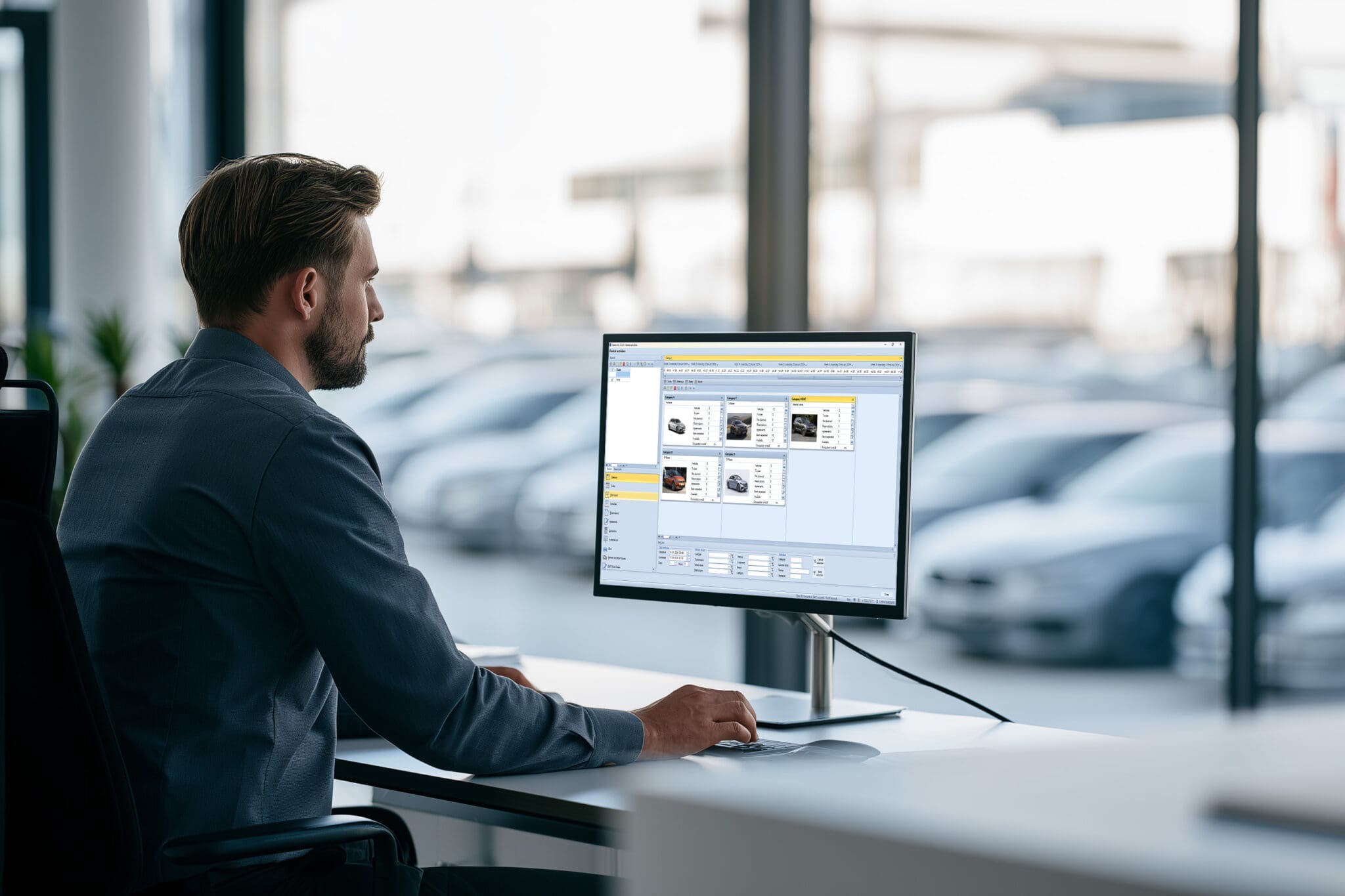
Without centralized planning, this balancing act is left to chance or manual work in Excel. In RentWise’s Planning & Availability module, you can see at any time which rental car is available at which location and when—providing the basis for actively rerouting bookings instead of turning down demand.
Returns and Issuance as a Bottleneck
A frequently underestimated loss of utilization isn’t caused by a lack of cars, but by the time between when a car is returned and when it becomes available again: After being returned, for example, a car must be inspected for damage, cleaned, and prepared for the next customer. If manual reconciliations or paper-based processes slow down these procedures, the downtime is further extended.
Digital check-ins and check-outs can help capture information about the vehicle’s condition immediately and trigger downstream processes more quickly. The more efficiently returns and reissues are organized, the faster a car will be available for the next reservation.
Adjust the fleet mix to match actual demand
Usage also depends on whether the existing mix of vehicles matches actual demand. A fleet with too many cars in a class that is rarely booked ties up capital, while popular classes are constantly sold out.
Analyses of bookings, fleet utilization, and downtime by vehicle class and location highlight areas where adjustments should be made—such as when purchasing new vehicles, relocating a fleet, or selling older rental cars.
Online Visibility and Bookability
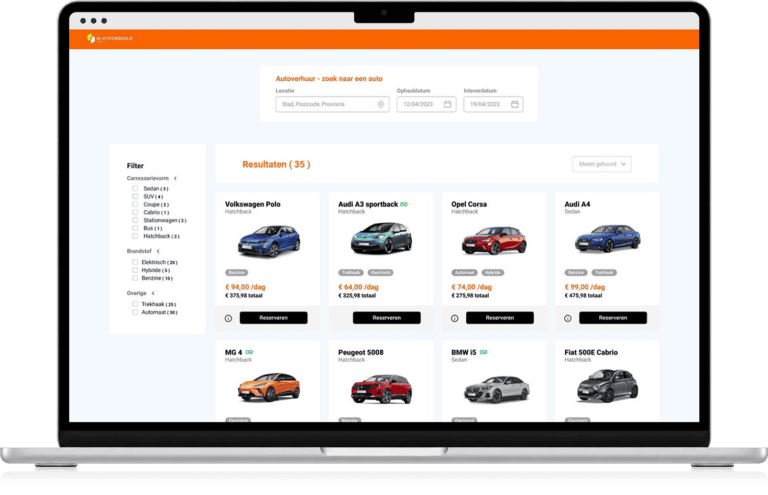
Effective management begins even before the reservation is made: If actual availability is visible online and can be booked immediately, the number of missed bookings due to follow-up inquiries or delayed confirmations decreases.
A customer portal that uses the same availability data as internal planning also prevents double bookings between online and in-person reservations. At the same time, it reduces the risk of conflicting information between online bookings and the rental location.
Aligning Short-Term Car Rental Demand with Long-Term Fleet Strategy
Effective management cannot be achieved through operational measures alone—it also depends on strategic decisions regarding fleet size and composition. In the short term, demand and availability can fluctuate significantly depending on the season, day of the week, and location. Strategic decisions regarding the purchase of additional vehicles, adjustments to the rental fleet, or the expansion of individual locations should therefore not be based solely on snapshots of the current situation.
A good fleet strategy is based on key performance indicators relevant to operations and takes both into account: up-to-date booking data as a guide for scheduling, and longer-term booking patterns as a basis for purchasing, expanding locations, or selling surplus vehicles.
If actions are taken only reactively, without taking into account trends over several months, recurring bottlenecks will arise in the same classes or locations. Efficient operations are achieved by basing both time horizons on the same data, rather than treating operational decisions and strategic fleet planning as separate matters.
What this means for mobility as a whole
The factors described here apply not only to traditional car rental companies but to any form of mobility in which vehicles are made available on short notice: Replacement car fleets, corporate car-sharing services, or leasing companies with their own rental operations must provide vehicles based on demand and manage their availability in a targeted manner.
Regardless of the specific business model, a transparent overview of locations and availability, well-coordinated handover processes, and a vehicle mix tailored to demand are key requirements for maximizing utilization of the existing fleet.
How CarWise Group Supports Management
Location overview, return and pickup processes, fleet mix, and online booking capabilities—these are all interconnected, but they can only be managed collectively if they are based on the same data.
RentWise combines planning and availability, online rentals and the customer portal, returns and pickups, and fleet management into a single centralized system, rather than using separate tools with their own data sets. As a result, usage reports access the same data as daily scheduling.
This provides car rental companies with a shared data foundation for managing their rental fleet on an operational level and further developing fleet planning based on actual usage.
Frequently asked questions
Manage existing vehicles and locations in such a way that requests are turned down as infrequently as possible and downtime is kept to a minimum—through allocation, processes, and vehicle mix rather than solely through fleet size.
No. A larger fleet increases capital tied up and fixed costs without solving the actual distribution problem if vehicles are located at the wrong site or in the wrong class.
For example, through a more demand-driven allocation of cars, shorter downtime between rentals, an appropriate mix of vehicles, and better coordination between online booking and internal scheduling.
A centralized rental management system can consolidate information on vehicles, reservations, locations, and availability. This allows for both day-to-day scheduling and long-term analysis to be conducted using a single, unified database.
Yes. RentWise can be combined with LeaseWise, allowing leasing and rental operations to be managed within a single integrated system environment.