
 Hans-Joachim Guth
Company cars play a central role in many businesses. The fleet of commercially used passenger cars is large; they account for a total of 11.6 percent of all passenger cars in Germany . Nevertheless, there are several factors to consider, particularly with regard to the costs of company cars for employers. Whether it’s purchase costs or lease payments, ongoing operating expenses, or insurance costs—all these aspects should be taken into account when considering a company car. In this article, we’ll explain which company car costs employers should be aware of, what advantages and disadvantages the traditional company car model entails, and in which areas costs may also arise for employees.
Contents
- 1. What is a company car?
- 2. Costs of Company Cars for Employers: Leasing vs. Purchasing
- 3. Ongoing operating costs of a company car
- 4. Insurance Costs for Company Cars
- 5. Taxes as a Cost Factor
- 6. Repair costs for a company car
- 7. What tax benefits does a company car offer employers?
- 8. Company Cars Provided by Employers: Pros and Cons
- 9. Company Cars: Save Money
What is a company car?
A company car, also known as a company vehicle, is a vehicle that a company provides to its employees for business purposes. The company car can be used for both work-related tasks and, depending on the agreement, for personal trips. The exact terms of use are governed by the company’s specific regulations and its car policy.
Costs of Company Cars for Employers: Leasing vs. Purchasing
Leasing a company car involves monthly payments, while purchasing a vehicle requires a large initial investment. Both models have different effects on the long-term budget and financial planning for the vehicle fleet.
Leasing Payments for Company Cars:
Leasing costs vary depending on the vehicle model, lease term, and service package. It’s important to note that higher-end vehicles or longer lease terms can increase monthly payments. In addition, additional services such as maintenance or insurance costs can also affect the price.
Calculating leasing costs is often time-consuming and costly for employers. With the Easy+ Company Car Configurator, you can simplify this process and speed up the entire leasing process. Thanks to the pre-defined car policy and the subsequent feasibility check, time-consuming ordering processes are no longer necessary.
Acquisition Costs for a Company Car:
Purchasing a company car makes sense if the company intends to use the vehicle long-term and has sufficient financial resources. Especially when annual mileage is low and the vehicle is used long-term, purchasing a vehicle can be more cost-effective than leasing.

In 2024, there were 5.7 million passenger cars in Germany owned by businesses.
Ongoing operating costs of a company car
Calculating the costs of a company car is essential for fleet managers. A key cost factor for company cars is their ongoing operating costs. These consist of several items:
- Fuel (gasoline, diesel, alternative fuels)
- Insurance
- Vehicle tax
- Maintenance and Repairs (Inspections, Wear Parts)
- Cleaning
- Administrative Costs
- Parking Fees
The amount of ongoing operating costs depends on the vehicle model and how the company car is used. In most cases, employers cover the costs of the company car. However, if an employee uses the car for personal purposes, he or she may also be required to contribute toward the operating costs.
Fleet managers should also not underestimate the administrative costs. The larger the fleet, the higher the costs of vehicle management. Digital fleet management using software can optimize processes, save time, and thus reduce costs.

Insurance Costs for Company Cars
Insuring company vehicles is an important aspect of fleet management and involves several necessary insurance policies:
- Automobile liability insurance is required by law and covers damage caused by the company car to other vehicles or people. In addition, you should purchase commercial auto insurance, as it addresses risks specific to businesses.
- A fleet insurance policy can be a good idea if a company has multiple vehicles in operation. It can be more cost-effective than purchasing individual policies and simplifies vehicle management. In addition, it offers the option of covering additional risks such as roadside assistance or driver protection.
- Comprehensive auto insurance (partial or full coverage) is not required by law, but it is often recommended to cover damage to company vehicles, especially those with a high value or that are used frequently.
These insurance costs are covered by the employer.
Taxes as a Cost Factor
The tax implications should not be underestimated either. Often, the employer covers both the vehicle tax and the sales tax for the company car in question. If employees are permitted to use the car for personal purposes, these personal trips and trips to work must be taxed separately based on the gross list price.
To calculate the taxable benefit in kind resulting from personal use of a vehicle, employees can use either the 1-percent method or a logbook. The amount of the benefit in kind is determined based on the vehicle’s list price. If the vehicle is used infrequently, a logbook may offer advantages when calculating the benefit in kind. However, when private use is high, employees often benefit from the 1-percent rule.
Repair costs for a company car
In addition to the purchase cost, company cars also incur regular repair costs, which are usually covered in full by the employer. The repair costs for a company car consist of various items and can vary significantly depending on usage:
- Regular inspections: Maintenance required by the manufacturer includes, for example, oil changes and brake inspections. Electric vehicles often have lower maintenance costs because they have fewer wear-and-tear parts.
- Repair of wear-and-tear parts: Brakes, tires, and batteries are among the parts that are subject to heavy wear and tear and must be inspected and repaired regularly.
- TÜV and Mandatory Inspections: The general inspection (TÜV) is required every two years. Any defects found may require additional repairs and result in further costs for the employer.
- Accident and Damage Repairs: Minor damage, such as scratches or dents, often results in lower costs. In the case of more serious accidents, repair costs can quickly run into several thousand euros.

What tax benefits does a company car offer employers?
Company cars canincur high costs for the employer , but the associated taxes are tax-deductible. This applies, for example, to the sales tax paid when purchasing a company car. In addition, the costs of insurance, maintenance, and operation are generally fully tax-deductible.
Vehicle tax is considered a business expense for a company if the vehicle is part of the business assets and is used primarily for business purposes. For company cars used for personal purposes, only the business portion of the tax is deductible. The vehicle tax paid can be recorded in the accounting records and claimed for tax purposes, which reduces the company’s taxable income and thus lowers its tax burden.
In addition, companies can benefit from tax advantages when purchasing all-electric vehicles. Vehicles first registered by December 31, 2030, are exempt from motor vehicle tax for up to ten years, but no later than the end of 2035.
When it comes to company car taxation, electric vehicles are also eligible for tax breaks on the taxable benefit under certain conditions. These tax provisions can make electric company cars more financially attractive for both companies and employees.
Company Cars Provided by Employers: Pros and Cons
The decision for or against company cars depends heavily on a company’s individual needs and circumstances. Company cars offer numerous benefits, especially to employees. But employers can also benefit from them. Here’s an overview of the advantages and potential disadvantages:
Benefits of Company Cars
- Tax Benefits: Operating costs such as maintenance, insurance, and fuel are generally tax-deductible. For new vehicles, the sales tax may also be refunded.
- Retention and Motivation: Company cars are valued by employees and can boost loyalty and satisfaction.
- Flexibility Through Leasing: With leasing, the residual value risk remains with the leasing company, which provides financial planning certainty.
- Efficiency in Business Travel: Company cars make good economic sense, especially for field staff or frequent customer visits.
Disadvantages of Company Cars
- High costs: In addition to the purchase or lease price, there are ongoing costs such as insurance and administrative fees. These make company cars a costly solution.
- Administrative Burden: Coordinating and maintaining company vehicles requires additional organizational effort. However, this can be significantly simplified by using fleet management software that enables efficient management and maintenance of the vehicles.
- Practicality: Not all employees need a company car. In many cases, alternatives such as shared vehicles or mobility budgets can be more cost-effective.
Company Cars: Save Money
The high cost of company cars can place a significant burden on a fleet. To reduce this expense, employers can take various measures:
- Establisha Car Policy: Clear guidelines for employees regarding vehicle selection—such as limiting choices to cost-effective, fuel-efficient models—not only create transparency but also help avoid high expenses.
- Using Electric and Hybrid Vehicles: Depending on the vehicle type and usage, alternative powertrains can offer tax benefits and economic advantages. Electric vehicles can also help reduce the use of fossil fuels and direct CO₂ emissions during operation.
- Leasing Instead of Buying: Leasing agreements offer flexible terms and lower fixed costs, allowing companies to remain more financially flexible.
- Corporate Car Sharing : Instead of the traditional company car model, companies can opt for corporate car sharing. This allows employees to access a pool of vehicles as needed. As a result, fleet efficiency is improved and downtime is minimized.
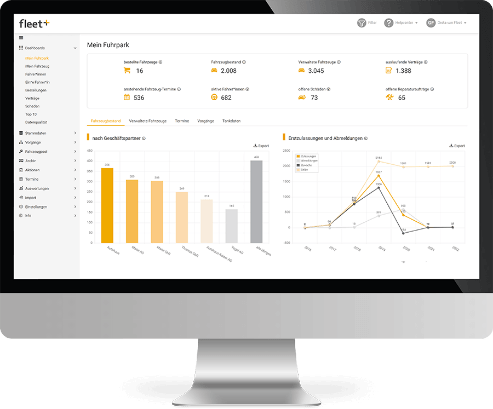
- Implementing Fleet Management Software: Digital tools help efficiently manage the use of company cars, schedule maintenance, monitor costs, and analyze driving behavior.
These strategies can significantly reduce company car costs without sacrificing mobility.
Conclusion: Costs of Company Cars for Employers
- In addition to the initial purchase or lease, company cars also incur ongoing costs for operation, insurance, and administration. Fleet managers should keep track of these costs as part of their vehicle management.
- Many expenses, such as maintenance, insurance, and vehicle tax, are tax-deductible; there are also tax benefits for electric vehicles. When used for personal purposes, employees must pay taxes on the non-cash benefit.
- Strategies and tools, such as fleet management software, help make the fleet more efficient and reduce expenses.
FAQ – Costs for Company Cars
Despite high costs, a company car can be worthwhile for employers, as it serves as an attractive fringe benefit and offers tax advantages, such as the deductibility of operating costs and the refund of sales tax on new vehicles. It also strengthens employee retention and motivation. Leasing provides financial planning security, as the residual value risk remains with the leasing company.
The cost of a company car to the employer consists of the purchase price and the ongoing operating costs. The latter vary depending on the type of vehicle, the financing model, and how the vehicle is used. Therefore, the expenses can vary depending on the circumstances.
Purchasing a company car is worthwhile if the vehicle is to be used over a long period of time and the company has sufficient financial resources. Purchasing a company car is particularly advantageous when annual mileage is low.
Insurance costs for a company car are usually covered by the employer, since the vehicle belongs to the company and is used for business purposes.
Other useful articles on the topic of company cars
- Car Policy: Significance and advantages of a company car policy in the vehicle fleet
- E-mobility in the Company: 5 Important Points of the Fleet Analysis
- Key Management in the Fleet: Managing Keys Digitally
- Fleet management: How to manage your fleet successfully
- Owner liability in the fleet: These obligations apply to fleet managers