A well-managed fleet can make the difference between smooth business operations and inefficient, costly processes. This is where fleet analysis comes into play.
Whether you’re thinking about modernizing your fleet, reducing costs, or focusing specifically on fuel consumption and CO₂ emissions, a fleet analysis offers valuable insights and potential solutions. But how does it work? In this article, we’ll explore the most important aspects and questions.
Contents
- 1. What is a fleet analysis?
- 2. 1 – Define the Objectives of the Fleet Analysis
- 3. 2 – Analyze Processes and Structures
- 4. 3 – Analyze the vehicle fleet and utilization rates
- 5. 4 – Calculating the Total Cost of Ownership
- 6. 5 – Environmental and Climate Goals for the Vehicle Fleet
- 7. How does a software solution support fleet analysis?
What is a fleet analysis?
A fleet analysis is a systematic approach used to evaluate the current state of a fleet and identify opportunities for optimization. Such an analysis enables companies to gain a deep understanding of their fleet’s structure, processes, and costs and to make strategic decisions.
How often a fleet analysis should be conducted depends on the size of the fleet. In general, it is recommended to take a closer look at the fleet at regular intervals—for example, once a year. A comprehensive analysis takes into account business, technical, and organizational aspects. The following steps should be considered:
1 – Define the Objectives of the Fleet Analysis
First, determine what you hope to achieve by analyzing your fleet. Do you want to gain a comprehensive overview of the fleet, reduce costs, or increase efficiency? Or is the focus on complying with new environmental regulations? Perhaps you’re also considering implementing fleet management software. Another possible goal would be to assess whether the fleet meets operational requirements. The subsequent analysis should be tailored to whichever goal is your top priority.
2 – Analyze Processes and Structures
The fleet analysis begins with an examination of all processes and structures within the fleet. First, describe the structure of fleet management. Is the fleet organized centrally or decentralized, and how many people and departments are responsible for managing the fleet? Next, examine the individual processes and steps, such as
- Vehicle Procurement
- Data and Contract Management
- Maintenance and Repairs (including Tire Management)
- Claims Processing
- Insurance Management
- Handling Fuel Cards
- Fleet Management
- Compliance with Legal Requirements
Please answer the following questions:
- Are the individual steps up to date or outdated?
- Are the processes adequately documented?
- Can these workflows be optimized with the help of digital tools? Are there any process gaps?
- If you are already using a software solution, you should ask yourself whether it still meets the needs of your fleet.
3 – Analyze the vehicle fleet and utilization rates
The next step in the analysis focuses on one of the most important aspects of the fleet: the vehicles. Check whether all vehicles are necessary, whether they are being utilized efficiently, and whether older vehicles should be replaced with newer, more cost-effective models.
After all, not every vehicle is necessarily tailored to the company’s specific requirements. This analysis will help you determine whether your existing vehicles meet your actual needs.
In doing so, consider the following, among other things:
- Number and Type of Vehicles
- Age and Condition of the Vehicles
- Frequency and Duration of Use
- Intended Use of the Vehicles
- Running Distances
The utilization rate of individual vehicles is particularly important. While some vehicles may be used only rarely and spend long periods of time idle, others may regularly reach their capacity limits. The analysis should therefore distinguish between company cars assigned to specific employees and pool vehicles.
For shared vehicles, for example, you can analyze how often they are booked, when downtime occurs, and whether bottlenecks arise at certain times. Car-sharing software can provide transparency regarding usage and booking data. Based on this information, it is possible to assess whether the existing vehicle fleet meets actual mobility needs or whether vehicles should be deployed differently or the mobility mix adjusted.

4 – Calculating the Total Cost of Ownership
Examining the total cost of ownership (TCO) of a fleet is a key component of fleet analysis. The TCO encompasses not only the initial purchase costs but also all expenses associated with owning and using the vehicles. By taking all direct and indirect cost factors into account, you can uncover hidden expenses and cost drivers within the fleet. Therefore, examine all expenses more closely and identify areas where savings are possible. Generally, the TCO consists of the following cost centers:
- Acquisition costs
- Financing costs, such as interest or leasing fees
- Ongoing operating costs such as maintenance and repairs, fuel costs, and insurance
- Administrative Costs
- Loss of value
5 – Environmental and Climate Goals for the Vehicle Fleet
Climate and environmental considerations are also playing an increasingly important role in fleet management. A fleet analysis can therefore take into account fuel and energy consumption, CO₂ emissions, and vehicle usage. This makes it possible, for example, to identify potential savings through more fuel-efficient vehicles, alternative powertrains, or optimized route planning.
A thorough analysis also provides a data foundation for defining specific and measurable climate and environmental goals for the fleet and tracking their progress. When conducting a fleet analysis, you should therefore consider the following questions:
- What types of propulsion systems are used in the fleet?
- How high are the CO2 emissions?
- What is the fuel consumption?
- Which vehicles can be electrified?
To learn how you can reduce fuel consumption and CO₂ emissions in your fleet and use vehicles more efficiently, read our article “A Sustainable Fleet—Measures for Greater Environmental and Climate Protection in Your Fleet.”
How does a software solution support fleet analysis?
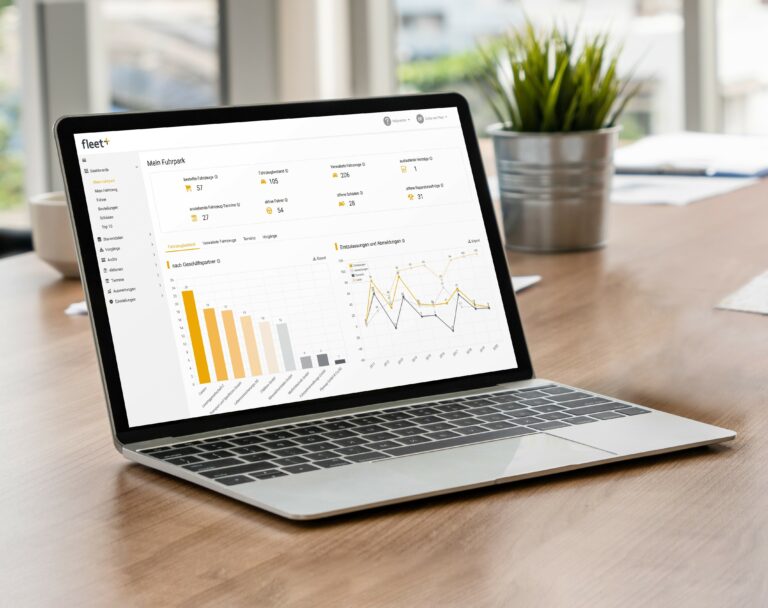
Fleet management software such as Carano Fleet+ can significantly simplify and optimize fleet analysis. It replaces manual processes and offers a wide range of options for data collection and analysis. At the click of a button, the software generates detailed reports that can be used to examine various aspects of the fleet—such as total cost of ownership (TCO) or the utilization of individual vehicles—and identify opportunities for optimization.