Bicycles can be a useful addition to a company’s vehicle fleet and offer an alternative to cars, especially for shorter distances. Whether it’s a cargo bike or an e-bike, there are various types of bicycles for different purposes. In this article, you’ll learn how to integrate bicycles into your business, what economic and practical benefits they offer, and what challenges to consider.
Contents
- 1. Where does it make sense to use bicycles in the company?
- 2. What are the advantages of having a bicycle in the company?
- 3. What special features need to be considered for a bicycle in the company?
- 4. Download bike safety checklist (German only)
- 5. Company bike instead of company car
- 6. How can bicycles be successfully integrated into the company?
Where does it make sense to use bicycles in the company?
There are many ways to incorporate bicycles into a company’s vehicle fleet, in addition to various motor vehicles. Especially for short trips in the city and in densely populated areas, they can provide fast and flexible mobility. As a result, bicycles offer an optimal solution for employees who regularly commute within a city or between nearby locations. This makes short business trips possible even without a car.
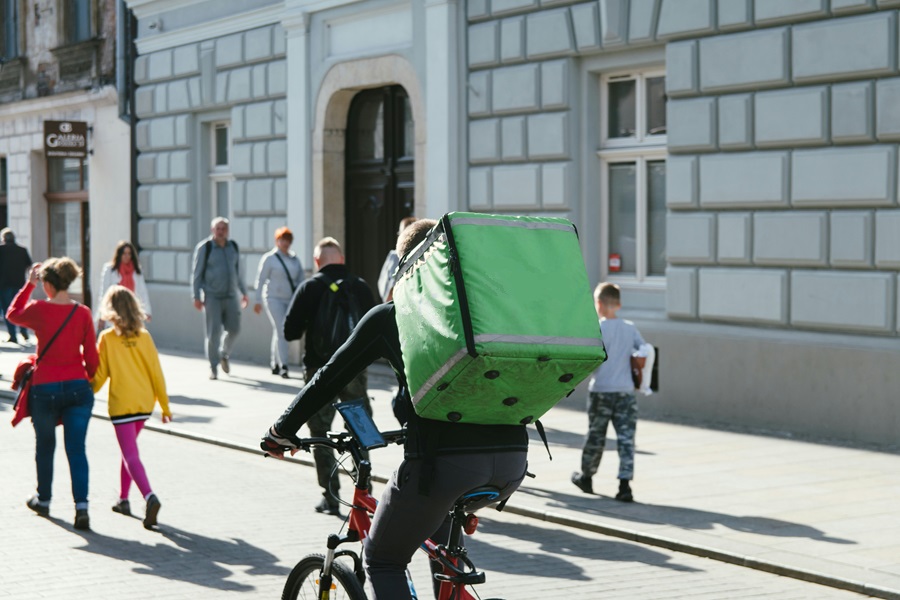
Companies in industries such as delivery services, courier services, or the food service industry can also incorporate bicycles into their fleets. Cargo bikes and e-bikes, in particular, make it easy to transport even heavier goods. Specialized trailers, bags, and baskets ensure that deliveries arrive safely at the customer’s location. Insulation helps keep food warm, so bicycles can also be used for food delivery.
What are the advantages of having a bicycle in the company?
Cycling offers various benefits for both employees and the company. These include:
- Climate and Environment: Bicycles require no fuel to operate and produce no direct CO₂ emissions when used. They can therefore serve as an alternative to cars, particularly for short trips, and help reduce fuel consumption and direct emissions in a vehicle fleet.
- Costs: Bicycles can be less expensive than cars, particularly in terms of purchase, maintenance, and upkeep. Depending on the mobility plan, the need for parking spaces for cars can also be reduced.
- Flexibility and Efficiency: Especially for short trips in the city, bicycles can be a flexible alternative to cars and offer time savings when traffic is heavy.
- Health Promotion: Regular cycling adds more movement to the workday and can encourage employees to be more physically active.
- Expanding Mobility Options: Bicycles broaden mobility options for employees and offer an alternative to cars, especially for shorter distances.
E-bikes in the fleet
In addition to conventional bicycles, e-bikes are also part of the fleet. They offer similar advantages to conventional bicycles and provide a fast and convenient alternative to cars. Thanks to the electric assistance, hills and longer distances can be tackled more easily, which significantly increases their range and flexibility compared to conventional bicycles. This makes them appealing even to less experienced riders.
It is important to note the difference between electric bicycles and pedelecs. High-speed pedelecs (S-pedelecs), which can travel at speeds of up to 45 kilometers per hour, are considered motor vehicles. Different regulations apply to them than to e-bikes.
Cargo bikes as a transportation option
It is also possible to incorporate cargo bikes into the vehicle fleet. They are suitable for a variety of purposes, ranging from the transport of small packages to bulky goods. The cargo areas are designed to allow for easy loading and unloading.
The Federal Office for Economic Affairs and Export Control (BAFA) offers funding opportunities. It supports the purchase of electric cargo bikes and electric cargo trailers by companies for bicycle-based freight transport. Funding covers 25 percent of the purchase cost, up to a maximum of 2,500 euros per electric cargo bike or electric cargo trailer. A moratorium on applications and approvals had been in effect since November 2023. This moratorium was lifted on January 23, 2024, by the Federal Ministry for Economic Affairs and Climate Action (BMWK). Funding applications can now be submitted and approved again.
What special features need to be considered for a bicycle in the company?
When integrating bicycles, there are a few guidelines to follow. In many areas, similar regulations apply to bicycles as to company vehicles. This is intended to ensure the safety of cyclists. Here are some of the most important points:
Instruction
Bicycles and e-bikes used for business purposes are considered work equipment. To ensure their safe use, employees must therefore receive training in advance. During this training, employees are informed about potential hazards and what to do in the event of an accident. To this end, companies must conduct a risk assessment in accordance with DGUV Regulation 1, which serves as the basis for the annual bicycle safety training.
UVV also for bicycles
Under certain conditions, bicycles used by a company must also be inspected in accordance with accident prevention regulations (UVV for short). The prerequisite for this is that the bicycle is used for business purposes and is motor-powered. Standard bicycles and 25 pedelecs are not considered vehicles and are therefore not subject to the general inspection requirement. However, in special cases—such as when subjected to particularly heavy use—they must also be inspected. The inspection should be performed at least once a year by a qualified expert.
Insurance cover
Bicycles in the fleet should also be insured against potential risks. Liability insurance is particularly important in this regard. It provides protection against liability claims that may arise from accidents involving company bicycles. In addition, theft and damage insurance can cover the loss or damage of bicycles due to theft, vandalism, or accidents. Insurance policies should also be tailored to the specific type of bicycle, its intended use, and the company’s industry.
“Bike Policy”
Similar to company vehicles, there are also specific guidelines for bicycles in the workplace. The “Bike Policy” outlinesresponsibilities related to maintenance and upkeep, safety standards, and rules for using bicycles on public roads. In addition, it may also specify criteria for purchasing bicycles, such as price ranges, models, and equipment specifications. Furthermore, it defines whether the bicycles may be used solely for business purposes or also for personal use. This helps prevent misunderstandings and conflicts within the company.
Service and Maintenance
To ensure employee safety, bicycles must be serviced regularly. This includes checking and adjusting the brakes, tire pressure, lights, and gears. Wear-and-tear parts such as brake pads, chains, and sprockets must also be checked regularly and replaced as needed.
To help you keep track of bicycle safety at your company, we’ve created a checklist of the most important points. Here you’ll find the relevant criteria for bicycle safety that you should check every day. Download the bicycle safety checklist now and share it with your employees to make daily bicycle inspections easier.
Download bike safety checklist (German only)
Company bike instead of company car
One way to integrate bicycles into a company is through company bicycles. In this arrangement, employees can typically use the bicycles provided by the company not only for work but also for personal use. This offers tax advantages for both the employees and the company. In addition, company bicycles can serve as a valuable incentive and help further motivate employees .
Leasing of company bicycles
Companies can lease company bicycles. In this arrangement, an external provider covers the purchase cost of the bicycle and makes it available to the company. The company pays a monthly lease payment for its use. This payment often covers maintenance and insurance costs as well and depends on the selected model and insurance plan. This allows companies to enjoy the benefits of a company bicycle without having to pay the full purchase price all at once.
If the bicycle is damaged, the lessor covers the repair costs. Some plans also include accident and theft coverage, while others include roadside assistance.
Monetary benefit and 0.25 percent regulation
If an employee is provided with a company bicycle, this may be treated as a non-cash benefit. The key factor here is whether the employee receives the company bicycle in addition to their salary or as part of a salary conversion arrangement.
If the employee receives the company bike in addition to their salary, it is tax- and contribution-free. However, employees often forgo a portion of their salary equal to the lease payment for the duration of the company bike lease. In this case, it constitutes a salary conversion . If the company provides the company bicycle for the first time by the end of 2030, a tax benefit applies here as well. Since 2020, the monthly value of the bicycle provision has been 1 percent of one-quarter of the manufacturer’s suggested retail price (rounded down to the nearest 100 euros). In effect, this corresponds to a tax rate of 0.25%.
Example:
- List price for company bike = 3,000 euros
- Of that, ¼ = 750 euros
- Amount rounded down to the nearest 100 euros = 700 euros
- Monetary benefit (1 percent) = 7 euros
In this example, the employee must pay 7 euros per month as a non-cash benefit.
How can bicycles be successfully integrated into the company?
Companies that want to incorporate bicycles into their fleets should keep a few important steps in mind. These include:
- Assess the need: Determine the extent to which bicycles can be used at your company and whether there is a need for them. You can also ask employees if they would take advantage of a bicycle program.
- Assess the infrastructure: Check whether the necessary infrastructure for bicycles is already in place at your company, or identify which aspects need to be added. This includes, for example, parking facilities and charging stations for e-bikes.
- Comparing Models and Providers: Depending on the type of bike and financing option, there are different providers. It’s important to make a detailed comparison here to save money and choose the best package of services.
- Choose insurance coverage: To ensure that the bicycles in your fleet are insured against loss, damage, or theft, for example, you should choose comprehensive insurance coverage. Here, too, it’s important to compare different offers to find the ideal insurance coverage.
- Ensuring Safety: In addition, regular inspections should be conducted to verify that the bicycles are in working order and roadworthy. Employees should also receive training before using them. In some cases, the bicycles may also need to be inspected in accordance with UVV regulations.
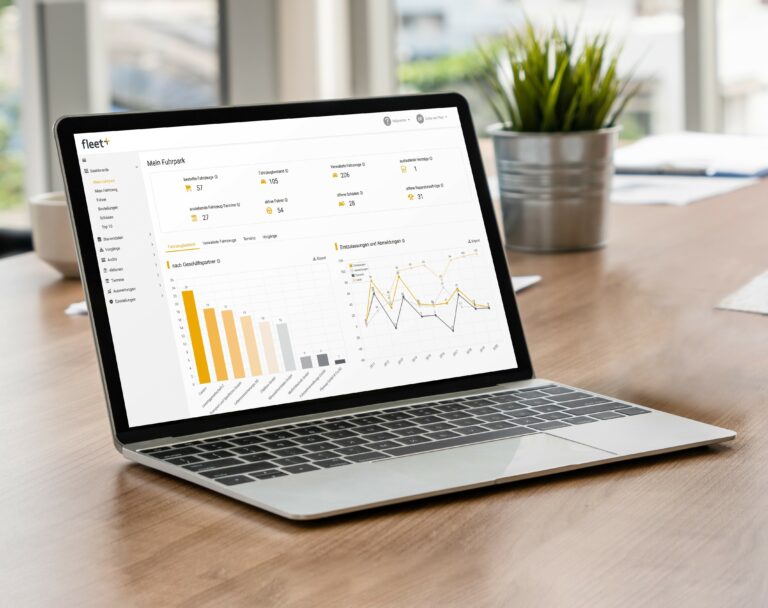
- Managing Bicycles in the Workplace: Like all other vehicles in a fleet, bicycles should be managed efficiently. The Carano Fleet+ software solution can help you keep track of everything. With Fleet+, related documents and data—such as lease agreements, bicycle information, and service appointments—can be organized centrally.